
Rated · CÓRDOBA DAY TRIPS
Cordoba: 2.5-Hour Guided Jewish Quarter and Alcazar Tour
Cordoba’s Jewish Quarter and the Alcazar complex are one of those rare mixes where buildings, faiths, and rulers overlap in the same few blocks. I like the way the tour is paced, slow enough to notice details, and I love the skip-the-line access paired with real guided storytelling through the neighborhood. One thing to keep in mind is that the Alcazar portion is affected by restoration, so you will not get the full run you might expect from a normal visit.
You also get a monolingual guide, meaning the explanation stays in the language you book (no switching back and forth mid-sentence). The tour is listed as 2.5 hours, and in practice you should plan for a flexible duration because closures and weather can shift which areas are available.
Key Highlights You’ll Feel Immediately
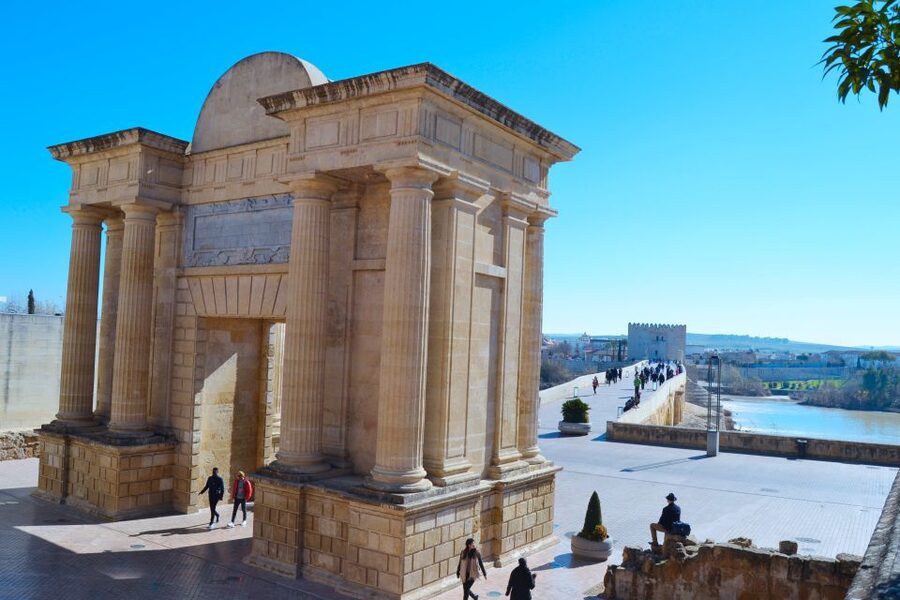
- Guided walk through Cordoba’s Jewish Quarter with context you cannot get from just wandering
- Skip-the-ticket line plus entrance fees included, so you spend time looking, not waiting
- Plaza Cardenal Salazar and Algafequi’s legacy, including the eye-medicine story
- Capilla Mudejar de San Bartolomé, a chapel tied to Jewish convert history
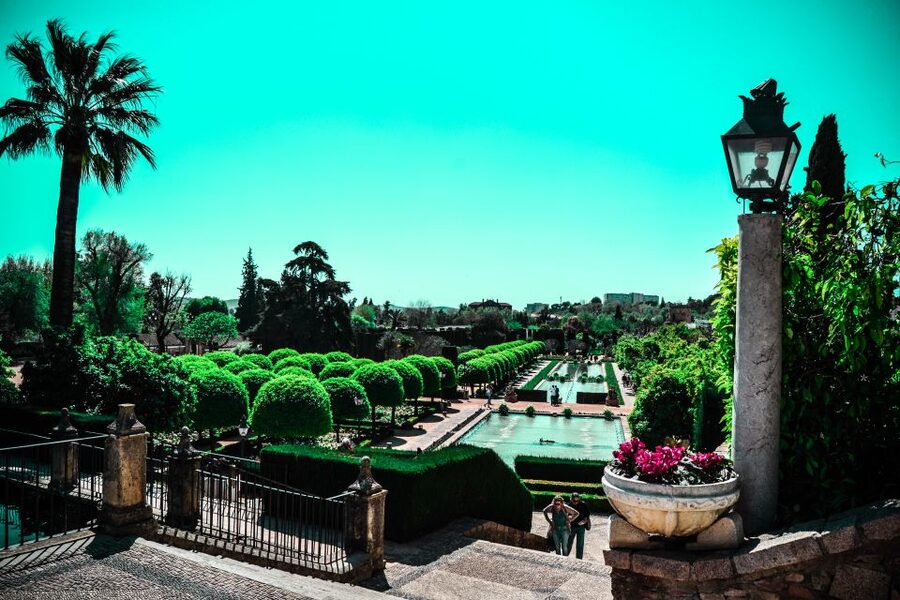
- Alcazar access during restoration, focused on the Gardens and the Arab Baths areas that are open
Why Cordoba’s Jewish Quarter and Alcazar Work So Well Together
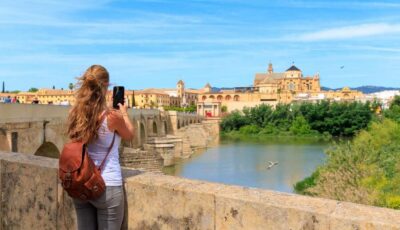
This tour is smart because it doesn’t treat Cordoba as two separate attractions. It connects the city’s layered past, walking you from medieval Jewish Quarter streets into the monumental world of the Alcazar complex. The effect is like reading one long story, but in chapters you can actually see.
What I like for you is the balance. You get street-level sights, like narrow lanes and market corners, and then you step into major sites that anchor the history. The guided approach matters here, because so many buildings have Christian and Islamic fingerprints, sometimes in the same structure.
The practical tradeoff is that the Alcazar visit is not 100 percent complete right now. You will still see important areas, but the experience is shaped by what the restoration crews have opened to the public.
More Córdoba day trips from Seville:
- Córdoba: Skip-the-Ticket-Line Mosque-Cathedral Guided Tour
★ 4.6 · 9,634 reviews - Cordoba Mosque-Cathedral: Skip-the-Line Guided Tour
★ 4.7 · 6,610 reviews - Córdoba: Jewish Quarter, Mosque, and Alcázar Tour
★ 4.7 · 4,279 reviews
Start at Puerta del Perdón, Mezquita Catedral, With an Easy Meeting Point
Your tour begins at Puerta del Perdón, Mezquita Catedral, at Calle Cardenal Herrero, 1. Look for the orange umbrella, and you will know you are in the right place fast. This matters in Cordoba, because streets around the Mezquita are easy to misread when you’re arriving for the first time.
I recommend showing up a few minutes early with your eyes on the entrance area, not the big square in the distance. Once you’re grouped up, the guide can set the tone quickly, and you can start moving before the city starts feeling crowded.
Also, wear comfortable shoes. The route includes many stairs, and that gets important later when the tour reaches the Alcazar complex.
Calleja de la Hoguera: A Historic Lane With a Mosque’s Echo
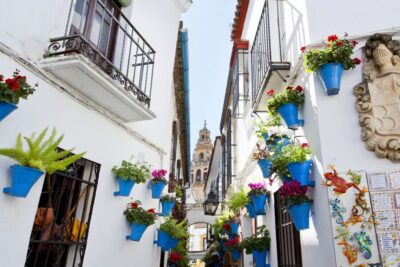
From the meeting point, you head toward Calleja de la Hoguera, a narrow street tied to the Arabic-era layers of Cordoba. The guide points out a historic mosque location, and it’s the kind of sight that makes you look twice at ordinary-looking corners.
One fact you’ll hear that helps you picture the scale is that historians believe Cordoba once hosted over a thousand mosques in the 10th century. Even if you do not remember the exact number, the point lands: Cordoba was a major spiritual and civic center, not a side note on the map.
This part of the tour is less about one monument and more about training your eye. You learn to see how Cordoba’s streets behave like routes through time, not just places to walk.
Plaza Cardenal Salazar: Algafequi and the Surprising Power of Medicine
Next comes Plaza Cardenal Salazar, where the tour adds a human-size anchor to all that architecture. You’ll see a statue of Algafequi, described as the first doctor to operate on eyes in Europe in the 12th century.
That detail is not random trivia. It gives you a sense of what Cordoba contributed beyond buildings: knowledge and practical science. When you learn a city was advancing medicine like that, the monuments stop feeling decorative and start feeling consequential.
Nearby, you also get the story of an old hospital from the 18th century, which now serves as a university. I like this because it shows continuity. Even after political and religious shifts, Cordoba kept turning institutions into learning spaces.
A few more Cordoba tours worth comparing
- Cordoba: Mosque-Cathedral E-Ticket with Audio Guide
★ 4.1 · 2,124 reviews - Cordoba: Alcazar Guided Tour and Skip-the-Line Ticket
★ 4.2 · 1,792 reviews - Mosque-Cathedral of Córdoba Guided Tour with Tickets
★ 4.5 · 1,649 reviews - Córdoba: Guided Tour of Azahara Medina
★ 4.5 · 1,042 reviews
Capilla Mudejar de San Bartolomé: When Architecture Becomes a Story of Converts
Then you walk to Capilla Mudejar de San Bartolomé, an old chapel with an arabesque style that connects to Jewish convert history. The guide explains how a Christian chapel built in that decorative language grew from the complex reality of Cordoba’s communities.
Here’s the thing I think you’ll appreciate most: you are not just seeing a pretty building. You’re seeing how style travels with people, beliefs, and power. The guide’s job is to link small architectural choices to bigger social changes, and that’s where the tour earns its guide fee.
If you enjoy history that feels embodied rather than textbook-like, this stop delivers. You’ll come away understanding why locals made certain design choices and what those choices signaled.
The Souk Stop: Craft Markets Are a Real Part of Modern Cordoba
After the chapel, the tour heads to the souk, a craftwork market with local products typical of Cordoba. This is a short detour, but it’s not fluff. It’s where you shift from medieval story to daily texture.
I recommend using this break to reset. Markets are the moment to check photos, look for small souvenirs, and get water if you need it. It’s also a good place to ask the guide a practical question about what to try for food later, since the tour itself does not include any food.
This portion gives the tour a grounded feel. Cordoba is not frozen in time, even if you spent the previous hour inside time layers.
A Medieval Synagogue That Survived: What You See and What It Means
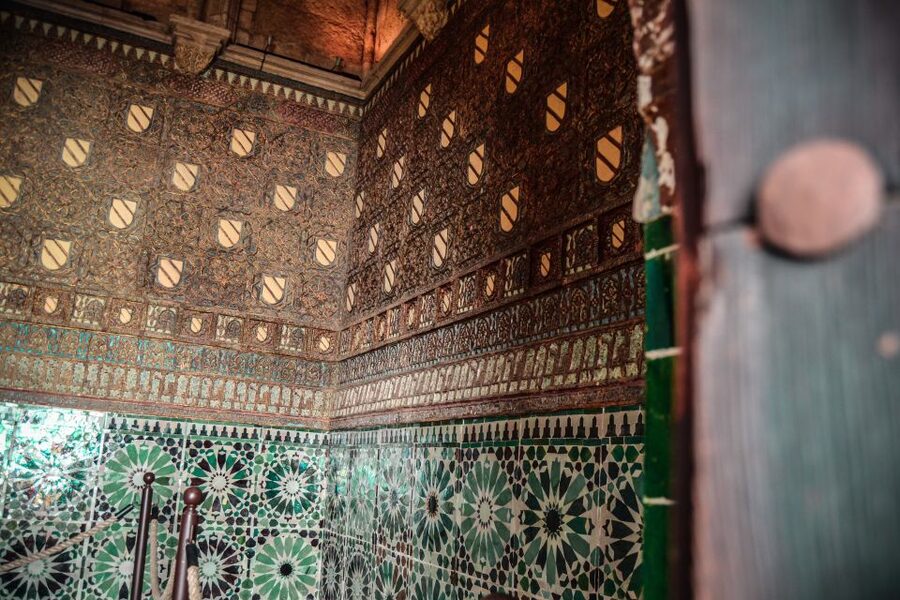
After time in the souk, you reach a breathtaking medieval synagogue, built in the 14th century. The key point is that it is one of the few Jewish monuments that has survived a tumultuous history.
This is where the tour becomes emotionally meaningful, but still grounded in facts. The guide helps you understand what survival means in a place where communities were reshaped, displaced, and sometimes erased from public space.
If you care about architecture, focus on the details the guide points out. If you care about history, listen for the guide’s explanation of how the synagogue’s survival changes the story of Cordoba’s Jewish presence from rumor to something you can actually stand beside.
You also end up with a clearer picture of why the Jewish Quarter is more than a route. It is a set of remaining proofs.
Alcazar of the Catholic Monarchs, Right Now: Gardens and Arab Baths During Restoration
The tour ends at the Alcazar of the Catholic Monarchs, but with an important update. Restoration work has been ongoing since last June, and during your visit you will not be able to access the entire complex.
Instead, you’ll explore the areas currently open to the public:
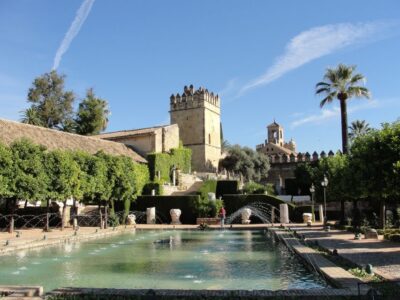
- Alcazar Gardens
- Arab Baths of the Caliphal Alcázar (part of the same monumental complex)
This matters for your planning. You should go in expecting a partial experience shaped by what is open, not a full circuit of every possible room and viewpoint. The good news is that the open areas still cover major highlights. Gardens give you the mood shift from dense streets into an outdoor, architectural pause. The Arab Baths connect you back to Cordoba’s Islamic-era technical and design sophistication.
Also, the tour does not include the towers. So if towers are your must-do, you will need to choose a different option or add a separate visit.
The Guide Experience: English, Spanish, and Staying on Message
The tour includes a live guide in English or Spanish, and the highlights emphasize that the guide will stay monolingual. For me, that’s a big quality marker. When a guide switches languages midstream, you lose the pacing and the precision of the storytelling.
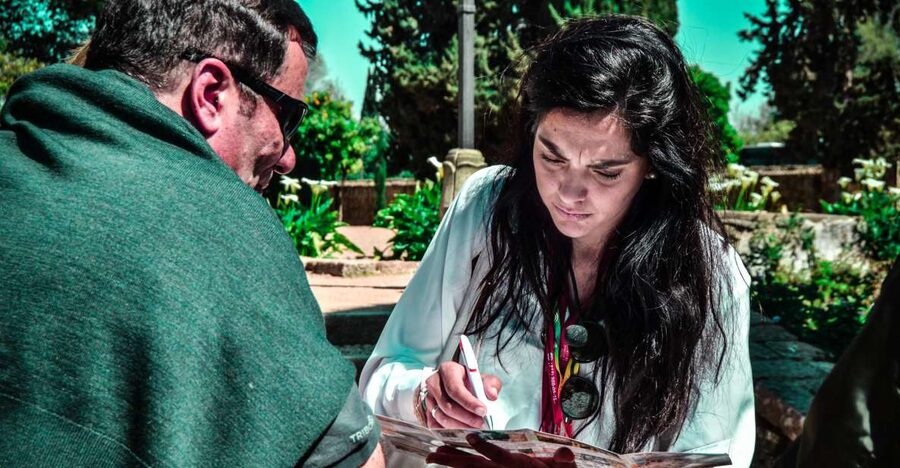
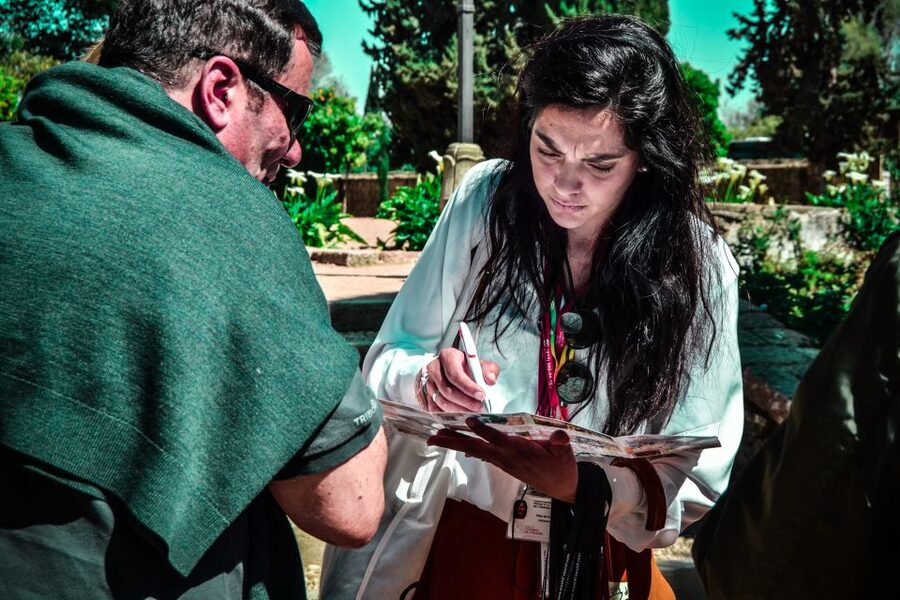
You may hear names in your group depending on who is leading that day, and past guides like Patricia and Raphaël have been praised for keeping explanations engaging for adults and younger listeners. That tells me the style here is not stiff. It’s the kind of guiding that aims to be clear, not just academic.
What you should do in return is simple: ask questions as you walk, especially at the stops where the guide mentions conversions, medicine, or the survival of buildings. Those topics invite curiosity, and you’ll get better payback when you interact.
Value and Timing: Is $34 Worth 2.5 Hours?
At $34 per person for a 2.5-hour guided experience, the value mostly comes from two things: entrance fees are included, and you get skip-the-ticket line. That combination matters in Cordoba because time spent queuing steals attention from what you came to see.
The second value factor is the focus. In two and a half hours, you are not just buying entries. You’re buying a curated walking route that ties the Jewish Quarter sights to the Alcazar complex without leaving you wandering for context.
One caution: the actual time can vary. Restoration access limitations can shorten or reshape the ending. And if gardens or certain areas are unavailable due to circumstances like weather, your guide may adjust the route inside the parts that remain open.
My practical advice is to book this tour as a solid core activity for one morning or early afternoon, not as the final item on a tight schedule where minutes matter.
Who Should Book This Tour (and Who Should Skip It)
This works best if you:
- Want a guided walk that makes the Jewish Quarter readable
- Like architecture that carries stories, not just views
- Prefer a guide who sticks to one language
- Are comfortable with stairs and uneven historic-site walking
It is not recommended for people with limited mobility, and it is also not suitable for back problems. The tour includes many stairs, and the Alcazar area can be physically demanding. Babies trolleys must be left at the entrance, and the tour does not include the towers.
If you fit the mobility profile, you’ll likely love the intensity-to-time ratio. You cover multiple high-impact stops without needing to plan them separately.
Should You Book This Tour?
Yes, I think you should book it if you want a guided, history-informed route through Cordoba’s Jewish Quarter that ends at the Alcazar in a way that still feels complete, even with restoration limits. The combination of skip-the-line access and entrance fees included makes it efficient, and the walking plan is designed to connect people, places, and architecture into one coherent experience.
Skip it if stairs are a problem for you, or if you specifically want a full tower-heavy Alcazar circuit. In that case, you’ll be happier choosing another option that matches your physical needs and your exact sight priorities.
If you do book, come wearing comfortable shoes, go in expecting restoration adjustments, and let the guide do the work of translating the city’s layers. That’s when this tour becomes more than a checklist. It becomes a real understanding of Cordoba.
FAQ
Where is the meeting point for the tour?
You meet at Puerta del Perdón, Mezquita Catedral, Calle Cardenal Herrero, 1. Look for the orange umbrella.
How long is the guided tour?
The tour is 2.5 hours.
What is included in the ticket price?
The tour includes a guided tour and entrance fees.
What parts of the Alcázar can you visit during restoration?
Because of restoration works, you can access the Alcázar Gardens and the Arab Baths of the Caliphal Alcázar, which are the areas open to the public.
What languages are available?
The live tour guide is available in English and Spanish.
Is the tour suitable for limited mobility?
No. The tour is not recommended for people with limited mobility because there are many stairs. It is also not suitable for people with back problems.
Recently reviewed around Cordoba
- The Jewel of the City, Mosque-Cathedral of Córdoba★ 4.0 · 7 reviews
- Walking Tour in Heritage center of Cordoba★ 5.0 · 10 reviews
- Exclusive visit to the Mosque with official guide. Small groups★ 5.0 · 7 reviews
- Private guided tour of the Alcazar de los Reyes Cristianos★ 5.0 · 6 reviews
- Private tourist route in Córdoba★ 4.5 · 12 reviews
- Visit Cathedral Mosque of Córdoba★ 4.5 · 4 reviews
- Tour to the Mosque-Cathedral of Córdoba with admission included★ 5.0 · 103 reviews
- Visit Cathedral Mosque with official guide. Small groups★ 4.5 · 16 reviews
Córdoba Day Trips, side by side.
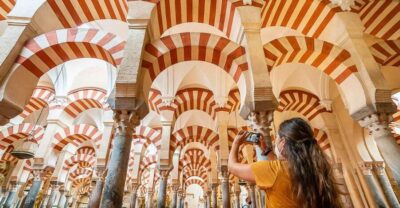
Skip-the-Ticket-Line Mosque-Cathedral Guided Tour
Read our review →
Cordoba Mosque-Cathedral: Skip-the-Line Guided Tour
Read our review →

Cordoba Mosque & Jewish Quarter Tour with Tickets
Read our review →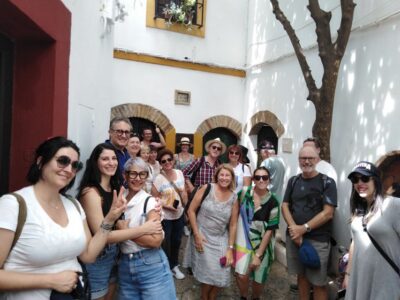
Also filed under