
Rated · HISTORICAL TOURS
History of Women of Seville Private Tour
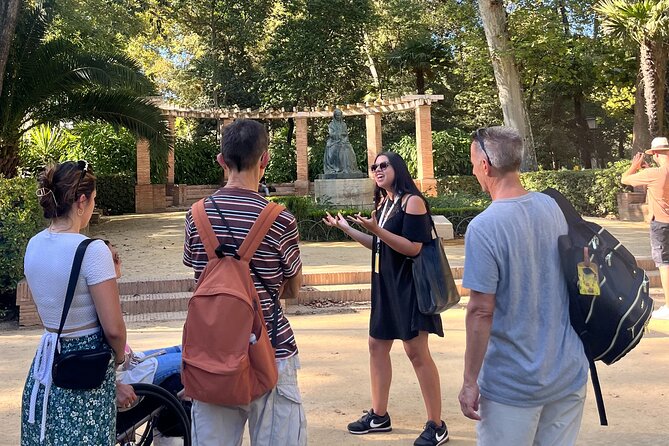
Seville has a talent for making you second-guess your direction. This private tour turns that confusion into a guided story route through the city center. I like that it is private, so you get a calmer, more personal pace, and I like that it is led by Alba, who tells women-centered history as a sequence of places you can actually find again later.
You will also appreciate the practical side: the route is designed to help you avoid getting lost in Seville’s narrow lanes. One thing to consider is that this is a 2-hour walking experience, so you will want to plan for comfort if you are sensitive to uneven sidewalks or frequent stops.
Key highlights you will feel on this tour
- A private, only-your-group format keeps the focus on the stories and your questions
- Alba’s storytelling style ties each stop to a clear historical origin
- Six women-focused landmark stops give you a real sense of where they were in Seville
- A first-time orientation that works even if you are not sure how the streets connect
- Wheelchair and stroller accessible, with service animals allowed
- English tour, mobile ticket, and all fees and taxes included
Why Women of Seville feels like the smarter first-time tour
What I like about this experience is the angle. Instead of doing Seville as a checklist of big monuments only, you learn the city through the lives, stories, and legacies of specific women tied to notable spots around the center. That changes how the streets feel. You stop noticing only the architecture and start noticing the people history is attached to.
The biggest win is the structure. You are not wandering and guessing. You start at a defined place, you move stop to stop, and you end at another clear endpoint. That kind of guided logic is especially valuable in Seville, where the streets can look similar after the first few turns.
And because it is a private tour, it stays flexible. If you want to slow down at a stop, ask about a name, or spend extra time connecting what you are hearing to what you are seeing, you have that control. This is the kind of format that makes history feel practical, not abstract.
A few more Seville tours worth comparing
- Sevilla Food Tour: Tapas, Wine, History & Traditions
★ 5.0 · 3,468 reviews - Ultimate Seville Tapas, Wine & History Small Group Tour
★ 5.0 · 1,766 reviews - Seville: Tapas, Taverns, and History Walking Tour
★ 4.9 · 676 reviews
Price and what you really get for $134.17 per person
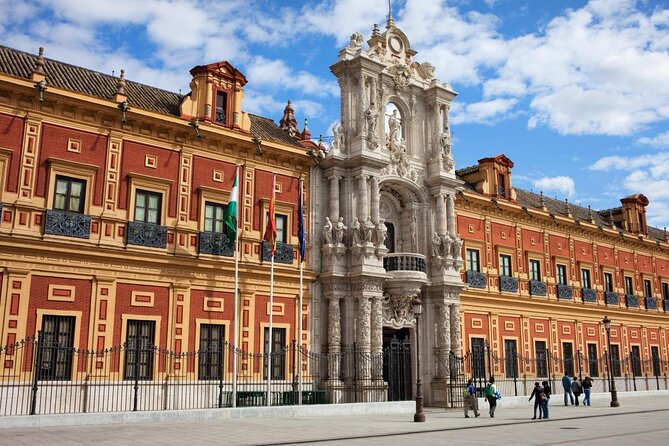
At $134.17 per person for about 2 hours, this is not a “cheap and cheerful” deal. But it is also not priced like a premium day of private car service, because the tour itself is the main value. You are paying for a private guide with a focused women-history narrative, organized around specific places.
Here is where the value comes from:
- It is private and only your group participates, so you are not competing with strangers for attention.
- All fees and taxes are included, which reduces surprise add-ons.
- It is guided in English, which matters if you want the story clearly and without effort.
- You get multiple landmark stops in a short window, which helps you compress what you need for orientation.
One caution on value: the tour does not include food or drink, and it does not include private transportation. So if you are building a full day, you will want to pair it with your own plans before or after.
Meeting points that help, not hassle: Plaza de la Pescadería to Catalina de Ribera
Good tours are easy to find. This one starts at Plaza de la pescaderia (Pl. Pescadería, 15, Casco Antiguo, 41004 Sevilla) and finishes on Paseo de Catalina de Ribera (P.º de Catalina de Ribera, Casco Antiguo, Sevilla). Having two real anchors matters because Seville is easiest when you can reorient yourself and then later trace your steps.
The meeting point is in the historic center, which is also why the tour works as a first introduction. You are positioned where the streets narrow and where you will likely be walking anyway during the rest of your stay. That means the tour is not just educational, it also helps you learn the basic “shape” of where things are.
It is also near public transportation, so if you are hopping between sights by tram or bus, you can fit this into your schedule without too much friction. If you rely on public transport, that is a real quality-of-life detail.
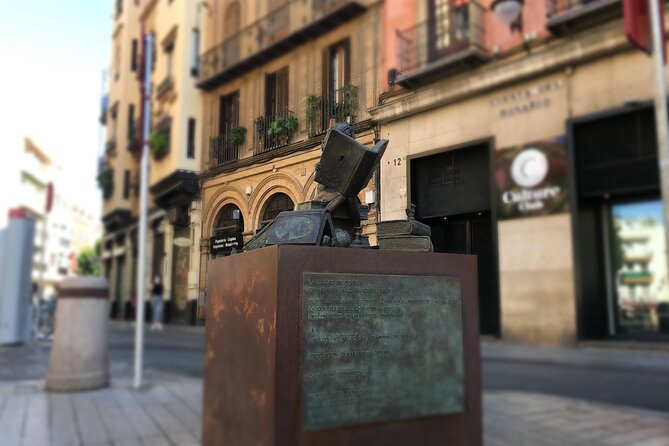
Stop 1: Clara Campoamor and the power of starting with one name
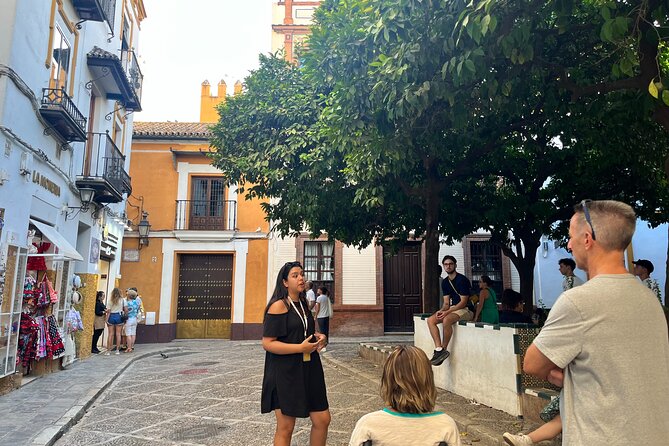
The tour begins at the achievement of Clara Campoamor. Starting with a single, clearly named point sets the tone. Instead of opening with a vague overview of Seville, you begin with a woman’s story placed in a specific location you can stand in and look at while you listen.
For your first time in Seville, this is a smart move. You get an immediate “now I’m in the right place” feeling. You also learn how the guide will work: you will hear a story, then connect it to the city itself.
Practical tip: arrive a few minutes early and take one quick look around at the surrounding street layout. When the guide starts turning you toward the next stop, you will be able to track how you are moving. That helps you avoid the classic Seville problem, where you realize too late that you are far from where you thought you were.
Still around Seville, a different sort of day:
- Seville: Live Flamenco Dancing Show Ticket at the Theater
★ 4.7 · 16,396 reviews - Seville: 1-Hour Guadalquivir River Sightseeing Eco Cruise
★ 4.2 · 10,281 reviews - Seville: Cathedral, Giralda, and Royal Alcázar Guided Tour
★ 4.7 · 9,165 reviews - Seville: Setas de Sevilla Entry Ticket
★ 4.6 · 8,901 reviews
Stop 2: María Dolores López, then keeping momentum through the next stories
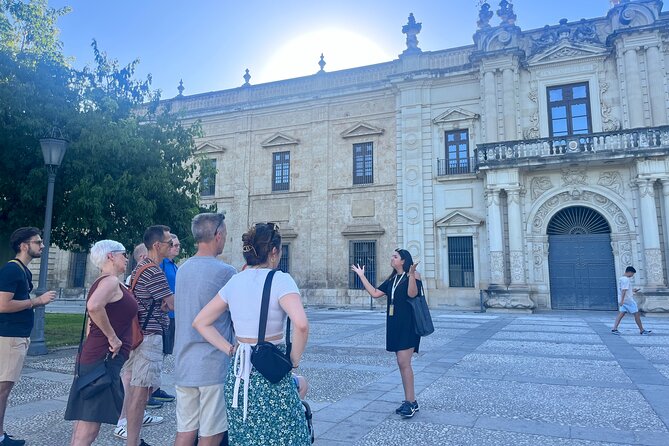
Next up is the story of María Dolores López. At this point, the tour should start feeling like more than a set of facts. You are building a chain of connections between people and place.
The most useful part of this stop is the pacing. In a guided walk like this, the guide’s job is to keep the story clear and keep you moving without rushing. When it works, you walk, listen, and absorb without feeling like you are being dragged from one corner to another.
Also, because it is private, you can follow the story at a steady pace that suits you. If something doesn’t click right away, you have a better chance to ask a question and get a clean explanation.
Stop 3: The legend of the two sisters, where story becomes place memory
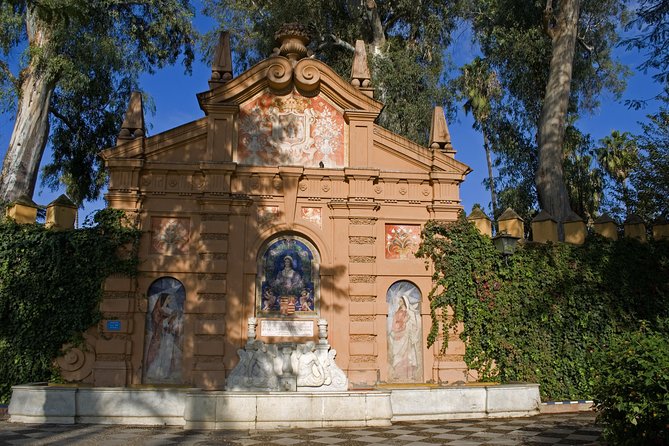
Then you hear the legend of the two sisters. Legends are often treated like entertainment only, but in a walking tour like this, they become a memory tool. The place helps you remember the story, and the story helps you remember the place.
This is one of the stops that can be especially enjoyable if you like the human side of history. It gives you a different flavor from the more formal sounding royal or monument-based moments. It also helps you break up the heavier themes with something more narrative.
In practical terms, legends are also easier to carry after the tour. You can recall the shapes of the streets and link them to the legend, even days later, which is the real goal of a first orientation walk.
Stop 4: Maria Luisa Fernanda de Borbón and Queen Isabel II, how royalty shows up in everyday streets
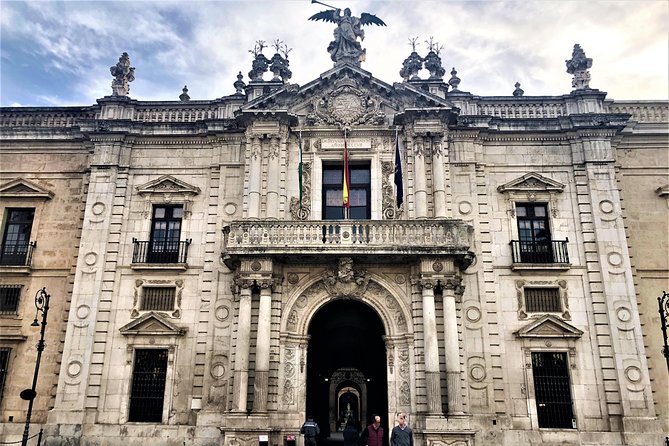
The next stop covers the life of Maria Luisa Fernanda de Borbón and her sister, Queen Isabel II. This is where the tour likely shifts from story and legend into more name-and-period explanation, because royal figures tend to anchor the timeline.
What you should watch for here is how the guide ties these women to Seville as a physical place. Even if you are not going deep into dates, you can still understand why the city references these names. That matters because Seville is full of memorials and attributions. Without guidance, it is easy to see names as labels. With guidance, they become a connected web.
If you are the type who likes to understand the “why” behind plaques and monuments, you’ll enjoy this stop. It is also a nice contrast after the legend, because you get a different kind of context and a different type of historical lens.
Stop 5: The life of the Cigarreras, learning the city through work
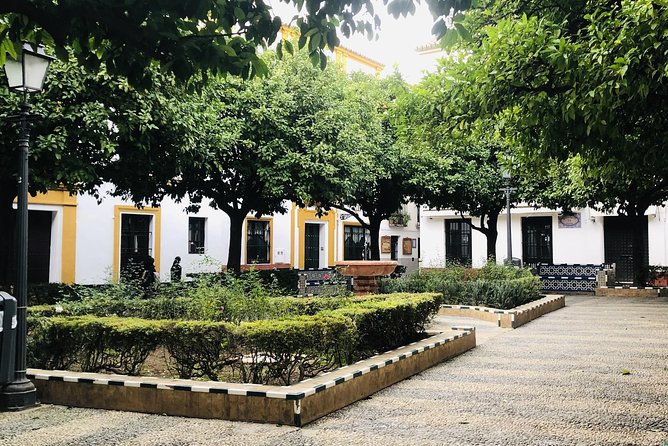
Then comes the life of the Cigarreras. This is a brilliant pivot. A women-focused tour can easily get stuck in politics and royalty only, but the Cigarreras angle pulls you toward lived roles and work connected to the city.
Even with limited time, this kind of stop helps you rebalance your mental map of Seville. You start to see the city as something made by people, not only by rulers and monumental decisions.
As you walk here, pay attention to how the guide frames the Cigarreras story. If it is done well, you come away with a clearer sense of what kind of women these names represent in Seville’s narrative, and how that narrative is tied to the streets you are standing on.
Stop 6: Catalina de Ribera and Queen Isabel I, finishing with strong anchors
The tour ends with monuments of Catalina de Ribera and Queen Isabel I, on Paseo de Catalina de Ribera. Ending with monuments is useful because it gives your last 15 to 20 minutes a sense of closure. You hear the stories, then you see the city’s way of memorializing them.
This endpoint also matters for planning the rest of your day. A proper finish makes it easier to continue on your own. You can head off to nearby sights without needing to retrace steps to find your bearings again.
If you like to take photos, this is when you will probably want to slow down and look around. Even if you are not a long exposure photographer, standing at the end point helps you anchor the whole story route in your head.
What Alba’s approach does for your understanding
Both example guide feedback points to the same strength: Alba’s storytelling sticks. The tour is described as ultra informative, with stories that keep attention while staying grounded in the historical origin facts that give each stop credibility.
That matters, because a tour about women’s history can sometimes become either too generalized or too purely chronological. The way this one is structured, you get both. You learn specific names, then you learn why those names belong to particular places. In other words, you are not just hearing, you are building a mental map.
It also sounds like the two hours stay engaging the whole time. That is not always easy in a short walk tour, especially when you have multiple named stops. Here, the tight structure seems to prevent the “half-listening while you check the next corner” problem.
Who should book this private women’s Seville tour
This fits best if you:
- Want a first-time orientation that also gives you an identity to remember Seville by
- Prefer a private format where you can ask questions and set the pace
- Like history told as stories linked to real locations
- Are traveling as a couple or small group and want a clear, compact route
It also makes sense if you have limited time and want a guided walk that helps you stop feeling lost. The focus on specific women and their associated landmarks gives you a strong theme to remember, instead of random sight hopping.
Should you book this tour of Women of Seville?
I would book it if you want Seville to feel personal and legible quickly. The price is fair for a private, English guided, two-hour walk that uses multiple landmark stops as your backbone, not just scenic wandering. If you like getting your bearings fast, this is a strong match.
Skip it if you only want the biggest, most famous single sights and you do not care about theme-based history. Since it is focused on named women and specific stops, it will be less satisfying if you want a broad, general tour of Seville’s highlights only.
If you are on the fence, think about what you struggle with more. If you get lost easily, this route logic helps. If you want stories that connect people to place, this is exactly the kind of thematic tour that pays off.
FAQ
How long is the Women of Seville private tour?
It is approximately 2 hours.
Is this tour private?
Yes. Only your group will participate.
What language is the tour offered in?
The tour is offered in English.
Where does the tour start and end?
It starts at Pl. Pescadería, 15, Casco Antiguo, 41004 Sevilla, Spain and ends at P.º de Catalina de Ribera, Casco Antiguo, Sevilla.
Is the tour wheelchair and stroller accessible?
Yes, it is listed as wheelchair and stroller accessible.
Are service animals allowed?
Yes, service animals are allowed.
Is food or drink included?
No. Food and drink are not included.
Is there free cancellation?
Yes. You can cancel up to 24 hours in advance for a full refund.
Recently reviewed around Seville
- The Villages of Andalusia: Full-Day Trip from Seville★ 4.8 · 19 reviews
- From Seville: White Villages Tour★ 5.0 · 9 reviews
- White Villages and Ronda: Day Trip from Seville★ 4.9 · 89 reviews
- White Villages & Ronda 2-Days Trip & Overnight Stay★ 4.6 · 5 reviews
- Seville: Guided visit of the Casa de Pilatos with entrance tickets★ 4.3 · 18 reviews
- Triana Market Tapas Tour★ 4.9 · 12 reviews
- Your Photo Story in Seville★ 5.0 · 16 reviews
- Transfer Hotel Seville-Seville Airport★ 4.5 · 15 reviews
Historical Tours, side by side.
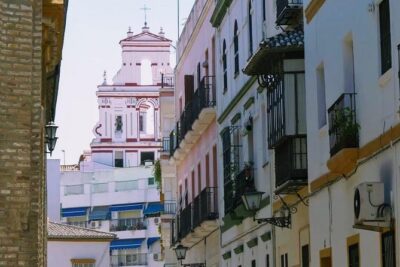
Sevilla Food Tour: Tapas, Wine, History & Traditions
Read our review →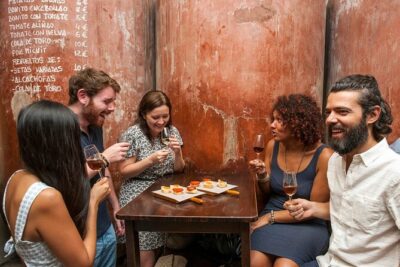
Ultimate Seville Tapas, Wine & History Small Group Tour
Read our review →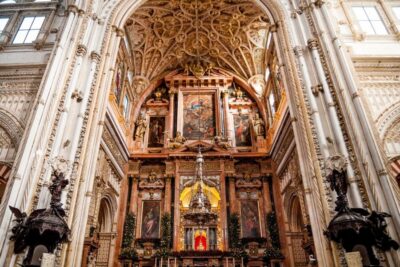
Skip-the-Line Great Mosque-Cathedral History Tour
Read our review →
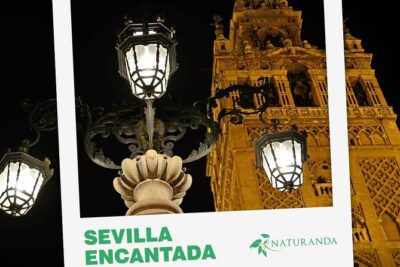
Seville Evening Historical Tour with Haunted History
Read our review →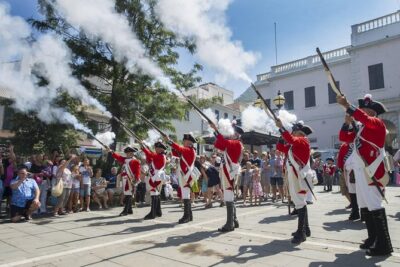
Historic Gibraltar Rock and St Michael’s Cave Tour from Seville
Read our review →
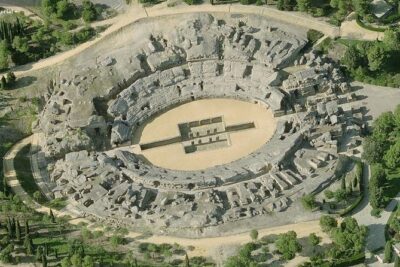
Historical Italica: Half-Day Guided Tour from Seville
Read our review →Also filed under