
Rated · WALKING TOURS
Off the Beaten Path: Seville Urban Walking Tour
This Seville walk stands out because it blends famous sights with quieter streets in areas like Macarena and Alameda, so you get a feel for the city beyond the postcard view. It’s also run as a small-group outing (max 8), which keeps the pace human and lets you ask real questions.
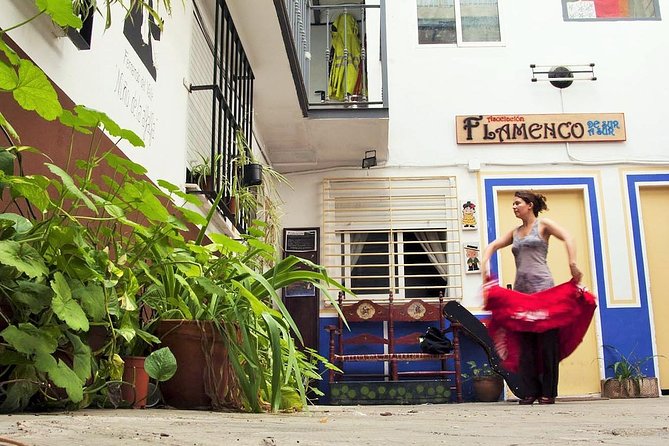
I really like how the guide uses everyday details to connect the big monuments to daily life. In one group, the guide Abby was praised for steering people into places like an olive shop, a flower market, and even a cloistered convent where a nun opened a metal door for the group. In another, Esther impressed with a more craft-focused approach, bringing people toward artists and artisans you might not find on your own.
One thing to consider: this is a moving walk with short stops. Most sights are quick looks, and some entries are optional, so it is not the tour for you if you want long, slow time inside major buildings.
Key highlights worth planning around
- Small group (up to 8) keeps it personal and makes it easier to pause for questions.
- Macarena and Alameda time gives you a side of Seville that feels more like neighborhoods than a checklist.
- Free “ticket-free” stops listed throughout means you can focus on seeing, not budgeting for admissions during the walk.
- Santa Cruz gets extra time (about 20 minutes) for wandering narrow lanes and courtyards.
- A included drink plus a visit to Seville’s oldest market adds real-life rhythm to the tour.
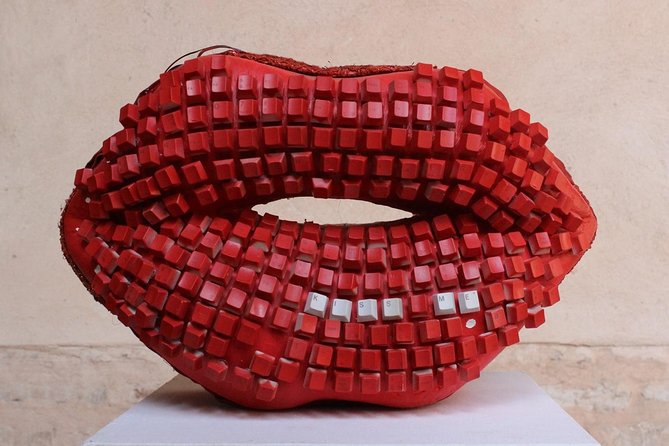
- Art stops range from street art to galleries, which pairs well with learning what the neighborhoods value.
Why This Seville Walk Feels Like Seeing the City, Not Just Touring It
If you only do the biggest sights, Seville can start to feel like a set of stand-alone monuments. This tour helps stitch them together. You start in the historic center, then you keep moving until the route naturally links cathedral views, Jewish-quarter streets, river views, and the newer neighborhood energy of Macarena and Alameda.
What makes that connection work is the guide style. This is not a “read-this-plaque” kind of experience. You get the kind of explanations that make you notice what is in front of you: why the architecture looks the way it does, what certain spaces were used for, and how everyday shops and institutions shaped the neighborhood.
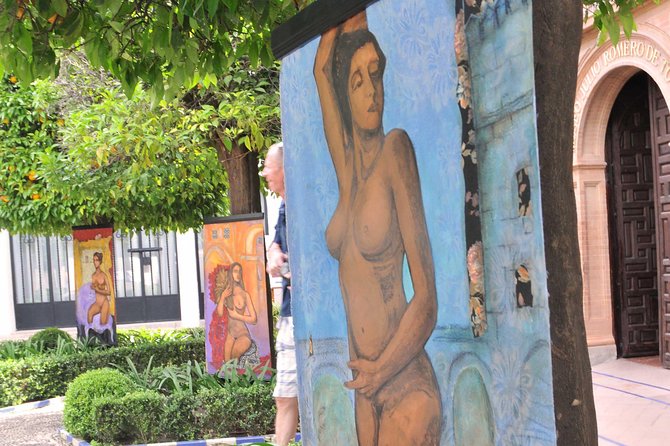
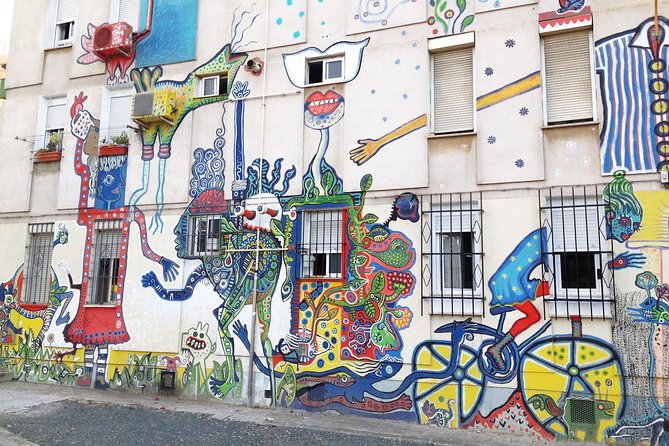
You’ll also get art along the way, from street scenes to galleries. I like that approach because Seville’s creativity is not only in museums. It shows up on facades, in workshops, and in the way people use public space.
More walking tours in Seville:
- Seville: Small-Group City Highlights Walking Tour
★ 5.0 · 1,204 reviews - Cultural Walking Tour of Seville Monumental
★ 5.0 · 861 reviews - Seville: Tapas, Taverns, and History Walking Tour
★ 4.9 · 676 reviews
Price and Value: Does $118.95 Make Sense?
At $118.95 per person for about 2 hours, the price feels fair when you factor in three practical things that you actually use.
First, you’re paying for a real local guide. The route includes more than famous landmarks, it includes interpretation, and that takes effort to do well. Second, the tour includes a visit to Seville’s oldest market and an included drink (water, soft drink, beer, or coffee). Those two items cut down the extra spending you usually do on a short walking day. Third, you get an information sheet with insider tips, which matters because it helps you keep exploring after the tour ends back where you started.
If you’re comparing this to a self-guided day, the difference is time and confidence. You avoid the “What do I do with my feet?” problem. Instead of bouncing between scattered stops, you follow a route designed to make sense when you’re on foot.
Meeting at Alameda de Hércules at 10:00: What Your Morning Should Feel Like
This starts at 10:00 am and ends back at the meeting point. You meet at Alameda de Hércules, 21, Casco Antiguo, 41002 Sevilla. That matters because it gives you a clean beginning, and you’re done early enough to keep the day flexible.
Expect a moderate amount of walking, and wear comfortable shoes. Seville is full of uneven pavement and little turns that add up. Also, some areas may be closed depending on the day and time, so morning tours are a smart bet. The guidance here is to aim for mornings Mon-Sat when you can.
One more practical note: the tour uses mobile tickets, so you’ll want your phone charged. Social distancing is practiced as best possible, and masks and gloves may be worn by guides and drivers with sanitiser available.
Stop-by-Stop: From Plaza Nueva to the Streets of Triana
This tour is structured as a set of short sight stops, with one longer wander. The best way to enjoy it is to treat many of the stops as orientation moments. You are learning what to look for, not trying to “finish” each landmark like it’s a standalone museum day.
Still around Seville, a different sort of day:
- Seville: Live Flamenco Dancing Show Ticket at the Theater
★ 4.7 · 16,396 reviews - Seville: 1-Hour Guadalquivir River Sightseeing Eco Cruise
★ 4.2 · 10,281 reviews - Seville: Cathedral, Giralda, and Royal Alcázar Guided Tour
★ 4.7 · 9,165 reviews - Seville: Setas de Sevilla Entry Ticket
★ 4.6 · 8,901 reviews
Stop 1 and 2: Plaza Nueva, then Catedral de Sevilla and Giralda energy
You begin at Plaza Nueva, where you get oriented right away. This is one of those starting points that lets the guide steer you into the right rhythm for the rest of the walk.
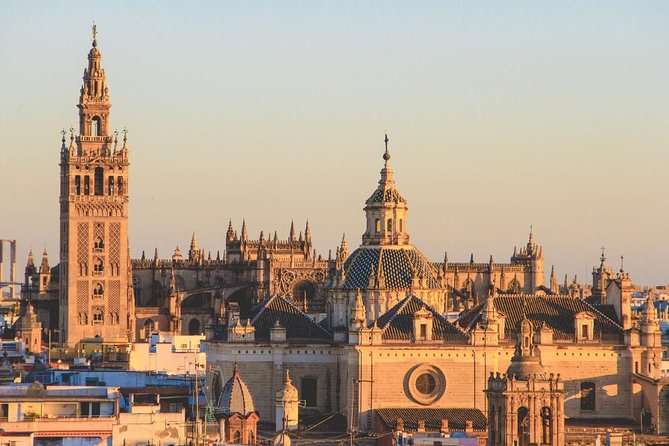
Next is Catedral de Sevilla, described as the largest Gothic cathedral in the world and a UNESCO World Heritage site. Even if you’ve seen cathedral photos, you’ll still want to look closely here. The tour highlights the magnificent altarpiece and the tomb of Christopher Columbus. There’s also the Giralda tower angle, which you should use as your mental anchor, because Seville’s skyline is the reward once you start thinking in silhouettes.
Quick tip: the cathedral area can feel busy, so listen for what your guide tells you to notice. That turns the crowd into context.
Stop 3 and 4: Ayuntamiento de Sevilla and the choice to go up La Giralda
From there, you hit Ayuntamiento de Sevilla (optional). The focus is on Renaissance architecture and the intricate Plateresque façade, plus the idea that Seville’s civic identity lives in the heart of the historic center.
Then comes La Giralda (optional). The tour frames it as a landmark that blends Moorish and Gothic influences. If you opt to ascend, you’ll do it via gentle ramps for panoramic views. If you skip it, you still get the big “why it matters” explanation, you just miss the skyline payoff.
Consideration: optional stops depend on time and what is open. If you really want the views, pick this choice early in the tour rather than hoping later.
Stop 5: Santa Cruz for wandering, courtyards, and narrow lanes
Santa Cruz is the longer stop, about 20 minutes. This is the former Jewish quarter, and you’ll walk through the narrow streets, hidden courtyards, and lively plazas described as quintessential Andalusian charm.
This is where the tour earns its off-the-beaten-path promise. Santa Cruz is popular, but it still rewards slow looking. When you have even a short chunk of time, you can notice details like how buildings wrap around small courtyards and how street corners create little viewpoints.
If you only have a strict schedule in Seville, this is a stop worth treating as your “slow down” moment.
Stop 6: Archivo de Indias, the colonial documents stop
Next is the Archivo de Indias, set in a Renaissance building and noted as a UNESCO World Heritage site. This stop is about colonial administration and exploration, using documents as the storytelling device.
Even if you do not read the documents themselves, I like this kind of stop because it forces a different lens. Seville was not only a beauty contest, it was an administration center for global systems. This is the kind of context that makes later architecture and artifacts feel less random.
Stop 7 and 8: The Royal Tobacco Factory and the Royal Alcázar complex
Stop 7 is the Royal Tobacco Factory of Seville, described as a monumental 18th-century building and once Europe’s first tobacco factory. It is also connected to the opera Carmen, which gives you a pop-culture anchor as you look at old industrial architecture.
Then comes Stop 8, the Royal Alcázar of Seville. The tour frames it as a palace complex that blends Moorish, Gothic, Renaissance, and Baroque styles. You’ll be guided to look at lush gardens, intricate tilework, and ornate halls. It’s described as one of Spain’s oldest royal residences still in use today, which matters because it is not just preserved for show.
Practical note: when you are on foot for two hours, you can’t treat Alcázar like a full-ticket day. Use this stop to identify what you want to return to later.
Stop 9 and 10: Palacio de San Telmo (optional) and the bullring museum angle
You may visit Palacio de San Telmo (optional). The description focuses on Baroque style, statues and carvings on the façade, and the idea that it served as a royal residence and a naval academy.
Then you reach Plaza de Toros de la Real Maestranza de Caballería de Sevilla (optional). This stop is about bullfighting tradition. The tour includes a museum angle, with emphasis on the art of bullfighting and the matadors who made names for themselves there.
If bullfighting is not your thing, you can still take the cultural context. Seville is not shy about its traditions, and these buildings are part of how that tradition is built into daily life.
Stop 11: Antigua Fábrica de Tabacos, now tied to academia
There is also an Antigua Fábrica de Tabacos stop, with details repeating the idea of the tobacco factory’s former role as Europe’s first. The tour notes the building is now part of the University of Seville and points you to courtyards and industrial architecture.
This is a useful reinforcement stop. You’ll spot the way the same building can be read as industry, romance, and modern education, depending on who is telling the story.
Stop 12 to 13: Plaza de España, then Parque de María Luisa
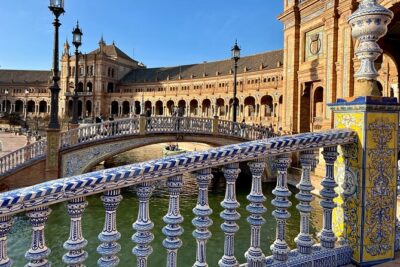
Stop 12 is Plaza de España. The description is specific: it was built for the 1929 Ibero-American Exposition, and you’ll see the semi-circular main building, ornate bridges, and colorful tilework. Walk along the canal and enjoy the scale as part of the lesson.
Stop 13 is Parque de María Luisa (optional). This is Seville’s green escape, with landscaped gardens, ponds, and charming pavilions. If you have heat in your day, a short park stop can help your energy levels.
Stop 14 to 17: Triana Bridge, Torre del Oro, and quieter back streets
Now you shift toward the river. Stop 14 is the Triana Bridge, also called Isabel II Bridge. It is described as a historic iron bridge with views of the Guadalquivir River, connecting to the Triana district.
Stop 15 is the Torre del Oro (Golden Tower), a 13th-century Moorish watchtower. The tour frames it as a former defense gateway with a maritime museum focus and potential panoramic views from the top.
Stop 16 is Plaza de la Alianza (optional). This is aimed at quieter atmosphere, traditional buildings, and a slower moment inside the historic center. It’s the kind of stop that helps you reset your senses.
Finally, stop 17 is Calle Agua. You’ll stroll a picturesque street in the historic district with traditional Andalusian architecture, plus chances to notice small shops and local eateries.
This last stretch is where the tour’s “off the beaten path” promise starts to feel earned. You end not just at a monument, but on streets that make Seville feel like a place where people live, shop, and chat.
The Guide Factor: How Abby and Esther Change the Day
The biggest difference between a good walking tour and a great one is what the guide makes you notice. In the praised experiences tied to guides like Abby and Esther, the common thread is human scale.
Abby was noted for being personable and respectful, with detours into everyday places like an olive store and a flower market. That kind of stop does not just add variety, it teaches you how Seville’s culture is practiced, not only displayed.
Esther was praised for a personalized approach, and for helping people interact with artists and artisans. Even when you only spend minutes in each spot, that interaction changes the way you remember the city. You stop seeing buildings as backdrops and start seeing them as part of a working culture.
What You’ll Get That Self-Guided Walking Often Misses
A self-guided day can absolutely work in Seville. But you usually lose two things.
You lose the “why this matters” context, especially around institutions like the Archivo de Indias and the tobacco factory. And you lose the local pacing, the gentle route design that keeps you from zigzagging across the city with tired legs.
Also, the included drink and market stop are small, but they do practical work. They give you a break and a reason to linger. And that is often when you spot street art, galleries, and side streets that you might otherwise pass without noticing.
Should You Book This Off-the-Beaten-Path Seville Urban Walking Tour?
I think this tour is a strong pick if you want an efficient, guided way to see Seville’s “layers” in one morning. It’s especially good for first-time visitors who want the big landmarks but also crave the feeling of neighborhoods like Macarena and Alameda.
Book it if you like:
- learning how architecture and history connect to everyday life
- short guided stops paired with a bit of wandering time
- small groups and a guide who adapts and chats
Skip it if you:
- want long time inside major interiors
- prefer a free-form itinerary with no optional choices
- dislike walking and standing for quick viewing
FAQ
How long is the off-the-beaten-path Seville urban walking tour?
It runs for about 2 hours.
What time does the tour start?
The start time is 10:00 am.
Where do I meet the guide?
You meet at Alameda de Hércules, 21, Casco Antiguo, 41002 Sevilla, Spain.
How big is the group?
This tour has a maximum of 8 travelers.
Is the tour offered in English?
Yes, it is offered in English.
What is included in the price?
Included are a local guide, a visit to the oldest market in Seville, a drink (water, soft drink, beer, or coffee), and an information sheet with insider’s tips.
Are there any optional stops?
Yes. Stops marked optional include Ayuntamiento de Sevilla, exploring La Giralda, Palacio de San Telmo, the bullring museum, Parque de María Luisa, and some quieter squares and viewpoints.
How much walking is involved?
There is a moderate amount of walking, so comfortable walking shoes are recommended.
What is the cancellation policy if plans change?
You can cancel for a full refund up to 24 hours in advance. If it is canceled due to poor weather, you are offered a different date or a full refund.
Recently reviewed around Seville
- The Villages of Andalusia: Full-Day Trip from Seville★ 4.8 · 19 reviews
- From Seville: White Villages Tour★ 5.0 · 9 reviews
- White Villages and Ronda: Day Trip from Seville★ 4.9 · 89 reviews
- White Villages & Ronda 2-Days Trip & Overnight Stay★ 4.6 · 5 reviews
- Seville: Guided visit of the Casa de Pilatos with entrance tickets★ 4.3 · 18 reviews
- Triana Market Tapas Tour★ 4.9 · 12 reviews
- Your Photo Story in Seville★ 5.0 · 16 reviews
- Transfer Hotel Seville-Seville Airport★ 4.5 · 15 reviews
Walking Tours, side by side.
Walking Tour through Cádiz: Stories from the hand of a local guide
Read our review →
Small-Group Jewish Quarter Discovery Walking Tour
Read our review →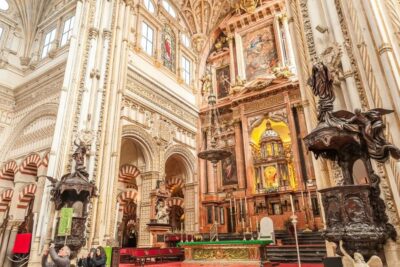
Also filed under