Rated · PRIVATE
Private tour of Seville highlights
Seville’s top landmarks are packed close together, but the difference here is the story you get while you’re walking. This 2-hour private tour keeps you moving through key squares and monuments and helps you spot what matters, like Moorish-to-Christian design changes and New World connections that are easy to miss on your own. I especially liked the Alcázar and Cathedral exterior details you can actually notice, and the Archivo General de Indias context that turns a building into a whole era.
You’ll have a private guide for a group of up to 15, with pickup available so you’re not hunting meeting points on day one. Just know it’s an exterior route, so monument entry is not included, and you may need to plan separate tickets if you want interior time.
The guides can make the whole thing feel effortless. The tour is operated by Beatriz Pérez García, and I’ve also seen standout feedback for Juan, which tells me you’re likely to get someone who enjoys explaining the city.
Key takeaways before you go
- Private group size (up to 15), so your guide can actually talk to you, not just your whole crowd
- Exterior-first route that still teaches you what to look for at each stop
- Archivo General de Indias scale, with documents stored across 9 kilometers of shelves
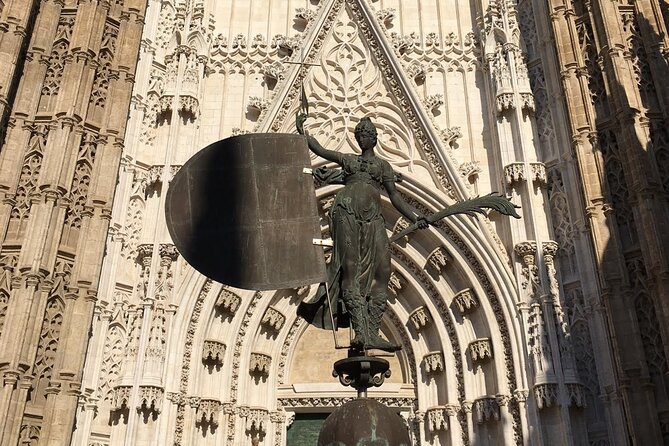
- Giralda and Puerta del Perdón details, including the pregnant-woman weather vane and key-and-sword saints
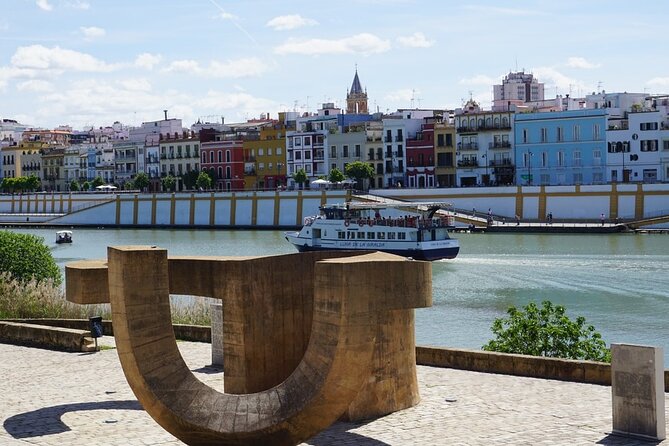
- Guadalquivir River focus, from Betis Street reflections to Triana in the distance
- Plaza de España design, with 48 province benches and a lake that makes the stroll feel playful
A 2-hour Seville sampler with pickup and a private guide
This tour is built for getting your bearings fast. In about two hours, you’ll see Seville’s headline sights in a tight loop, with just enough time at each place to orient yourself and understand how the city connects.
Pickup is offered, and the guide will wait for you in the hotel lobby. The meeting point is Plaza del Triunfo, and the tour ends at Plaza de España. That matters because you’re not stuck backtracking through the same streets just to finish.
The price is $85.19 per person for the guided experience. That’s a fair setup for a private guide, especially since it’s capped at 15 people, but remember what that price includes: interpretation and walking time. It does not automatically include museum or monument entry.
A few more Seville tours worth comparing
- Seville: Private City Tour by Eco Tuk Tuk
★ 4.8 · 963 reviews - Tour Welcome Seville with Local Guide in Eco Tuk Tuk Private
★ 5.0 · 786 reviews - Private Seville Tapas & History Tour
★ 5.0 · 380 reviews
Plaza del Triunfo: the square where Seville’s big landmarks cluster
Your first stop is Plaza del Triunfo, a square famous for being a front-row seat to several major monuments. From here you can admire the Alcázar, the Seville Cathedral, and the Archive of the Indies all in the same general area. That’s a big deal for first-time visitors because you start to see the “map” of the city without needing to study it.
There’s also a cultural detail worth knowing: on December 8, the tunos from the University of Seville sing to the Immaculate Virgin. If you happen to visit near that time, you may catch the spirit of Seville’s student traditions, tied to one of the city’s most recognizable squares.
Even though admission isn’t the point here, the square sets up your mental checklist. If you go to later stops without this orientation, you might recognize buildings by shape, but you’ll miss why they matter.
Archivo General de Indias: why 9 kilometers of shelves is a wow moment
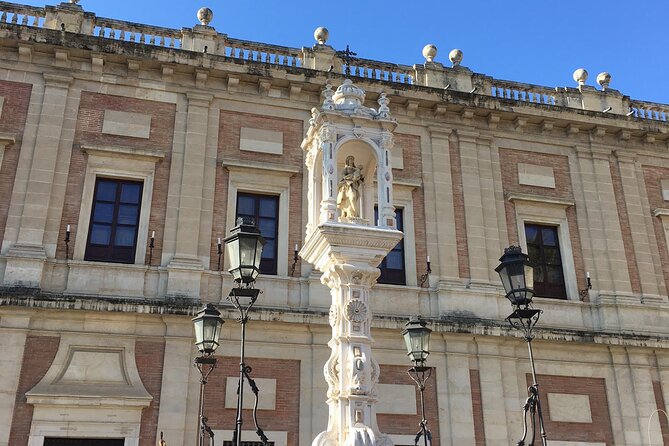
Next up is the Archivo General de Indias. This is the building that holds documents tied to Spain’s conquest and administration of the New World, including cartographic maps and navigation records. It’s one of those places where the scale of storage is the story.
The key detail I’d keep in your head is this: the information is organized across 9 kilometers of shelves. Even if you can’t tour inside on this route, that number gives you a clear sense of how seriously Spain documented its overseas projects. You’re not just looking at a stately facade. You’re looking at infrastructure for power, travel, and control.
Entrance is not included, so if you want to go in, you’ll need to plan for that separately. The exterior stop still works well because your guide can explain what the archive means before you ever see its interior.
Seville Cathedral exterior cues: the Giralda and Puerta del Perdón
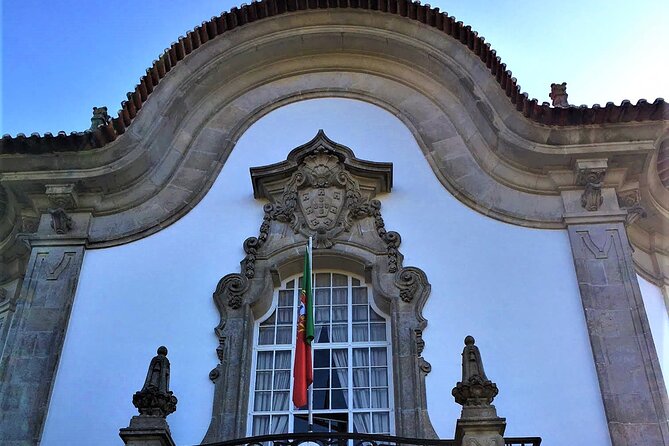
The walk continues to the Catedral de Sevilla, an old mosque site transformed into a Christian cathedral. That layered origin is not just a footnote. It helps you read the building like a timeline.
Here’s what to focus on around the exterior:
- The Giralda tower, with the famous weather vane on top shaped like a pregnant woman, representing good hope.
- The Puerta del Perdón, with figures flanking the entrance, including Saint Peter with the keys and Saint Paul with the sword.
Entrance is not included on this route, but you can still enjoy the architectural symbolism. If you’re the kind of person who likes details, this portion will feel satisfying because you’ll know what you’re looking at instead of just taking photos.
A drawback to keep in mind: because the tour is mostly outside, you won’t get the full effect of the cathedral interior or the Alcázar interiors during the allotted time.
Still around Seville, a different sort of day:
- Seville: Live Flamenco Dancing Show Ticket at the Theater
★ 4.7 · 16,396 reviews - Seville: 1-Hour Guadalquivir River Sightseeing Eco Cruise
★ 4.2 · 10,281 reviews - Seville: Cathedral, Giralda, and Royal Alcázar Guided Tour
★ 4.7 · 9,165 reviews - Seville: Setas de Sevilla Entry Ticket
★ 4.6 · 8,901 reviews
Real Alcázar and Plaza del Cabildo: power, beauty, and weekend markets
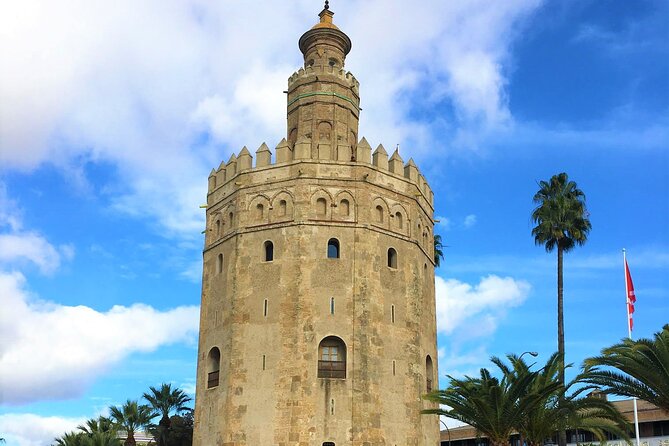
The Real Alcázar de Sevilla is next, built by Muslims in the 10th century. Today, it’s still tied to royalty, since Spanish kings stay there when they are in Seville. That continuity is part of what makes the place feel alive, even if you only view it from the outside here.
Even without entry, you’ll understand why people treat it as more than a pretty palace. It’s a symbol of how Seville’s rulers shaped the city over centuries, leaving behind a visual language that still reads as elegant and intentional.
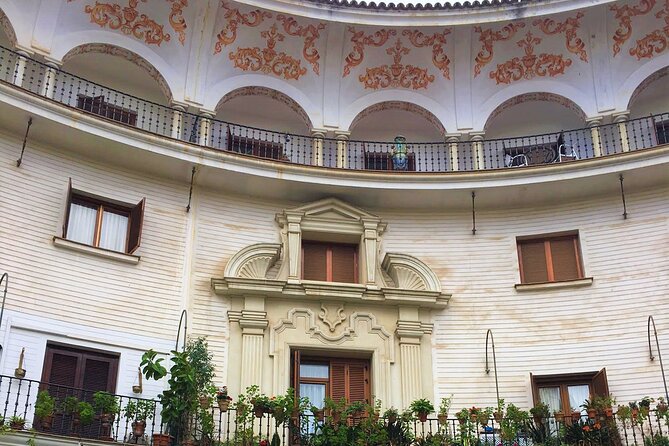
After that comes Plaza del Cabildo, right in front of the cathedral area. This is where Seville shifts into “small pleasures.” You’ll see the balconies with geraniums, and you also get a very local detail: every Sunday there’s a market for antiques, coins, and stamps.
Admission is free for this stop, so it’s a good moment to slow down. If you want to stretch your legs and get a feeling for everyday Seville, this is one of the better breaks on the route.
The Guadalquivir stroll: Betis Street reflections and Triana’s distance
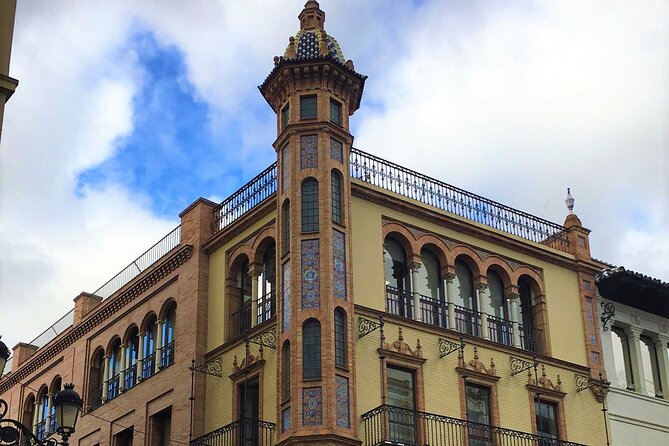
Then you move along the Guadalquivir River. Even if you’ve seen rivers in lots of cities, this one is special because Seville treats it like a scenic stage.
Your guide points out Betis Street, famous for colorful houses reflected in the water. You’ll also get the view back toward Triana, described as the birthplace of flamenco. That matters because Triana is more than a neighborhood name. It’s a cultural identity, and seeing it in the distance gives context to the flamenco story.
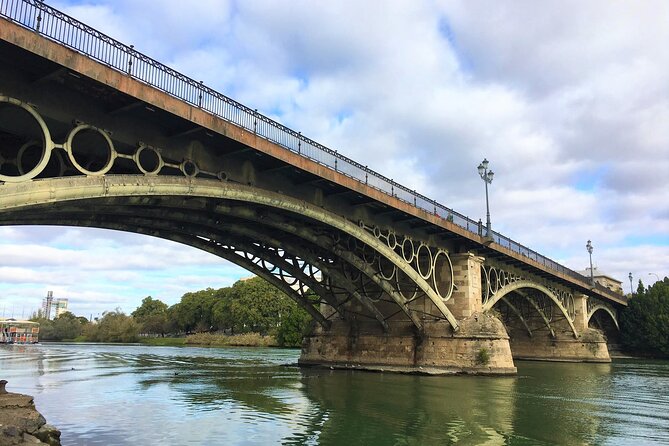
You’ll also notice the Isabel II Bridge, which was built on an older boat bridge. That detail is easy to miss if you just pass by, but it’s the kind of connection that helps you understand Seville as a place where the river shaped the city physically and economically.
This part is free, and it works especially well if your feet start to feel tired from earlier stops. It’s not a long hike, but it changes the tempo and gives you views that feel more open than the cathedral area.
San Telmo, Hotel Alfonso XIII, and Tabacos: big buildings with specific stories
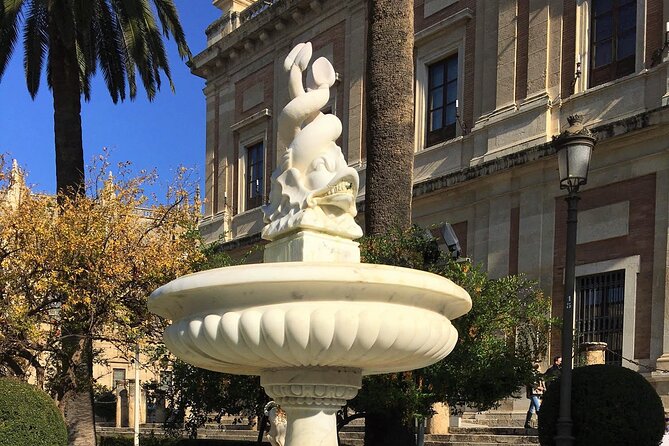
As you continue, you’ll see three impressive stops that are more about character and function than postcard shots.
First is Palacio de San Telmo, a huge palace today used as the headquarters of the government of Andalusia. The exterior is baroque and the guide will point out the patron saint of sailors, San Telmo, shown with a small boat. Even from the outside, it’s a reminder that power often comes with big stone and symbolic decoration.
Next comes Hotel Alfonso XIII, a luxury property that is one of Seville’s most emblematic hotels. There’s an interesting historical note: it was used during the Exhibition of 1929 so visiting personalities would have a place to stay. This gives the building a “period setting” feel, like it’s part of Seville’s modern identity as much as its old one.
Then the route reaches Real Fábrica de Tabacos. This is the former tobacco factory where tobacco from the New World arrived in bales, was manufactured, and later used for smoking. It’s also tied to the opera world, described here as the setting for Carmen, noted as the first feminist opera in history.
These last three stops have something in common: they are all major buildings, and the tour teaches you how to read them as institutions, not just walls. The tradeoff is the same as the rest of the route: no monument entry is included, so you’re relying on exterior observation plus your guide’s explanations.
Plaza de España: the “lake square” with 48 provinces and easy strolling
You finish at Plaza de España, located in María Luisa Park. This is the kind of place where Seville turns scenic and playful at the same time, thanks to the circular design and the water.
What makes it work for a highlights tour is how designed it is. There’s a lake around the square, and four bridges connect across it. Those bridges symbolize the ancient kingdoms in the time of the Catholic Monarchs. Even if you don’t memorize the symbolism, the layout helps you understand Seville’s obsession with order and representation.
Look for the details: there are 48 benches, each representing 48 provinces of Spain. It’s a built-in storytelling device you can actually see while you walk. If you’re traveling with kids, the design even invites little boat rides around the lake area, which the tour information points out as ideal for a family stroll.
Since entry is free at this stop, you get a satisfying ending without the stress of tickets or timed entry lines.
Price and logistics: is $85.19 worth it?
At $85.19 per person for about two hours, this is priced like a private experience, not a budget group bus tour. The best value comes if you want interpretation and orientation more than you want timed museum access.
Your guide’s work matters here. The reviews highlight that guides like Juan and Beatriz can make the monuments feel understandable and interesting, not intimidating. That kind of “what you’re seeing and why it matters” is exactly what you’re paying for.
The main consideration is entrances. The route is exterior, and admission is not included for most of the big interiors like the Archive, the Cathedral, and the Alcázar. If you’re planning to go inside anyway, you’ll get extra value from the tour because you’ll know what you’re hunting for when you buy tickets later.
One more logistics note: audio guides can be required in groups of more than 7 people, at €1.00 per person. If you’re booking with a larger group, ask how audio will be handled so there are no surprises.
Should you book this private Seville highlights tour?
Book it if you’re a first-timer who wants the big sights organized in your head, fast. It’s also a great fit if you like architecture details and symbolic cues, since the tour explicitly flags features like the Giralda weather vane and Puerta del Perdón figures.
Skip or rethink it if you mainly want interior time at the Cathedral, Alcázar, or the Archive. This tour is built to give the outside story and the walking context, so you’ll still need separate plans for entry.
If your goal is Seville clarity plus a guided path from Plaza del Triunfo to Plaza de España, this private format is a strong way to do it.
FAQ
How long is the Seville highlights private tour?
It lasts about 2 hours.
What does the tour cost?
The price is $85.19 per person.
Is this tour private?
Yes. It’s private, and your group is the only group participating, with a guide for a group that does not exceed 15 people.
Does the tour include monument entrances?
No. It is an exterior route and does not include entrance to monuments.
Where does the tour start and end?
It starts at Plaza del Triunfo (Pl. del Triunfo, Casco Antiguo, 41004 Sevilla) and ends at Plaza de España (Av. Isabel la Católica, 41004 Sevilla).
Is pickup included?
Pickup is offered. The guide will wait for you in the hotel lobby.
Recently reviewed around Seville
- The Villages of Andalusia: Full-Day Trip from Seville★ 4.8 · 19 reviews
- From Seville: White Villages Tour★ 5.0 · 9 reviews
- White Villages and Ronda: Day Trip from Seville★ 4.9 · 89 reviews
- White Villages & Ronda 2-Days Trip & Overnight Stay★ 4.6 · 5 reviews
- Seville: Guided visit of the Casa de Pilatos with entrance tickets★ 4.3 · 18 reviews
- Triana Market Tapas Tour★ 4.9 · 12 reviews
- Your Photo Story in Seville★ 5.0 · 16 reviews
- Transfer Hotel Seville-Seville Airport★ 4.5 · 15 reviews
Private, side by side.


Tour Welcome Seville with Local Guide in Eco Tuk Tuk Private
Read our review →
Seville Private Walking Tour with Alcazar & Cathedral Tickets
Read our review →
Private White Villages & Ronda Day Tour from Seville
Read our review →
Private Visit Mosque-Cathedral, Jewish quarter, Alcazar and Synagogue
Read our review →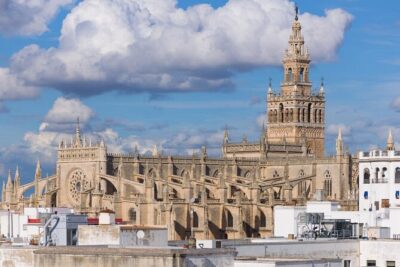
Private Walking Tour Alcazar and Cathedral in Sevilla
Read our review →