Rated · GUIDED
Seville Bullring: Guided Tour with Direct Entry
Seville’s bullring is one of those places that feels bigger than it should, even before you step through the doors. I like the direct entry angle because it gets you inside faster, and I like the guided story because you’re not just staring at an arena, you’re learning how it all works. One thing to consider: the tour is short, and the English can be hit or miss at certain moments, so it helps to stay close to the guide and listen for the audio.
On the inside, you get a guided walkthrough of the Plaza de Toros de la Real Maestranza de Caballería de Sevilla, plus museum rooms and a walk in the ring itself. The guide’s narration includes vivid details like the Prince’s Gate, the chapel space, and the tense courtyard moments bullfighters and crews face before stepping out. If bullfighting makes you uncomfortable, you can still get value here by focusing on history and design, not on cheering.
Key things to know before you go
- Direct entry into the Plaza de Toros saves time versus trying to figure things out on arrival
- Radio support helps you hear the guide clearly over other visitors
- You’ll walk corridors, museum rooms, and the ring area in about an hour
- The route hits the key architectural moments like the Prince’s Gate
- Small group size (up to 19) makes it easier to follow and ask questions
- Heat can be a factor in some interior rooms without air-conditioning
Seville’s Real Maestranza: an arena still part of the city
This is not a “dead” monument you only see from the outside. The Plaza de Toros de la Real Maestranza de Caballería de Sevilla is one of Spain’s oldest bullrings still in use, and that matters. You’re walking through a place with a working layout and real-world purpose, not just a themed exhibit.
I like that the tour stays practical. You don’t spend the whole time in a lecture hall. You move through the bullring’s corridors and museum spaces, then you end up in the arena, where the geography of the bullfight becomes obvious. That alone helps you understand why this building is such an attention magnet for visitors who are curious, and why it’s also controversial.
A few more Seville tours worth comparing
- Seville: Cathedral, Giralda, and Royal Alcázar Guided Tour
★ 4.7 · 9,165 reviews - Seville: Cathedral, Giralda & Alcazar Entry With Guided Tour
★ 4.6 · 8,560 reviews - Seville: Alcázar and Cathedral Entry Ticket and Guided Tour
★ 4.6 · 5,056 reviews
What you get for the price (about $34.84) and why it can be fair value
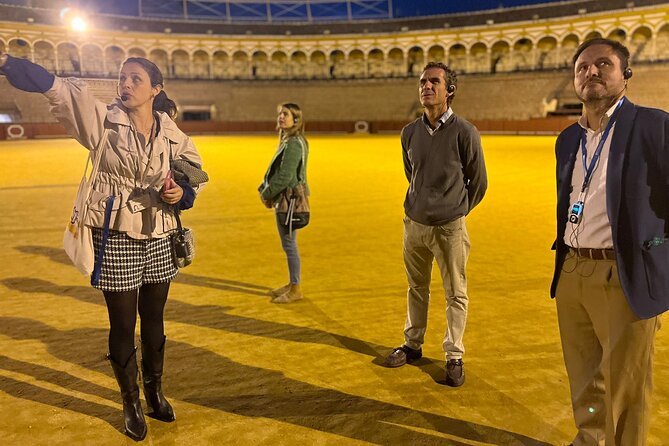
At about $34.84 per person for roughly an hour, the value depends on how you like to travel. You’re paying for three things that usually cost extra when you do them separately: a guided interpretation, an admission ticket, and a structured route through the bullring and museum content.
Here’s how that plays out on the ground:
- If you want context fast, the guide compresses a lot of explanation into a single visit.
- If you like architecture and history, the arena design is something you’ll notice more once the guide explains entrances, circulation, and sightlines.
- If you only want the basics, the short duration might feel tight, especially if you stop to read every museum label on your own.
The tour does include radio devices (and the guide uses a microphone), which is a real quality-of-life upgrade inside a loud, crowded venue.
Meeting point and first minutes that keep your tour from slipping
You’ll start at the Plaza de toros de la Real Maestranza de Caballería de Sevilla, P.º de Cristóbal Colón, 12, in the Casco Antiguo area of Seville. The tour ends back at the same meeting point, so you don’t have to re-plan the rest of your day at the end.
A practical tip: arrive a bit early. This is a timed, guided experience, and the group is capped at 19. When you arrive right on time, you usually lose less time to last-minute searching, especially in a busy neighborhood.
Also, bring your phone or be ready with the mobile ticket. Confirmation is received at booking time, so you’re not waiting around for an email the day of.
The museum corridor part: history, art, and how bullfighting got its look
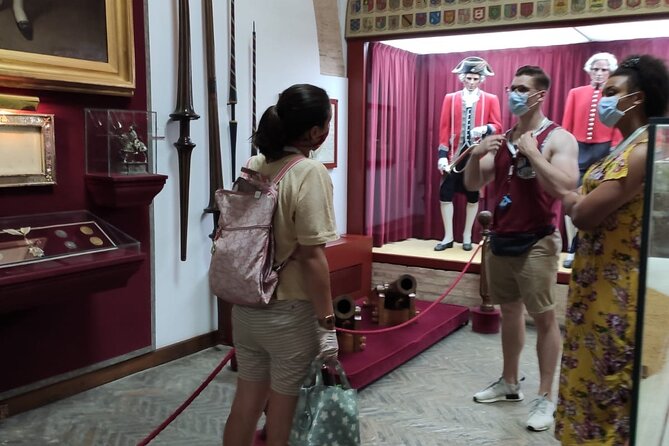
The tour’s first big phase is the walk through the bullring complex, including corridors and museum rooms. You’ll see museum pieces and artwork tied to the bullfighting tradition, including paintings from the 1700s (the tour describes them as narrated bullfights). You’ll also hear explanations that connect the cultural tradition to what you see in the building today.
This is the section that helps if you’re trying to understand tauro-related traditions in a neutral way. The guide frames the story as history and ritual, not as a sports highlight reel. That approach tends to work well even for people who do not support bullfighting, because it answers the question many visitors have: why did this become such a central Seville tradition in the first place?
A downside worth mentioning: at least one visitor noted that a room can feel very hot because there is no air-conditioning. If you’re visiting in peak summer or heat waves, plan around that. Water matters, and you may want to wear lighter layers you can adjust during indoor stops.
Still around Seville, a different sort of day:
- Seville: Live Flamenco Dancing Show Ticket at the Theater
★ 4.7 · 16,396 reviews - Seville: 1-Hour Guadalquivir River Sightseeing Eco Cruise
★ 4.2 · 10,281 reviews - Seville: Setas de Sevilla Entry Ticket
★ 4.6 · 8,901 reviews - Seville: Priority Access Cathedral, Giralda & Alcázar Tour
★ 4.8 · 7,563 reviews
Walking the bullring: corridors, entrances, and the Prince’s Gate moment
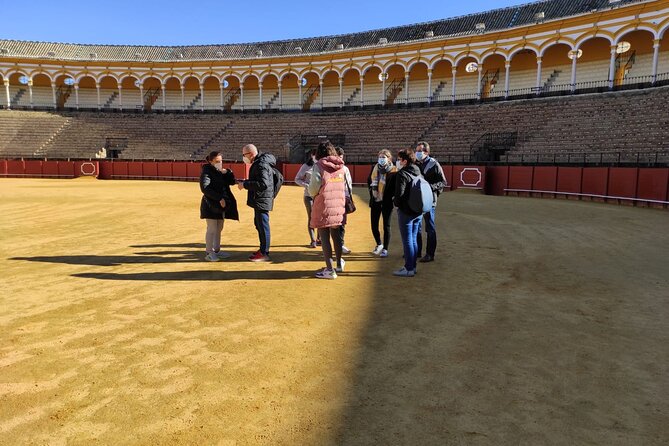
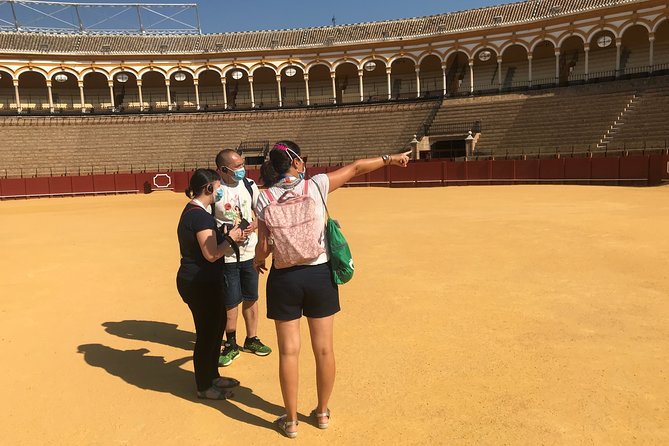
The heart of the experience is the guided movement through the bullring itself. You’ll learn about the arena’s design and the logic of how events happen within it. The guide points out the lines in the ring and where the bull enters, so you start to picture what the layout is doing.
One of the most memorable described moments is passing through the Prince’s Gate, which the tour presents as a defining entry. Even if you don’t know the terminology, you’ll understand it once you see it in context. It’s one of those architecture-and-story combinations that turns the building from a photo subject into a lived-in space with meaning.
The narration also includes dramatic detail about the pre-fight atmosphere: the chapel space where they implore a good afternoon, the courtyard tension, and the sensation of hearing the sound of iron mixed with wood as a door opens. That storytelling can feel over-the-top to some people, but it does serve a purpose. It makes you pay attention to the choreography of the place.
The educational angle: what the guide actually teaches you
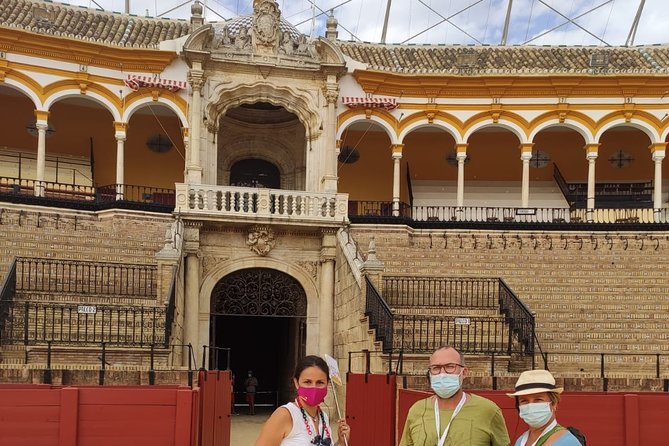
Expect a history-focused explanation of bullfighting traditions in Seville. The guide is presented as an official guide from Seville Única, and the tour emphasizes the tradition and its evolution.
This matters because bullfighting is one of those topics where people arrive with strong opinions, or with no background at all. A good guided format helps you separate:
- what the arena and tradition look like,
- how the routine developed,
- and why Seville’s version became so iconic.
Some visitors also found the tour helpful in sorting out confusion about how bullfighting works in different places. One person mentioned learning the difference between Spain and Mexico bullfighting, which fits with what a historical tour like this is trying to do: give you a framework, not just a single snapshot.
English and the audio setup: how to make the radio work for you
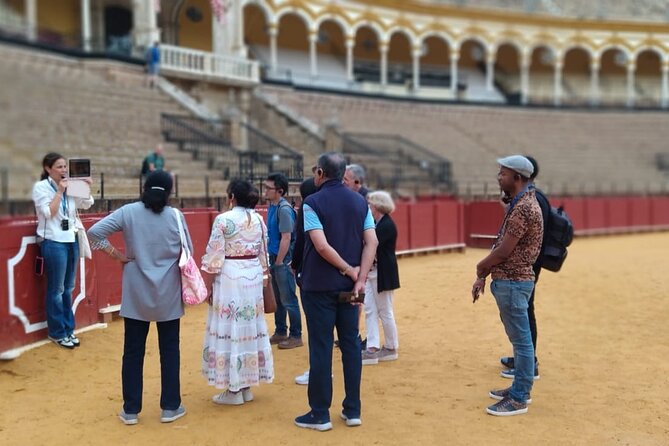
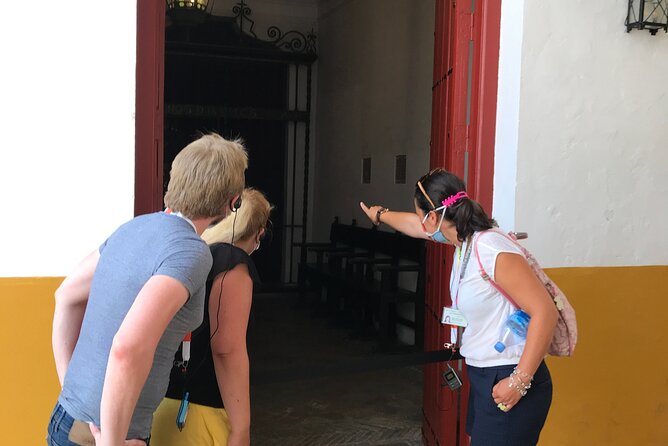
This is where the tour really shows its quality control. The guide uses a microphone, and you receive a radio device or earbuds so you can hear over other visitors. That’s especially important inside a large arena where sound bounces and groups talk over each other.
Still, there’s one practical consideration. If you drift too far from the guide, the audio can cut out. If you struggle with spoken English, the best move is simple: stick with the group and keep your attention forward when the guide is speaking. One review praised radio clarity, while others mentioned the guide could be difficult to understand at times, even though English levels are said to be certified through an official exam.
Think of the radio as your safety net, but you’ll still get the best experience if you stay within the working audio range.
Small group size and what it changes in a one-hour tour
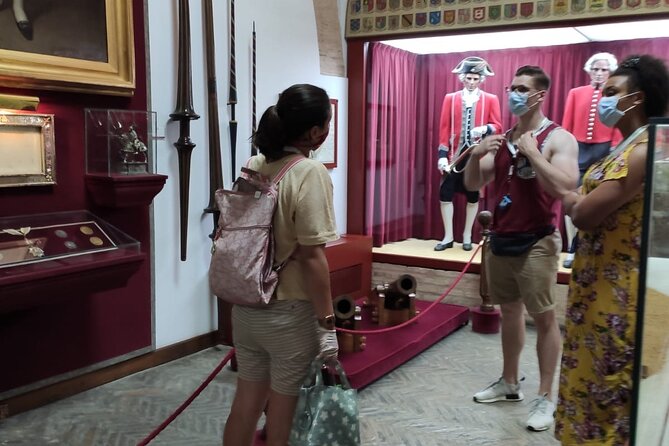
With a maximum of 19 people, you avoid the large-coach chaos that can turn a cultural tour into background noise. In practice, it usually means:
- you can track where you’re going,
- you’re less likely to get left behind in corridors,
- and you can ask a question if the guide pauses.
The tour is about an hour. That is short enough to fit into a packed day in Seville, but long enough to feel like you learned something specific about the building and its role. One review called it well worth a morning, and that’s the right mental model: do it early or mid-day, then let the arena’s story sink in while you explore nearby streets afterward.
Architecture and emotional reality: you might leave thinking, not cheering
This is a controversial site for many people. You may feel conflicted. The tour’s job is to explain the tradition and show you how the arena functions, not to convince you that it’s right.
Some visitors specifically mentioned that the guided history helped them understand why bullfighting became a tradition, even if they don’t support it. That’s a strong reason to book the tour if you’re curious but cautious. You’ll walk away with more context, and you’ll see the architecture in a way that self-guided photos alone usually cannot do.
Just be honest with yourself about what you can handle. If you’re emotionally sensitive to the subject, treat the tour like education at a historical site, and focus on design, ritual, and context.
Logistics that matter for your comfort
A few details help you plan a smoother visit:
- Location: in Seville’s Casco Antiguo near public transportation
- Mobile ticket: confirmation at booking time, mobile ticket is part of the process
- Service animals allowed: if that applies to you, this is a plus
- Group size: capped at 19
- Timing: about one hour, with the route ending back where you started
And for comfort: wear shoes you can walk in. Even though the tour is short, you’re moving through corridors and standing in an active-feeling arena space.
Who should book this Seville bullring tour
This guided bullring visit is a good match if:
- you like history and architecture more than you like big crowds,
- you want a focused explanation in about an hour,
- you’re curious about how Seville’s tradition developed and how the arena is organized,
- or you want a neutral education even if you personally don’t support bullfighting.
It might be a less perfect fit if:
- you want lots of free time to wander and read everything at your own pace,
- you struggle with spoken English and audio,
- or you feel strongly against the topic and would rather skip the arena entirely.
Should you book this tour?
I’d book it if your goal is a quick, guided understanding of Seville’s Real Maestranza bullring, and you like having a story tied directly to what you see. The best reasons are practical: direct entry, radio audio help, small group size, and the fact you get into the arena area instead of staying only in a museum room.
I would think twice if you’re expecting a long museum experience or if you know you tend to disconnect when the tour pace is fast. Also, if heat hits you hard, plan for indoor room comfort.
If you do decide to go, go with curiosity and a plan to stay close to the guide during the spoken sections. You’ll get more out of the one-hour time block than you might expect.
FAQ
Is there a guided tour at the Seville bullring with entry included?
Yes. The tour includes admission ticket access and a guided visit to the Plaza de Toros de la Real Maestranza de Caballería de Sevilla. The tour is about 1 hour.
What language is the tour offered in?
The tour is offered in English.
How long is the experience?
It is approximately 1 hour.
Where does the tour start and where does it end?
It starts at the Plaza de Toros de la Real Maestranza de Caballería de Sevilla, P.º de Cristóbal Colón, 12, Casco Antiguo, 41001 Sevilla, Spain, and it ends back at the meeting point.
Do I get an audio device to hear the guide?
A radio device may be used so you can hear the guide clearly.
Can I participate if I have a service animal?
Service animals are allowed.
Can I cancel for a full refund?
Yes. You can cancel up to 24 hours in advance for a full refund, using the local time of the experience.
Recently reviewed around Seville
- The Villages of Andalusia: Full-Day Trip from Seville★ 4.8 · 19 reviews
- From Seville: White Villages Tour★ 5.0 · 9 reviews
- White Villages and Ronda: Day Trip from Seville★ 4.9 · 89 reviews
- White Villages & Ronda 2-Days Trip & Overnight Stay★ 4.6 · 5 reviews
- Seville: Guided visit of the Casa de Pilatos with entrance tickets★ 4.3 · 18 reviews
- Triana Market Tapas Tour★ 4.9 · 12 reviews
- Your Photo Story in Seville★ 5.0 · 16 reviews
- Transfer Hotel Seville-Seville Airport★ 4.5 · 15 reviews
Guided, side by side.
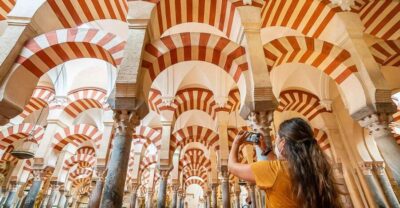
Skip-the-Ticket-Line Mosque-Cathedral Guided Tour
Read our review →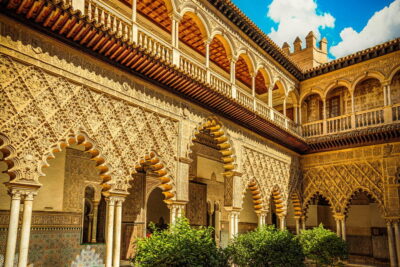
Cathedral, Giralda, and Royal Alcázar Guided Tour
Read our review →
Cathedral, Giralda & Alcazar Entry With Guided Tour
Read our review →
Cordoba Mosque-Cathedral: Skip-the-Line Guided Tour
Read our review →
Alcázar and Cathedral Entry Ticket and Guided Tour
Read our review →
Alcázar of Seville Skip-the-Line Tickets and Guided Tour
Read our review →