
Rated · AUDIO TOURS
Casa de Salinas Entry Ticket with Audio Guide
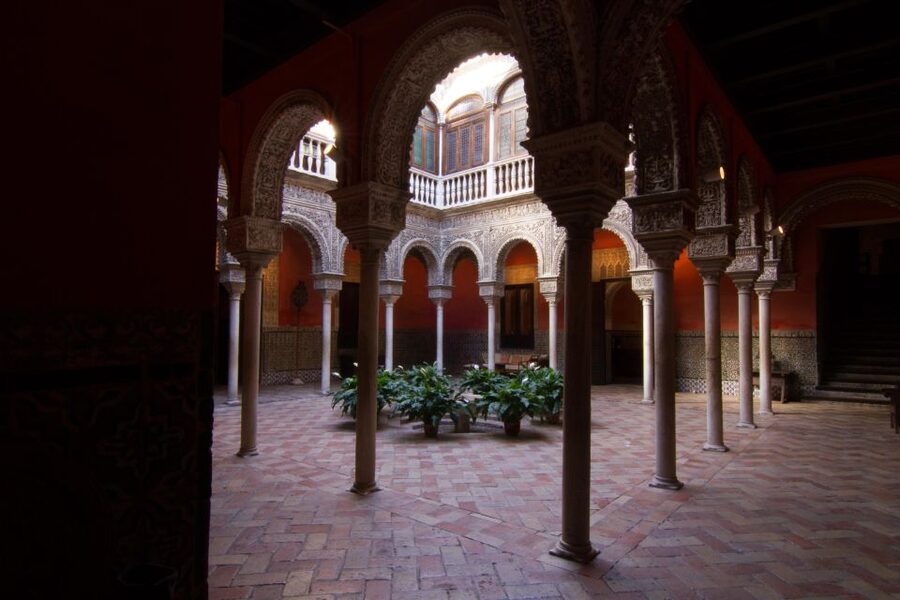
Casa de Salinas is interesting because it gives you the Seville mansion experience on a smaller, more intimate scale, with the mood of the Alcázar but in a privately lived home. I love the Mudéjar plasterwork arches in the 16th-century patios, and I love that you’re entering a private Seville mansion where the family still resides.
One possible drawback: the main visit is built around a 25-minute audio guided circuit. If you like slow, long-form wandering, you may want to plan extra time outside the audio portion.
Key highlights you should care about
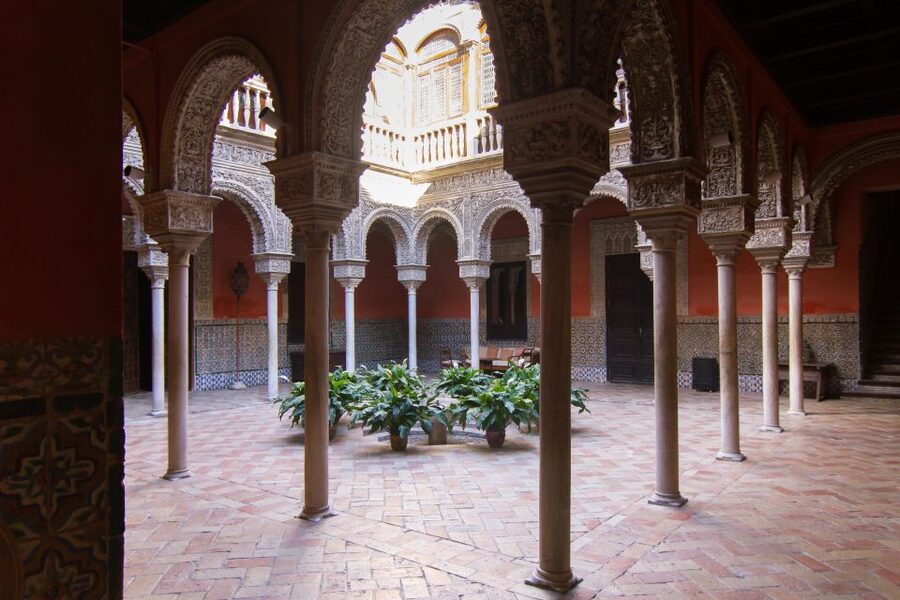
- Mudéjar plasterwork arches in 16th-century patios that feel made for close looking
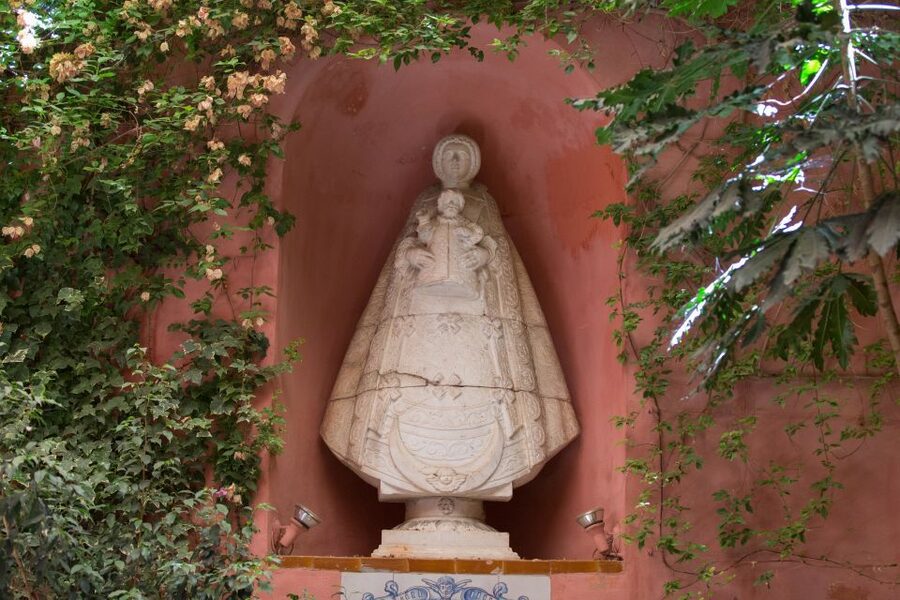
- Private home access, not a museum-only space
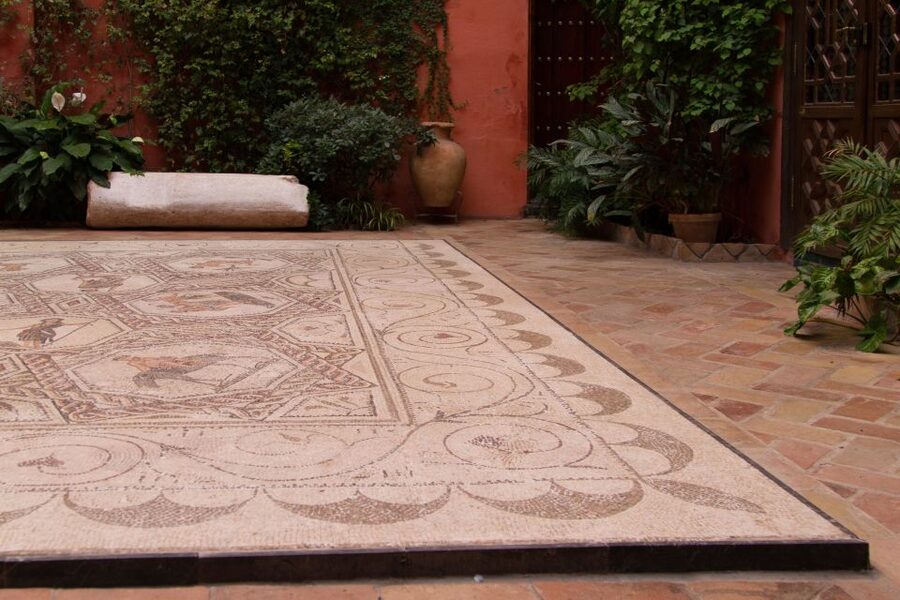
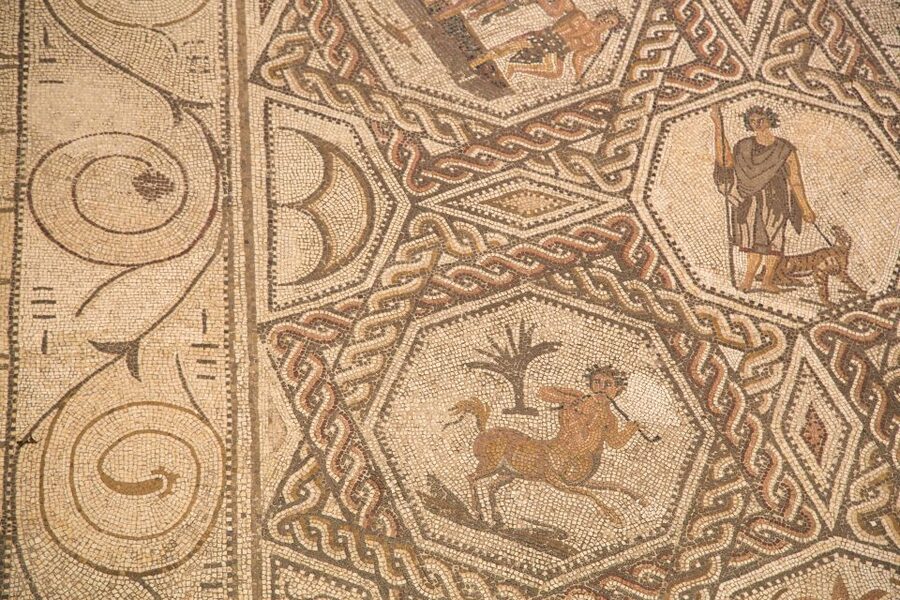
- Roman mosaic with Bacchanalian themes, plus original ceramic tiles
- Winter and summer drawing rooms with painted wooden ceilings
- Skip the ticket line so you can spend your time looking, not waiting
- Multiple language audio guide (Spanish, English, French, Italian)
Casa de Salinas vs. the Alcázar, why this micro-mansion matters
Seville’s big hitters are the Alcázar and the cathedral area, and it’s easy to feel like you’ve seen the “patio palace” formula after the first stop. Casa de Salinas is a clever counterpoint. Think of it as the same style of experience, but smaller and closer to lived-in history.
This matters for your time and your energy. Instead of committing to a huge site, you get a focused visit to a 16th-century mansion that still has that old-world courtyard rhythm: move in, look up at ornament, pause in the patio light, then continue into rooms that tell you how wealth was displayed at home.
And the setting amplifies the effect. The house sits in the monumental Old Town, just steps from the cathedral, La Giralda, and Los Reales Alcázares. You are not traveling across town for this. It’s the kind of stop you can build into an afternoon without feeling like you rushed it.
A few more Seville tours worth comparing
- Seville: Hospital de los Venerables Ticket with Audio Guide
★ 4.6 · 190 reviews - Cordoba: Mosque-Cathedral E-Ticket with Audio Guide
★ 4.1 · 2,124 reviews - Mosque-Cathedral of Córdoba E-Ticket with Audio Guide
★ 3.5 · 15 reviews
Getting oriented at Calle Mateos Gago, 39 and using the skip-the-line advantage
Your meeting point is Casa de Salinas, Calle Mateos Gago, 39, 41004 Sevilla. This location is handy because you can pair it with the surrounding sights without backtracking.
The big practical win is skip the ticket line. Even on busy days around central Seville, shorter entry processes help. You can arrive, collect your entry ticket, and move into the experience rather than losing momentum to a queue. For a short, audio-based visit, that matters more than you’d think. Waiting time steals the very thing you came for, quiet looking.
Also, the experience is designed to be self-paced within a guided structure. You do not need to match a group’s tempo every minute. You can slow down at the patio details, then pick up the pace when you’re moving through rooms.
One more point that comes up in the tone of the visit: it’s not a cold, sterile museum setup. The experience includes a warm sense of welcome, which makes the shift from street noise into a family home feel natural.
The 16th-century patios with Mudéjar plasterwork arches
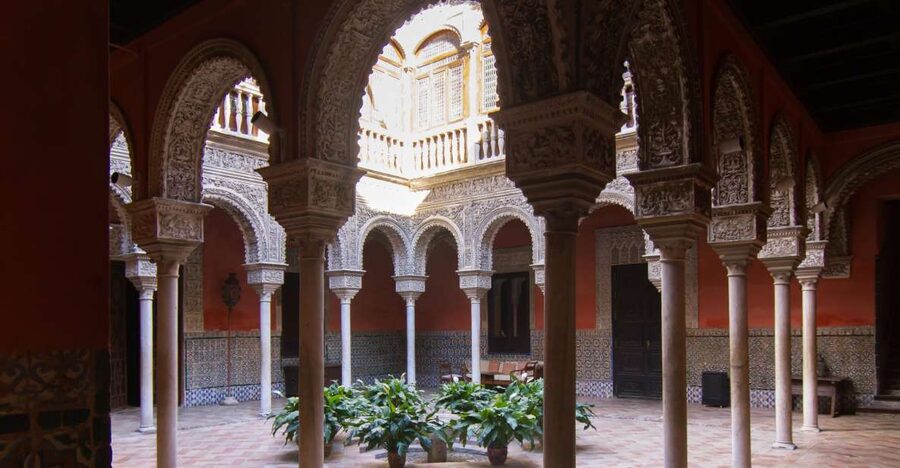
The patios are the star of Casa de Salinas, and not just because they’re photogenic. They’re your architectural “map” of what the house is trying to do: merge styles, show refinement, and turn daily life into a stage for art.
Here’s what you’re looking at: 16th-century patios with striking Mudéjar plasterwork arches. Mudéjar style is a key part of Seville’s identity. It blends Islamic artistic traditions with Christian-era building and ornament, so even if you are not a specialist, you can feel the craftsmanship in the surfaces. The plaster arches create rhythm, framing the light and directing your eyes from one section to another.
When you stand in a patio like this, it changes how you move through the home. You tend to pause more often, look upward, then walk more intentionally. That’s the value of a mansion patio. It’s not just a room. It’s a transition space between public display and private comfort.
How to get the most from the patios:
- Spend an extra minute with the arches before rushing into the next room.
- Look for how the ornament connects across openings. The effect is cumulative, not one single wow spot.
- Take your time if you enjoy architecture and craft, because the details reward slower looking.
The patio focus also makes Casa de Salinas a great pick if you already did the Alcázar. You get that same patio sense, but with a different scale and a different personality.
Roman mosaic, Bacchanalian shenanigans, and original ceramic tiles
If the patios are the stage, the floors and decorative surfaces are where the house shows its personality.
In Casa de Salinas you’ll encounter a Roman mosaic with Bacchanalian shenanigans, meaning the imagery nods to Bacchus, the classical god tied to revelry and wine. It’s a surprising pairing in a Seville home context, and that contrast is part of the charm. You go from 16th-century Mudéjar arches to an older visual tradition that feels like it shouldn’t fit here, yet somehow does.
You’ll also see original ceramic tiles. Tiles matter in Andalusian interiors because they bring pattern, color, and texture without requiring you to be an art historian. You can enjoy them like a surface design, and you can also appreciate them as a preservation of everyday materials, not just grand paintings and ceilings.
One review summary that lines up with this: the experience includes at least one standout room centered on the mosaic. If you have a soft spot for floor art, this is where your attention will naturally land.
The practical takeaway for you: keep your eyes lowered as well as lifted. In many historic sites, visitors stare at ceilings and ignore the floor. At Casa de Salinas, the floor imagery can be a genuine payoff.
Still around Seville, a different sort of day:
- Seville: Live Flamenco Dancing Show Ticket at the Theater
★ 4.7 · 16,396 reviews - Seville: 1-Hour Guadalquivir River Sightseeing Eco Cruise
★ 4.2 · 10,281 reviews - Seville: Cathedral, Giralda, and Royal Alcázar Guided Tour
★ 4.7 · 9,165 reviews - Seville: Setas de Sevilla Entry Ticket
★ 4.6 · 8,901 reviews
Winter and summer drawing rooms with painted wooden ceilings
After the patios and decorative details, the home shifts into the living spaces. This is where Casa de Salinas feels different from most official monuments. You are entering rooms that were meant for comfort and conversation, not just admiration.
You’ll be able to see the family’s winter and summer drawing rooms, and the descriptions point to exquisitely painted wooden ceilings. That combination, seasonal rooms plus decorated ceilings, tells you something important about the house’s design logic. Even when a building is ornate, it’s still responding to how people actually used space throughout the year.
It also helps explain why this is worth doing even if you’re tired of “more palaces.” A drawing room is intimate compared with a courtyard. The space invites closer looking, smaller movements, and a different kind of imagining. You’re thinking about how furniture was arranged, where light fell at certain hours, and how a ceiling becomes part of the room’s mood.
A quietly cool detail is the continuity. This house became the property of the Salinas family in the early 20th century, and they carried out a careful restoration to bring back the appearance of earlier centuries. That restoration matters because you are not just viewing an old structure in theory. You’re walking through a house that has been actively maintained and re-balanced after alterations that happened over the years, especially around 1900.
How the 25-minute audio guide keeps the pace in your control
The core visit runs on a 25-minute audio guided tour. It’s short enough to feel manageable, even if you’re already planning several big sights in Seville.
The audio guide is available in Spanish, English, French, and Italian, which is ideal if you’re traveling with friends who prefer different languages. And the way the tour is described, it helps you connect what you’re seeing to why it exists, including the context of Seville’s importance in the 1500s.
Here’s the storyline the audio is built around:
- In the 16th century, Seville was one of Europe’s most important cities.
- The wealth from the New World arrived at its port.
- That wealth helped fuel artistic work by top Italian and Flemish artists.
- The result was a blend of Renaissance ideas with Gothic and Mudéjar elements, in a style harmony unique to the city.
That background is not trivia. It changes your perspective while you look. If you understand that the city’s wealth and artistic influence fed houses like this, then the ornament and the mixture of styles stop feeling decorative for decoration’s sake. They start to feel like evidence of how Seville positioned itself in Europe at the time.
My practical advice: use the audio to guide your first pass, then do one slow re-look if time allows. The second look is where you catch details you missed because you were listening.
Price, time, and value at about $14 per person
At about $14 per person, Casa de Salinas sits in a very reasonable range for a central Seville cultural visit. What makes it good value is the combination of three things:
- You skip the ticket line, which saves your time.
- The site is a private mansion, where a family still lives. That’s a rare type of access.
- The highlights are concentrated: patios with Mudéjar arches, a Roman mosaic, ceramic tiles, and painted wooden ceilings.
Yes, the guided portion is only about 25 minutes. But that can actually be a plus. If you like not spending half a day in one building, this fits. It also pairs well with other nearby sights because you’re not stuck in a long timed-ticket window.
If you are building a Seville day plan, this is a smart “quality per hour” stop. You’ll get architectural payoffs without needing to commit to an all-day complex.
Accessibility and practical comfort during the visit
The ticket includes wheelchair accessibility, so it’s built to be navigable for visitors with mobility needs. If you’re planning around narrow historic passages, it’s always smart to confirm what routes work best once you arrive, but the fact that it’s labeled wheelchair accessible is a meaningful starting point.
Who should book Casa de Salinas (and who might pass)
This is an excellent fit if you:
- Want a mansion experience without the scale of the mega-sites.
- Like architecture, decorative plaster, and patterned surfaces.
- Enjoy audio tours that give context while you look around.
- Are already in the cathedral and Alcázar zone and want one more stop that feels different.
You might think twice if you:
- Want a long, do-it-all visit where you can wander for hours.
- Prefer guided storytelling that runs much longer than 25 minutes.
But even then, the patios and the mosaic are specific enough that it can still work as a short detour.
Should you book Casa de Salinas entry ticket?
Book it if you want a focused, high-detail look at Seville life inside a still-lived-in private home. The Mudéjar patio arches, the Roman mosaic, and the winter and summer drawing rooms with painted wooden ceilings are exactly the kind of “small site, big atmosphere” combination that makes a city feel real. And because it’s short and line-free, you can use it as a strategic piece of your day rather than another time sink.
Skip it only if you know you need long hours of wandering. For most people doing Seville’s Old Town, this is a well-paced stop that gives you a lot of architecture per minute.
FAQ
How long is the Casa de Salinas experience?
The audio guided tour is about 25 minutes, and the ticket is valid for 1 day.
What is included with the entry ticket?
You get the entrance ticket plus an audio guide.
Can I skip the ticket line?
Yes, the ticket includes skipping the ticket line.
What languages is the audio guide available in?
The audio guide is available in Spanish, English, French, and Italian.
Where is the meeting point?
Casa de Salinas is at Calle Mateos Gago, 39, 41004 Sevilla, Spain.
How much does it cost?
The price is listed at $14 per person.
Is it wheelchair accessible?
Yes, the experience is marked as wheelchair accessible.
Is there a cancellation option?
There is free cancellation, with full refund if you cancel up to 24 hours in advance.
Do I need to pay immediately?
You can reserve now and pay later, keeping your travel plans flexible.
Is the ticket time-based?
You should check availability for starting times, since the ticket is valid for 1 day.
Recently reviewed around Seville
- Tour Sevilla de las 3 Culturas★ 5.0 · 4 reviews
- NOSIESTA | Guided E-Bike Tour Sevilla | ENGLISH (NATIVE)★ 5.0 · 5 reviews
- Tour of the Alcazar of Seville★ 5.0 · 7 reviews
- The Cultures of Seville Walking Tour★ 4.7 · 8 reviews
- Sunset Kayaking★ 4.9 · 16 reviews
- Seville PHOTO WALK★ 4.8 · 10 reviews
- Sunset Kayak: Historic Seville, Triana and La Cartuja★ 5.0 · 10 reviews
- Seville with a Michelin Chef: Gastronomic Tour around Secret Corners★ 1.3 · 6 reviews
Audio Tours, side by side.
Hospital de los Venerables Ticket with Audio Guide
Read our review →
Mosque-Cathedral of Córdoba E-Ticket with Audio Guide
Read our review →
City Walk with Audio Guide in 7 Languages on your Phone
Read our review →
Also filed under