
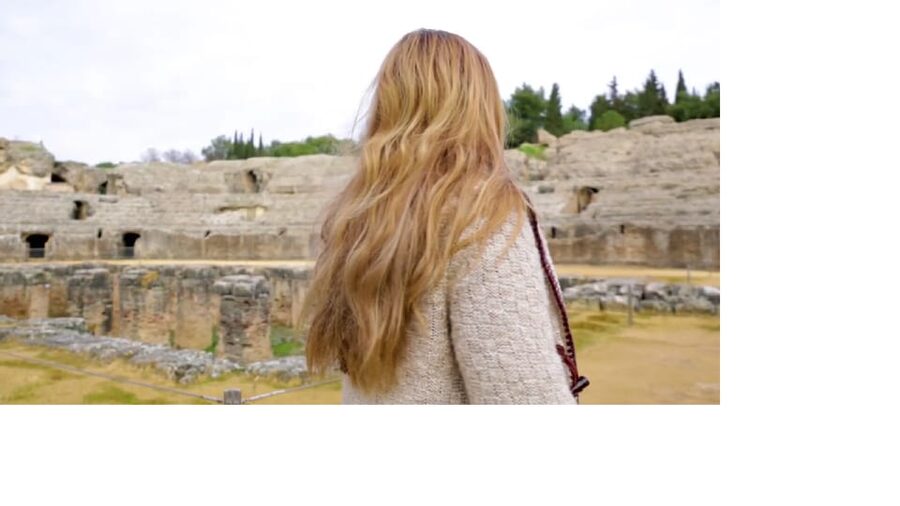
Rated · ITÁLICA TOURS
From Seville: Italica Roman City Tour
Italica is interesting because it is not a staged Roman display. It is a real Roman city, right outside Seville, where you can walk through ruins and still picture crowds, games, and everyday life.
I especially love the mosaics and street-level remains that make the past feel close, not abstract. I also love how the tour brings you face-to-face with the amphitheater’s huge scale, then continues to the Roman theater in Santiponce. One drawback to consider: if your group is large, it can get harder to hear every detail from farther back.
Key highlights at a glance
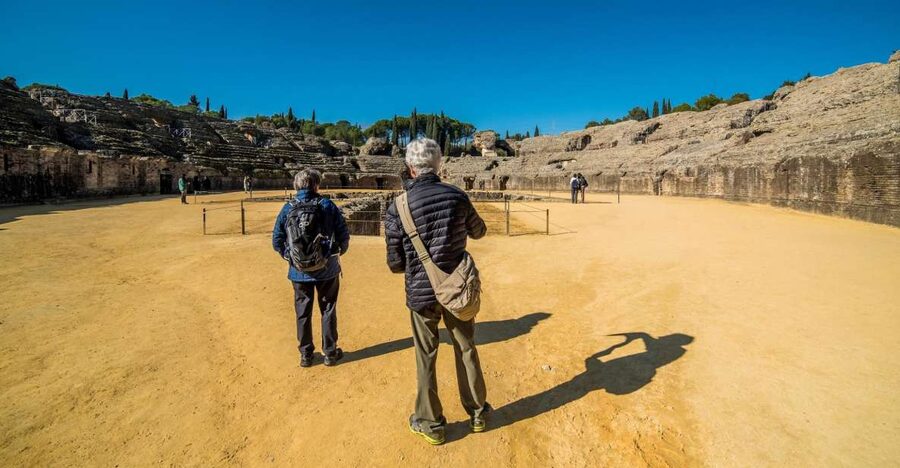
- Spain’s first authentically Roman city founded in 206 B.C.
- The amphitheater capacity of 25,000, and it is the third-largest in the Roman world
- Mosaic floors, plus the Traianeum, baths, and statues of Diana, Venus, and Trajan
- Partly reconstructed Roman theater in Santiponce, still impressive even in fragments
- Round-trip transport from Seville, with entrances and an official guide included
- Skip the ticket line, so you spend more time inside the ruins
Why Italica Feels Like a Real Roman City, Not a Photo Stop
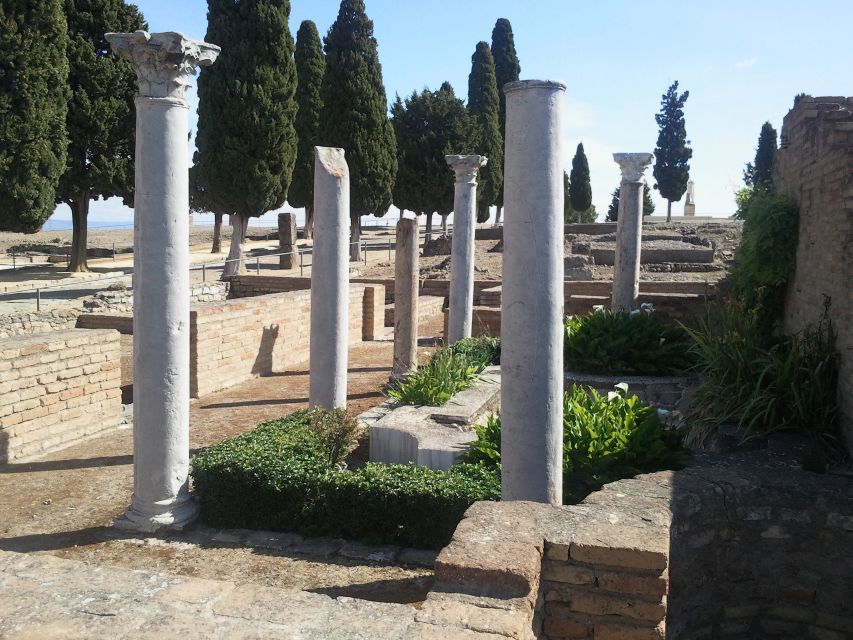
Italica is the kind of site that rewards you for slowing down. You are not just looking at columns, you are walking through the bones of a whole town. The Romans built it after it became important enough that it earned the title of Spain’s first authentically Roman city.
The founding story is a big part of the magic. It was established in 206 B.C. by Roman general Publius Cornelius Scipio Africanus. And it also matters historically because Italica was the birthplace of future Roman emperors Trajan and Hadrian. That is not trivia. It changes how you interpret what you are seeing, like why certain buildings, decorations, and public spaces feel so monumental.
Even if Roman history is not your usual travel lane, the architecture and scale do the heavy lifting. The amphitheater alone is enough to make you look up and think about crowd noise and drama. When a good guide ties that scale to real stories, the ruins start acting like a time machine instead of an outdoor classroom.
More Itálica Roman city tours:
- From Seville: Italica Roman City & Medieval Monastery Tour
★ 4.5 · 1,051 reviews - Historical Italica: Half-Day Guided Tour from Seville
★ 4.5 · 416 reviews - Seville: Game of Thrones and Roman Empire Italica Tour
★ 4.3 · 372 reviews
Price and Logistics: What Your $51 Actually Gets You
At about $51 per person, this tour has solid value because it packages three things people often forget to price separately. You get round-trip transportation between Seville and Italica, entrance fees, and an official tourist guide. You also get skip-the-ticket-line access, which saves time when you just want to get to the good parts.
The tour runs 4 hours total, with about 30 minutes of coach time each way. That leaves roughly 3 hours on site for the guided walk through Itálica’s main areas. In other words, you are not doing a quick drive-by. You are getting a real, guided circuit.
One practical note: the tour order can change based on circumstances, and in that case the tour can be done in two languages. Translation is often the difference between a confusing ruins visit and a clear one, so it is worth paying attention to how your language matches the guide you end up hearing.
Getting Picked Up in Seville and Riding Out to the Ruins
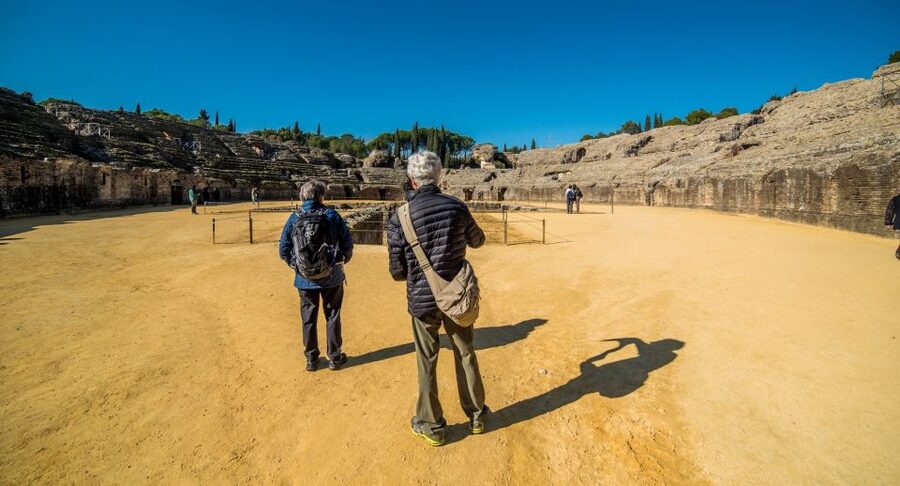
The trip starts in Seville with multiple pickup points, which is convenient if you are staying outside the most central streets. The pickup options include Calle Rastro 12A, Hotel Don Paco, and Calle Trajano 6. The start times listed are 09:45 at Calle Rastro 12A, 09:50 at Hotel Don Paco, and 10:00 at Calle Trajano 6.
The ride itself is fairly quick. You are going to Italica and the Santiponce area in about 15 minutes from Seville, and the tour schedule breaks the drive into two 30-minute coach segments (there and back). That timing matters because it keeps the day feeling efficient. You are not sacrificing half a day just to reach the site.
Comfort is a small detail that affects how much you enjoy the ruins later. Several guides in the reviews describe using comfortable transport, and the general pattern is that the logistics are smooth once you are on board. Your best move is to show up a few minutes early, especially if you are at a less obvious pickup point.
Roman Streets, Public Buildings, and the Walk-Through Feel
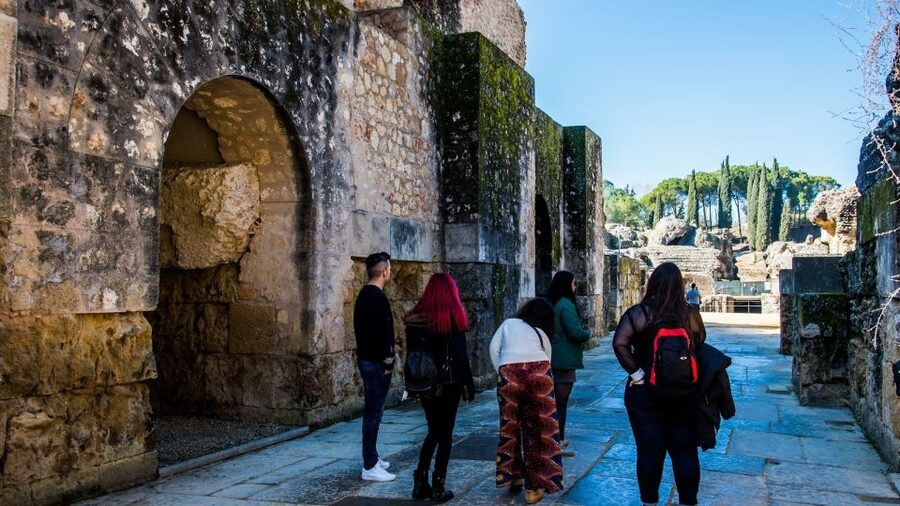
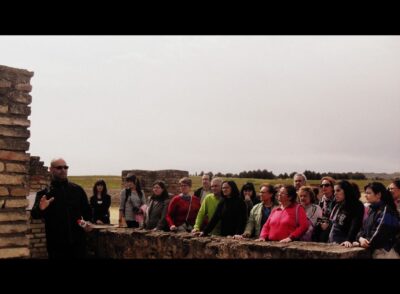
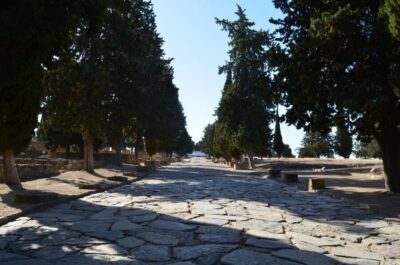
Once you arrive, the guided portion is where this tour earns its value. You take a walk along the old streets within the Archaeological Ensemble of Itálica, and you see ruins of houses and public buildings. This is the part many people enjoy most because it helps you understand how a Roman city was planned.
You start building a mental map fast. The guide typically frames what you are seeing as you move from domestic spaces to civic spaces. That flow matters because ruins can feel like scattered stones unless you get the connections explained. With a strong guide, you see how a home relates to a bath, how decoration links to status, and how public areas connect to entertainment.
One reason the tour works well for first-timers is that it gives you a narrative, not just stops. You are not standing around waiting for instructions, you are moving and interpreting as you go. And because it is guided, you get context for what is preserved versus what is missing.
A small drawback that you should keep in mind: a few reviews mention limited free time to wander on your own. If you love independent exploring, you may want to plan a little extra time later in Seville or accept that this day is mostly guided.
More day trips from Seville:
- From Seville: Pueblos Blancos and Ronda Full-Day Trip
★ 4.5 · 3,849 reviews - From Seville: Ronda+Setenil de las Bodegas Day Trip
★ 4.4 · 3,562 reviews - White Villages and Ronda Day Tour from Seville
★ 4.5 · 2,049 reviews - From Seville: Cordoba, the Mosque and Carmona Day Trip
★ 4.5 · 1,967 reviews
Mosaics, Statues, Baths, and the Traianeum
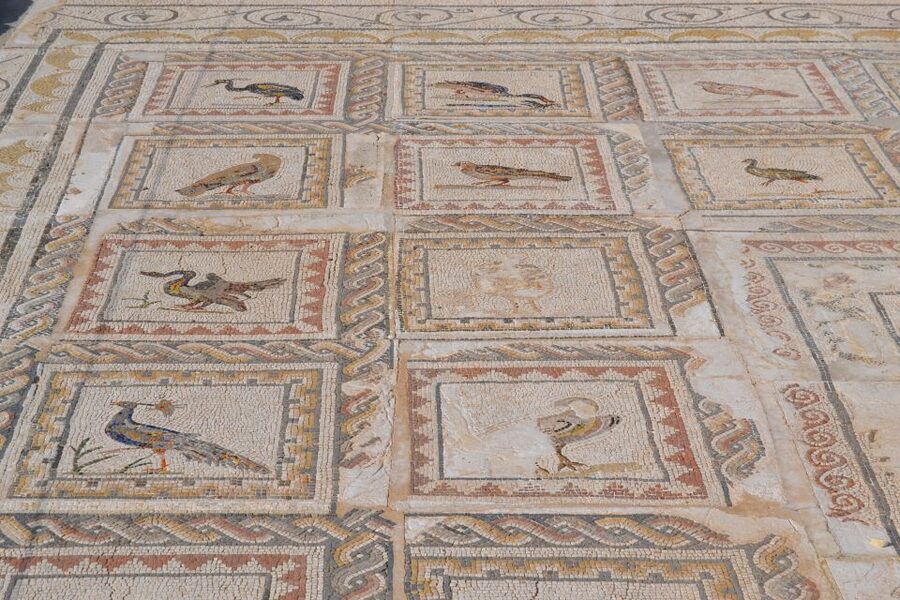
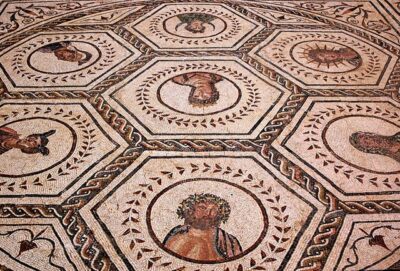
This is where Italica starts looking like a place people actually lived, not just a set of ruins. The tour highlights mosaic floors that were uncovered and preserved well enough to make you slow down. In a Roman city, mosaics were not just decoration. They signal wealth, taste, and the kind of world residents wanted to project.
You also visit major religious and public elements tied to power and identity, including the Traianeum. The tour also features notable statues of Diana, Venus, and Trajan, which helps you connect art to politics and everyday belief. Even if you cannot read every inscription, the guide’s storytelling turns these objects into clues.
Public baths are another key stop. Roman baths were social hubs, workout spaces, and relaxation zones. Seeing bath-related remains, with context about how the Romans organized daily life, makes the site feel more human. You start thinking about routines, not just empires.
If you are the type of person who cares about details, you will likely love this portion. One of the strongest patterns in the reviews is praise for guides who explain mosaics and architecture with clarity and entertaining stories. Guides with that skill can make a 4-hour tour feel like a full day of real learning.
The Amphitheater: Third Largest in the World and 25,000 Seats
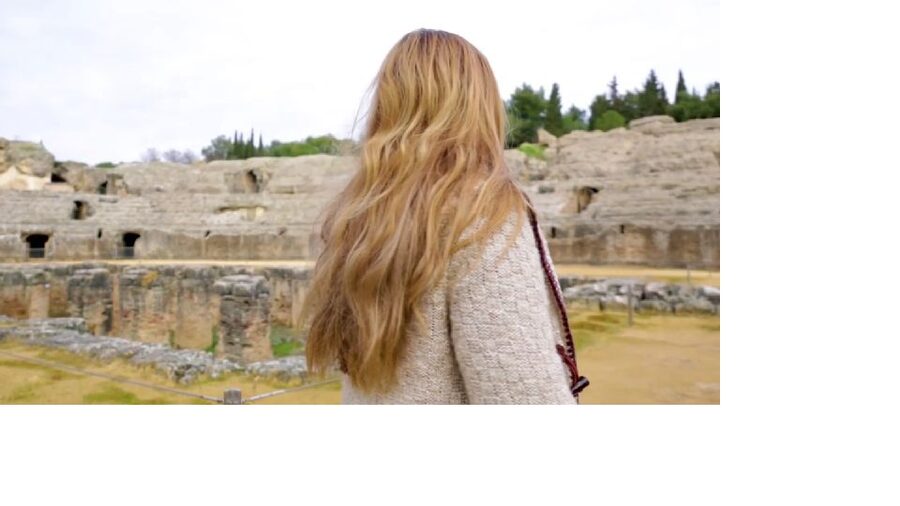
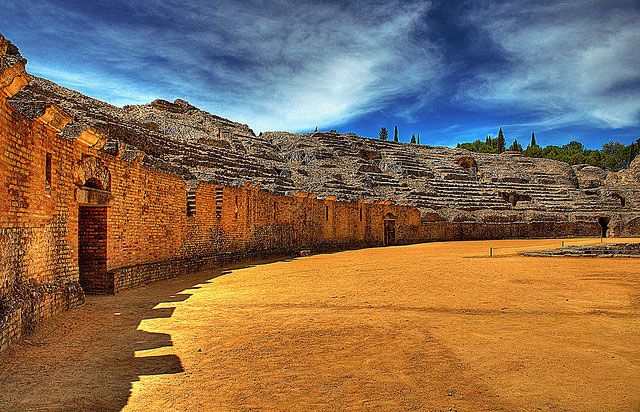
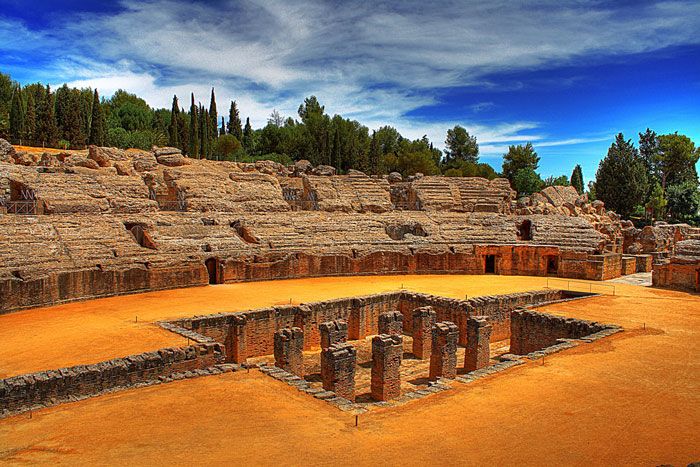
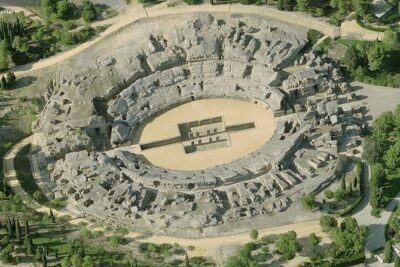
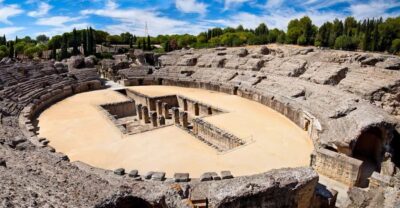
The amphitheater is the headline, and it deserves it. Italica’s amphitheater once held 25,000 spectators, and it is described as the third-largest in the world. Seeing that in person does something to your sense of scale fast. The structure is big enough that you stop thinking in fragments and start thinking in crowds.
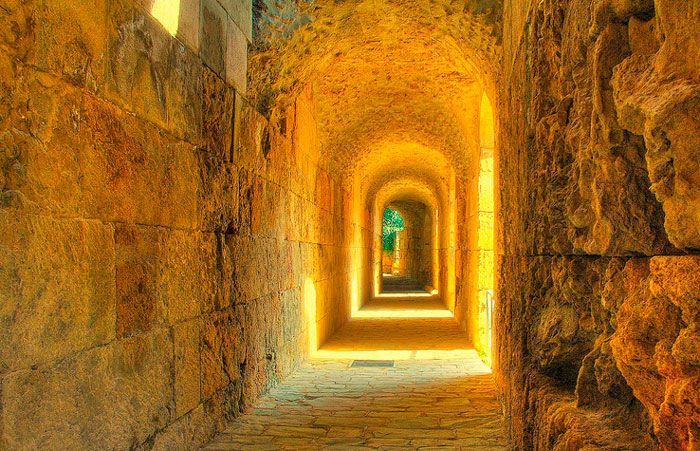
What makes it more than a big hole in the ground is the way a good guide helps you understand the design. You learn how seating, circulation, and the arena area were intended to function. And in several reviews, the tour experience includes walking through tunnels under the seating, which is one of those details that turns imagination into something physical.
That tunnel walk can be a highlight even if you are not a hardcore Roman history fan. It puts you in the movement system. You can feel the logic of where people entered, how performers might have appeared, and why the building was made to control sightlines and flow.
One consideration: the amphitheater is an open-air structure, so your comfort depends on the weather. Also, if you are in a larger group, you may find it harder to hear every explanation from farther back. Your best move is to stay closer to your guide during the most spoken-about moments.
The Roman Theater in Santiponce: Partly Reconstructed, Still Impressive
After the amphitheater, the tour shifts to the Roman theater in Santiponce, which is partially reconstructed. This is a good pairing because amphitheaters and theaters create different kinds of audience energy. Amphitheaters were built for spectacle in a very physical way. The theater is more about performance and staging.
Even with reconstruction limited to what has been preserved, the theater can still feel striking. The curve, the seating logic, and the way it frames the performance space all help you visualize how it once worked. A guide’s explanation can make you see what is there even when you can also see what is missing.
This stop also helps you diversify your Roman experience. You are not just staring at one type of entertainment architecture. You get two forms, two design goals, and two ways the Romans pulled people into a shared moment.
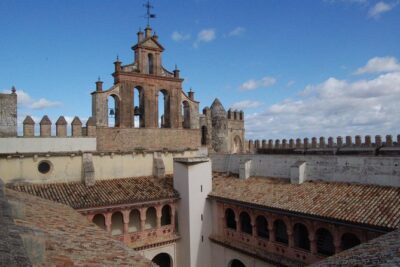
A couple of reviews mention a monastery stop later in the trip, which may affect how much time you feel you have left to explore Italica itself. If you crave maximum time in the ruins, you may want to be mentally prepared that the day can include more than just Italica’s core monuments.
Guide Quality Makes or Breaks the Experience
If I had to pick one factor that consistently lifts this tour, it is the guide. The reviews are full of examples: Jose Luis gets praise for being enjoyable and knowledgeable, Jesus for detailed expertise, and Alberto for making the city feel alive with anecdotes that help you picture what life was like. Other names that show up include Miguel, Nieves, and Sergio.
This matters because ruins are not always intuitive. You can stand in front of mosaic fragments and see beauty, but you might not understand why the Romans placed them where they did or what the design choices meant. Strong guides connect the physical remains to a bigger story.
That said, there is some variation. One review notes a guide who was funny and nice but did not provide enough context, and another mentions difficulty hearing in a big group. So if you are someone who really wants detailed explanations throughout, plan to position yourself closer to the front when the group stops.
Who This Tour Fits Best, and Who Might Want a Different Plan
This is a great fit if you want a structured, guided introduction to Roman remains without planning transport or ticketing yourself. It is also a strong choice if you like mosaics, public spaces, and architecture with a story attached.
It can work for families too. One review even mentions bringing young kids and doing well, with a practical tip: bring a stroller if you travel with small children, even if you might not be able to use it the entire time.
It may not be perfect if you are the kind of traveler who wants to wander slowly and linger. A few comments mention that there was little time to explore on your own. Others mention wanting a bit more museum or display content. If you want that, you might pair this with extra time in Seville after, or consider adding independent time at the site if your schedule allows.
Should You Book the Seville to Italica Roman City Tour?
Book it if you want a high-value half-day that turns Roman architecture into a real narrative. The combination of transportation, entrance fees, skip-the-line access, and a live guide makes this efficient, especially if you have limited time in Seville.
Skip it or adjust your expectations if you hate guided structure. This is not a freeform roaming day. It is a guided circuit focused on major monuments like the amphitheater, mosaics, public baths, and the Roman theater in Santiponce.
If you do book, do one thing that pays off immediately: show up early for pickup and stay attentive near the front during the big story stops. It is the easiest way to get the most out of those 4 hours.
FAQ
How long is the Seville to Italica Roman City Tour?
The tour lasts 4 hours total.
What’s included in the ticket price?
The price includes round-trip transportation between Seville and Italica, entrance fees to Italica, and an official tourist guide.
Are ticket lines skipped?
Yes, the tour includes skip the ticket line.
Where do pickups happen in Seville?
Pickup locations listed are Calle Trajano 6, Hotel Don Paco (Plaza Padre Jerónimo de Córdoba nº4), and C. Rastro 12a.
What languages is the tour offered in?
The tour is offered in Spanish and English. Other languages may be available on request.
What sites will I see?
You will visit the Archaeological Ensemble of Itálica, including the mosaics, Traianeum, public baths, and statues of Diana, Venus, and Trajan, plus the amphitheater and the partly reconstructed Roman theater in Santiponce.
Is lunch included, and is it optional?
Lunch is not included, but there is an optional lunch available for €18.
Recently reviewed around Seville
- Tour Sevilla de las 3 Culturas★ 5.0 · 4 reviews
- NOSIESTA | Guided E-Bike Tour Sevilla | ENGLISH (NATIVE)★ 5.0 · 5 reviews
- Tour of the Alcazar of Seville★ 5.0 · 7 reviews
- The Cultures of Seville Walking Tour★ 4.7 · 8 reviews
- Sunset Kayaking★ 4.9 · 16 reviews
- Seville PHOTO WALK★ 4.8 · 10 reviews
- Sunset Kayak: Historic Seville, Triana and La Cartuja★ 5.0 · 10 reviews
- Seville with a Michelin Chef: Gastronomic Tour around Secret Corners★ 1.3 · 6 reviews
Itálica Tours, side by side.
Historical Italica: Half-Day Guided Tour from Seville
Read our review →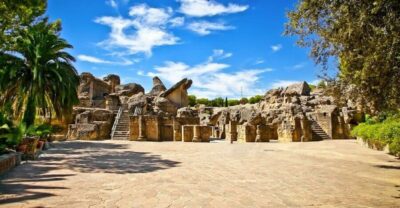
Visit to Italica Roman Ruins Tour tickets included
Read our review →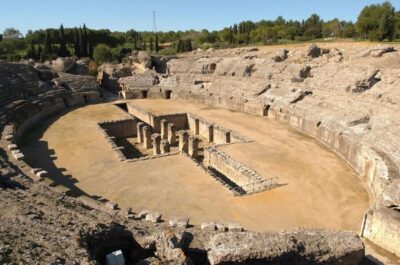
Also filed under