
Rated · GUADALQUIVIR RIVER CRUISES
Seville: Guadalquivir & Secrets of Triana Small Group Tour
Seville makes more sense when you start with the Guadalquivir River. This 1.5-hour walk ties the river to the way Seville grew, then flips you across to Triana, a neighborhood with its own identity. It is a simple route on foot, but the stories make it feel like two cities in one.
I love that the tour explains why the river mattered, not just where the pretty spots are. You get clear, memorable links between Seville’s port life and the crafts and folklore of Triana. And I also like the human touch, like the way Carmen’s storytelling turns Triana into something you can picture instantly.
One thing to consider: it runs rain or shine, and they are strict about timing. If you arrive late, you may miss the departure once the group moves on.
Key points to know before you go
- You start at Torre del Oro and get set up with the river and Seville’s maritime story from the first minutes.
- Triana is treated like a real place, not a side stop, with craft traditions and neighborhood folklore.
- Flamenco comes with context, including its relationship to Triana’s culture and identity.
- You see specific heritage spots like Triana Market and Centro Cerámica Triana, not just street photos.
- The walk includes contrast, including folklore alongside darker Inquisition-era history tied to Callejón de la Inquisición.
- You end back by the river where flamenco venues are common, so the theme lands in a natural way.
Why the Guadalquivir River makes Triana click
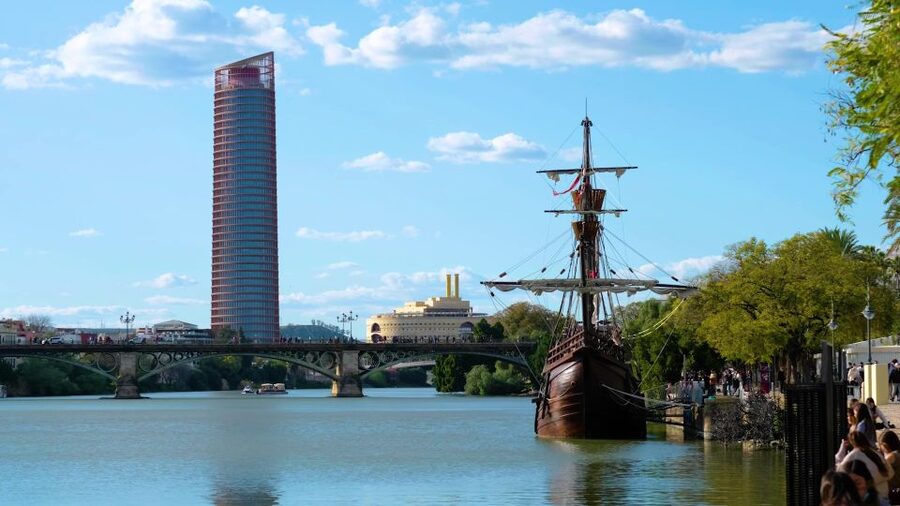
If you want Seville to feel logical, start with water. The Guadalquivir did not just decorate the city, it fed its economy, its ships, its traffic, and its wealth. Once you have that river in your head, Triana stops feeling like a separate neighborhood and starts feeling like a partner across the water.
What I like about this tour is how it keeps the theme tight. You walk, you look, and then the guide connects each view to what Seville was doing back then, as a trade center and port. That is how you avoid the common problem in historic cities, where you collect landmarks but lose the thread.
And then you cross into Triana, where the same river that brought business also helped create a culture of working people and neighborhood traditions. You get an angle on Seville that is less about grand viewpoints and more about everyday life, professions, and community memory.
More Guadalquivir river cruises:
- Seville: 1-Hour Guadalquivir River Sightseeing Eco Cruise
★ 4.2 · 10,281 reviews - Seville: Guadalquivir River Cruise
★ 3.9 · 6,921 reviews - Seville: Guadalquivir Boat Tour with Optional Lunch/Dinner
★ 4.4 · 2,193 reviews
Starting at Torre del Oro, you get the Seville port story fast
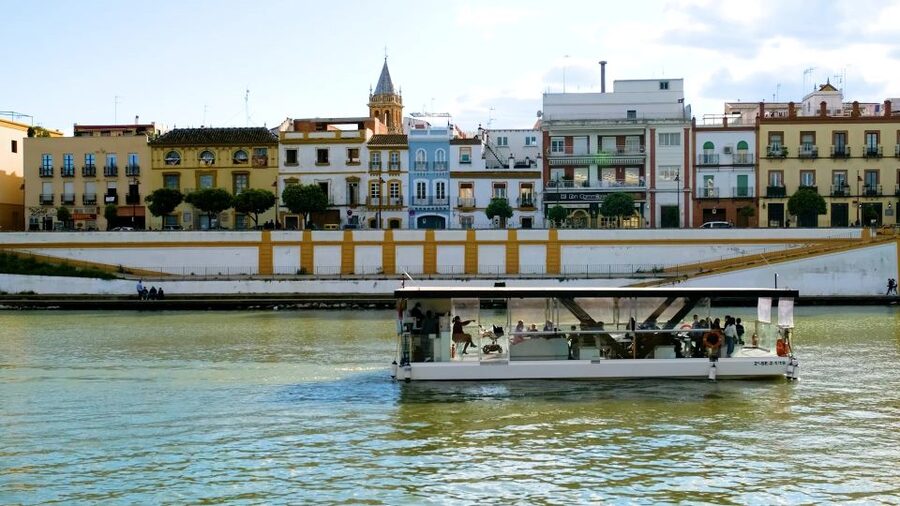
The meeting point is right by the river at the base of Torre del Oro, next to the tourist cruises ticket office. From there, you are not wandering blindly through the center. You begin with the Guadalquivir in front of you, which makes every later stop easier to understand.
Early on, you visit Fundación Nao Victoria, Espacio Exploraterra for a guided introduction. Even if you do not know the name already, the setting points you toward Seville’s maritime identity, and the guide frames why the river shaped the city’s role. This is the kind of start that helps you connect later themes like sailors, port prosperity, and long-distance trade.
After that, the tour keeps moving with short guided segments, so you are always nudged to look at something specific. That pace matters on a 1.5-hour walk. It gives you enough time to absorb the stories without turning the experience into a long lecture.
Puente de Isabel II: the crossing that changes the whole vibe
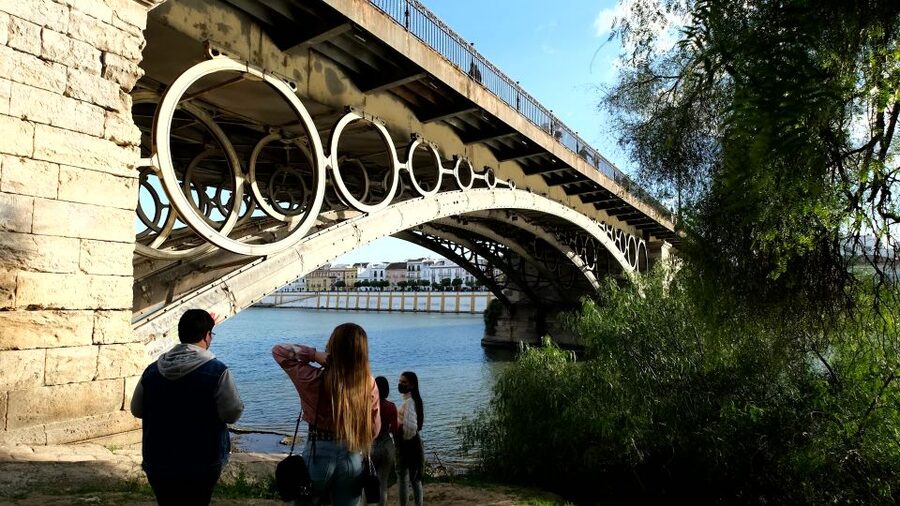
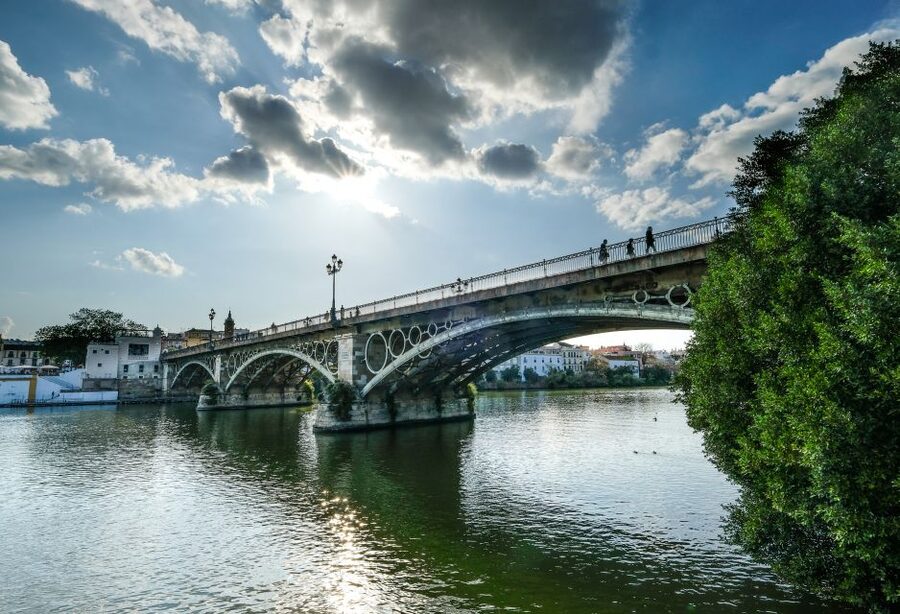
The Puente de Isabel II is the moment the walk shifts from Seville’s river power to Triana’s neighborhood personality. Standing by the bridge, you get the visual reminder that these areas are physically close, yet culturally distinct. The river acts like a divider and a connector at the same time.
This stop also helps you understand how Seville organized itself around the water. A bridge is more than architecture here, it is movement, commerce, and daily life. When the guide explains the bridge connection, you start thinking in routes instead of isolated buildings.
It is also a good pause point for photos, because you can line up views across the water and see why Triana became what it is. You are not just looking at a postcard. You are seeing the logic behind the layout.
Triana Market: where everyday culture meets local flavors
Once you reach Triana, the tour leans into neighborhood life. Triana Market is one of the stops that grounds the story in daily reality. The guide connects traditional professions and the rhythm of the area to the way Seville worked as a port city.
What you get here is a sense of how people lived, ate, and earned money on the Triana side of the river. The tour description also points to gastronomy, so you are likely to hear about what the neighborhood is known for and how food fits into its identity.
One practical note: markets can be busy and visually packed. If you are someone who likes to browse slowly, this stop still works, but keep your eyes on what the guide is explaining. That way, you leave with context you can use later when you return on your own.
Still around Seville, a different sort of day:
- Seville: Live Flamenco Dancing Show Ticket at the Theater
★ 4.7 · 16,396 reviews - Seville: Cathedral, Giralda, and Royal Alcázar Guided Tour
★ 4.7 · 9,165 reviews - Seville: Setas de Sevilla Entry Ticket
★ 4.6 · 8,901 reviews - Seville: Cathedral, Giralda & Alcazar Entry With Guided Tour
★ 4.6 · 8,560 reviews
Centro Cerámica Triana: crafts and guilds you can see
Next up is Centro Cerámica Triana, a ceramics-focused stop that supports the tour’s bigger theme about craft guilds that survived over time. Triana is known for working traditions, and the guide uses this area to show how those professions shaped the neighborhood’s character.
From the way guides talk about Triana, the crafts are not just an art stop. They are part of how the area organized community identity. That is why you hear about craft guilds and traditional trades, not just decorative tile.
If you love details like workmanship and materials, you will enjoy this portion. It is the kind of place where you look at a wall and suddenly understand why people cared about design and production. And if you are not a “tile person” yet, the guide helps you become one.
Callejón de la Inquisición: history with a darker edge
Every neighborhood has a shadow side, and Triana’s includes the Callejón de la Inquisición. Here, the tour brings up the darker times tied to the Inquisition, so the walk does not stay purely romantic or folkloric.
This stop changes the emotional temperature of the tour in a good way. You remember that places with strong local culture also lived through fear, control, and punishment. When you understand that, Triana’s folklore and traditions feel even more meaningful, because you can sense what people carried forward.
The guide also tends to connect this topic to architecture and folklore rather than keeping it abstract. You are walking in a built environment, so the story lands better when it is attached to real streets and corners.
Back to the river: trade, sailors, and Seville’s American port fame
The tour then returns to the river area for a guided segment focused on the Guadalquivir itself. This is the part where the tour really “clicks” for me, because the river becomes the thread connecting everything you just saw.
The tour description highlights the splendour of Seville as a port of the Americas, and you can feel how that would affect everyday neighborhoods like Triana. Ships bring people. Ports bring money, goods, and new ideas. And ports also attract the workers, sailors, and craftsmen who build the city’s practical bones.
You also visit the Chapel of Sailors, Sevilla. That stop is valuable because it personalizes the maritime theme. Instead of staying at the level of trade and ships, you hear about sailors and the human side of Seville’s connection to travel and long-distance routes.
Flamenco connections: why Triana is tied to the music
Flamenco is not treated as a random cultural add-on here. The tour explicitly connects flamenco to Triana, including the idea of Triana as a birthplace for origins many associate with the style. The guide ties the neighborhood’s folklore to the music traditions that later became famous.
This is where the walk has a natural finish point. You finish near the river shore, where many flamenco venues are located. That matters because you can carry the story straight into your evening plans, not just into your notes.
If you plan to see flamenco while you are in Seville, this tour helps you choose what to look for. You go in knowing the neighborhood context, so you listen with a better frame for how the music connects to working life, identity, and community memory.
Real Parroquia de Señora Santa Ana: the church that anchors the ending
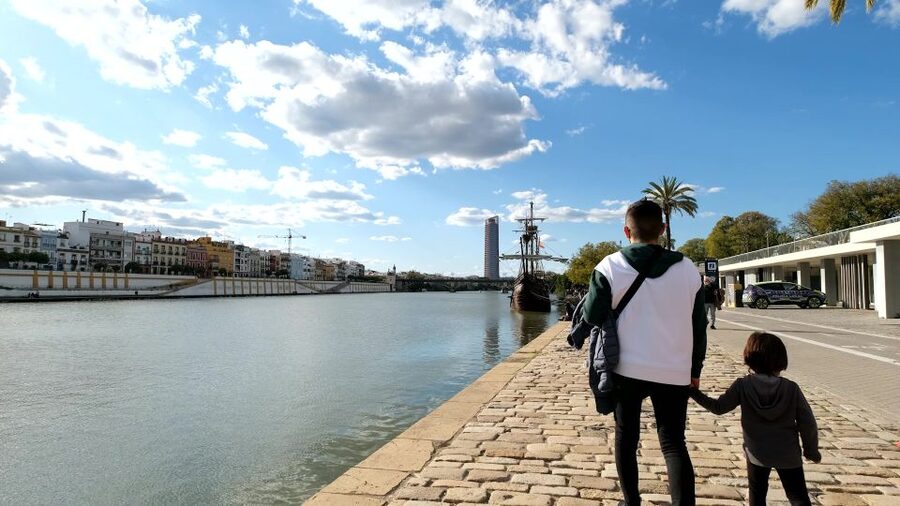
The tour ends at Real Parroquia de Señora Santa Ana. This church is positioned as an important marker in the story, including the mention of the first church built after the Christian conquest. Ending here gives the walk a clear historical punctuation mark: you leave Triana with a sense of how long the area has been shaped by major eras of change.
Finishing at a church also keeps the tour from feeling like a set of unrelated photo stops. It wraps up the themes of history, architecture, and community identity in one final location.
And since the theme of the river continues to the end, you still feel that Triana is across from Seville, not stuck on the other side of the map.
Guides, story style, and why the small group size matters
This is a small group tour limited to 10 participants, which is a big deal for a 1.5-hour experience. It means you are not lost in a crowd, and you can actually hear the details and ask questions.
It also seems to bring out the best guide energy. In the past, I have seen stories praised for both clarity and personal connection. Guides like Carmen, Marta, Valentin, Miguel, and Carlos are singled out for patient explanations and a strong sense of place. You can expect that kind of storytelling style, especially when the guide is from or deeply connected to Triana.
Also, the tour has a real-world flexibility element. One guest shared that even when they were the only participant, the tour still ran, which suggests the guide team is willing to tailor attention when the group is small. You should not count on a private tour every time, but the structure is designed to feel personal.
Price and value: why $29 for 1.5 hours can be a smart buy
At $29 per person for about 1.5 hours, the value comes from three things.
First, it is not a single landmark stop. You get multiple guided segments tied to one theme: the Guadalquivir, Seville’s port role, and Triana’s culture. That keeps your money focused on understanding, not just entry into a building.
Second, the tour includes a guided session by an English-speaking license guide. That is what turns the street-level walking into history you can remember and reuse when you explore on your own.
Third, the group size cap of 10 helps you get more interaction per minute. For this kind of thematic walk, small-group attention is worth more than it sounds.
If you are cost-conscious but want a serious Seville context layer before you wander independently, this pricing is in the sweet spot.
Who should book this Triana and river walk
This is a great fit if you want more than big sights. You like neighborhoods. You enjoy story-led walking. You want to understand the city’s mechanics, the way people worked and lived, not just what happened in royal palaces.
It is also a smart option if you are new to Seville. The tour’s themes guide you from the river into Triana’s identity. And if you already know Seville, the Triana angle can still surprise you, because it focuses on local professions, crafts, and folklore rather than repeating the most obvious central sights.
I would also recommend it for solo travelers who like asking questions. The format makes it easier to talk with the guide rather than shout into a group.
Practical tips so you enjoy every minute
The tour runs rain or shine, so plan for weather. Seville can change quickly, and you will be outside the whole time.
Arrive on time. Latecomers cannot join once the group leaves the meeting point. The meeting spot is easy enough to find if you are already near Torre del Oro, but set yourself a little buffer.
Finally, wear walking shoes. Even though it is only 1.5 hours, you are moving through several stops with guided explanations, so comfortable soles matter.
Should you book this Seville Unique Experiences tour?
Yes, if you want a thematic Seville walk that actually connects the river to culture, especially Triana’s folklore and flamenco links. The best reason to book is the way the guide builds one clear thread through multiple streets and stops, ending near the river where flamenco venues are part of the scene.
Skip it only if you are looking for a stop-heavy tour with lots of monuments and ticketed interiors. This one is about guided walking, story, and neighborhood context, with monument tickets not included. If that matches what you want, this $29, 1.5-hour small-group tour is a strong buy.
FAQ
Where is the meeting point for the tour?
You meet at the base of Torre del Oro by the river bank side, just next to the tourist cruises ticket office.
How long is the Seville: Guadalquivir & Secrets of Triana tour?
The tour lasts 1.5 hours.
What group size should I expect?
It is a small group limited to 10 participants.
Is the tour wheelchair accessible?
Yes, the tour is wheelchair accessible.
Is the tour guide speaking English?
Yes. The tour includes a guided tour by an English speaking license guide.
What is included, and what is not included?
Included is the guided tour by an English speaking license guide. Not included are tickets to monuments.
Does the tour run rain or shine, and what about being late?
The tour takes place rain or shine. Latecomers will not be able to join once the group leaves the meeting point.
Is hotel pick up included?
No, hotel pick up is not included.
Recently reviewed around Seville
- Tour Sevilla de las 3 Culturas★ 5.0 · 4 reviews
- NOSIESTA | Guided E-Bike Tour Sevilla | ENGLISH (NATIVE)★ 5.0 · 5 reviews
- Tour of the Alcazar of Seville★ 5.0 · 7 reviews
- The Cultures of Seville Walking Tour★ 4.7 · 8 reviews
- Sunset Kayaking★ 4.9 · 16 reviews
- Seville PHOTO WALK★ 4.8 · 10 reviews
- Sunset Kayak: Historic Seville, Triana and La Cartuja★ 5.0 · 10 reviews
- Seville with a Michelin Chef: Gastronomic Tour around Secret Corners★ 1.3 · 6 reviews
Guadalquivir River Cruises, side by side.

1-Hour Guadalquivir River Sightseeing Eco Cruise
Read our review →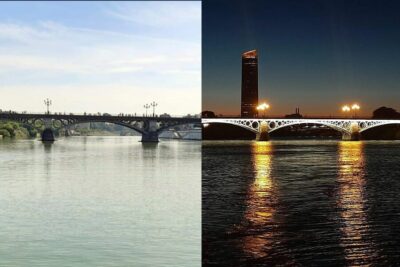
Guadalquivir Boat Tour with Optional Lunch/Dinner
Read our review →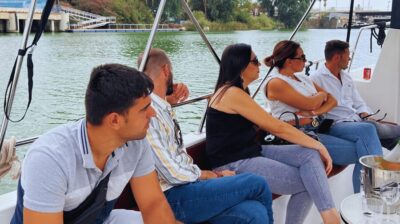
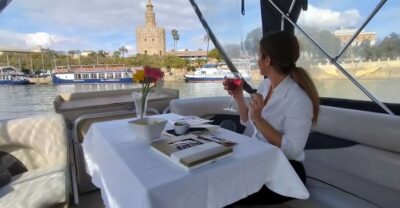
Cruise along the Guadalquivir River with appetizer
Read our review →
Also filed under