
Rated · WALKING TOURS
Seville Triana Quarter and River Small-Group Walking Tour
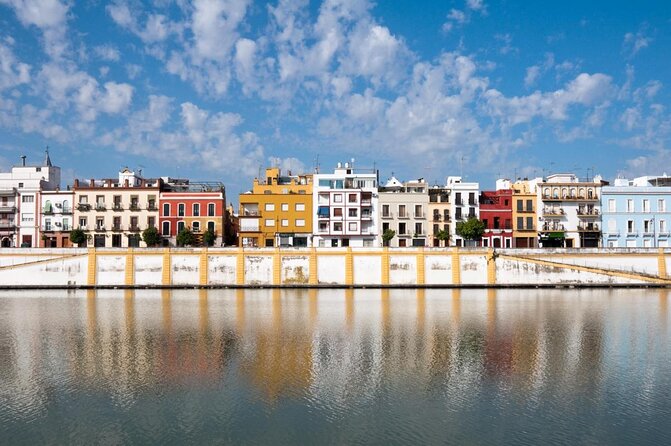
Triana feels different from the rest of Seville, and this tour gives you the quickest way to understand why. You start at the Torre del Oro river watchtower and end in Triana’s religious heart, with the Guadalquivir always nearby as your map. I like that it is a small group of up to 10, so the guide can slow down when questions pop up.
Two things I really like: the route mixes big monuments with everyday life, and it stays focused on what shaped Triana. You get history tied to visible places, from bridges and ironwork to markets and the crafts that put Triana on the arts map.
One drawback to plan around: it is a walking tour, and while the area is generally easy to move through on foot, it still means time on your feet in Seville weather. If you prefer long sit-down breaks, you might find the pace a bit nonstop.
Key highlights if you love Seville and want it explained well
- Up to 10 people, so you get more than a generic overview
- Two start times (morning or afternoon), making it easy to fit into your day
- Riverfront and Triana connected by real landmarks, not just passing views
- Markets and ceramics, so you understand Triana through food and craft
- Holy Week and Mudéjar church architecture, including the Cathedral of Triana nickname
- English tour with mobile ticket, convenient and straightforward
Triana on foot, with the Guadalquivir as your guide
This is one of those tours that helps you read a city like a story. You do not just see places, you connect the dots between Seville and Triana across the river, and you start noticing details most people rush past.
The structure is also smart. The walk is built around stops that explain Triana’s identity, not random photo spots. That means you finish with a clearer sense of why this neighborhood matters, long after the last church bell.
And because the group is capped at 10, the guide can keep things conversational. I have found that makes the history easier to keep in your head, especially when it connects to practical things you can see right away.
More walking tours in Seville:
- Seville: Small-Group City Highlights Walking Tour
★ 5.0 · 1,204 reviews - Cultural Walking Tour of Seville Monumental
★ 5.0 · 861 reviews - Seville: Tapas, Taverns, and History Walking Tour
★ 4.9 · 676 reviews
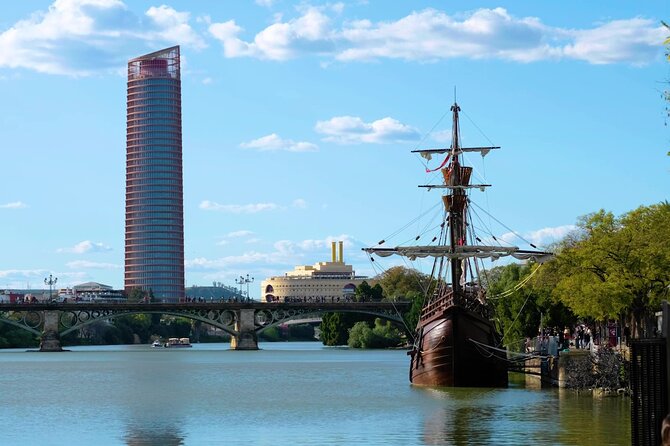
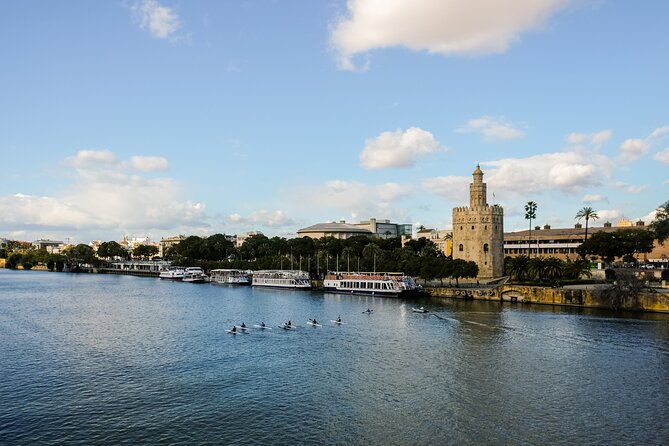
Starting at Torre del Oro, where the river meets power
You begin at the Torre del Oro, the Golden Tower watchtower on the Seville side of the Guadalquivir. This is not just a dramatic landmark. It is your time machine, because it sets the idea that controlling the river meant controlling access to the city.
From the start, you get a sense of how Seville protected itself and how ships mattered. The guide’s job is to connect that early river control to what came later, when Triana grew into its own crucial part of city life.
You also get a feel for scale. Standing near the riverfront buildings and looking toward Triana helps the rest of the route make sense, especially when bridges and viewpoints appear later in the walk.
If you like geography, this tour will feel extra satisfying. Even if you have never studied Seville before, the river does the teaching.
How a modern monument shows Seville’s long string of cultures
Next comes a stop at a modern monument that reflects how many cultures called Seville home and managed to coexist over centuries. It is a useful pivot. After the fortress mindset of the Golden Tower, you shift into the idea of layered identity.
This kind of stop works best when you understand it as a bridge between eras. You are moving from medieval and early defensive thinking into the broader story of a city shaped by trade, migration, and cultural overlap.
It also primes you for what comes next, because bridges, markets, and religious buildings all show different parts of Triana’s character.
The iron bridge story, and why the 1800s still matter
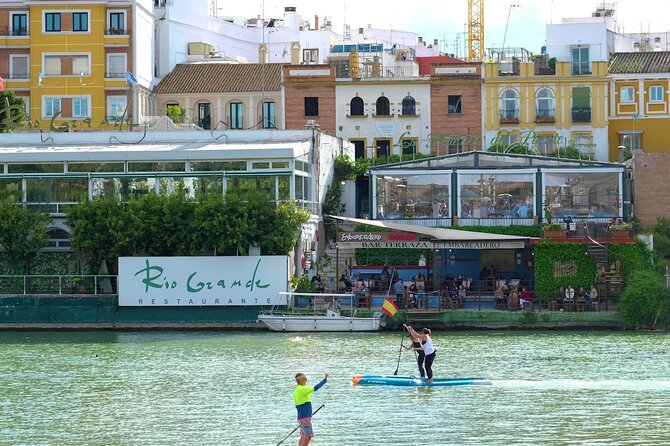
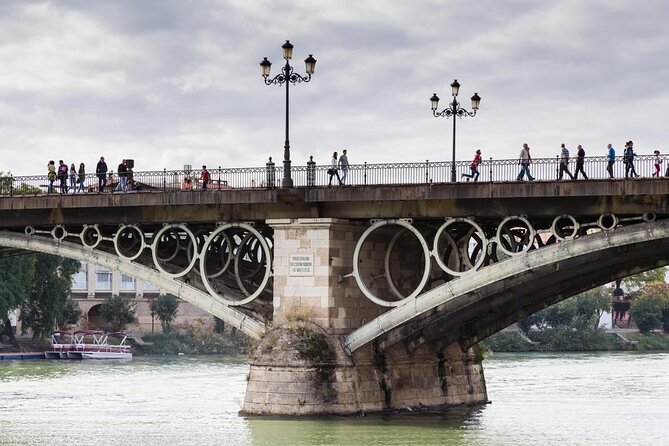
Then you reach the first fixed bridge of Seville, built to replace the earlier floating bridge that connected the city to Triana. It is a perfect transition stop, because it is both practical infrastructure and cultural connection.
The bridge also gives you a chance to look at architecture as a clue. You hear how it is a great example of iron architecture from the 1800s, which is not just a design detail. It signals an era when connections across the river became more permanent and easier to rely on.
If you tend to skip over engineering landmarks while sightseeing, this part is worth paying attention to. Bridges are where urban planning meets daily life, and Triana’s link to Seville becomes more than an idea.
Still around Seville, a different sort of day:
- Seville: Live Flamenco Dancing Show Ticket at the Theater
★ 4.7 · 16,396 reviews - Seville: 1-Hour Guadalquivir River Sightseeing Eco Cruise
★ 4.2 · 10,281 reviews - Seville: Cathedral, Giralda, and Royal Alcázar Guided Tour
★ 4.7 · 9,165 reviews - Seville: Setas de Sevilla Entry Ticket
★ 4.6 · 8,901 reviews
Triana’s traditional market, food culture, and what’s behind Mediterranean flavors
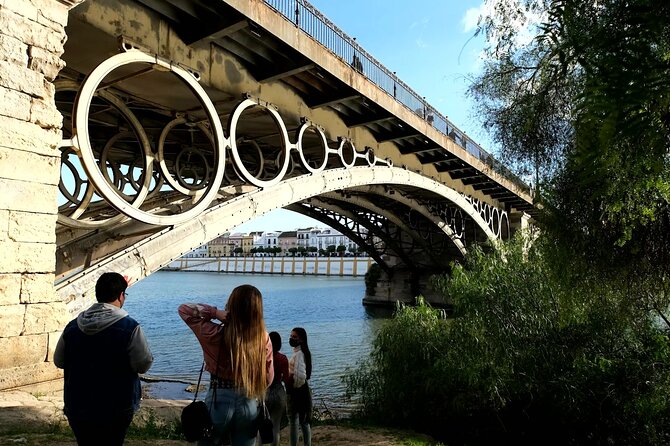
At the neighborhood market, you shift from stone and metal to hands and food. This is where the tour explains why Triana’s local products mattered, and how they fed into Mediterranean cuisine.
Market stops are often vague on walking tours, like: here is a market, take a photo. Here, the point is understanding the food logic. You learn what products were important and why, so when you later eat in Triana you are not just guessing.
It also helps you picture daily rhythm. Markets are where people meet, trade, and choose what they cook. Once you understand that role, the rest of Triana’s craft and religious culture clicks into place.
Ceramics and artisan workshops, where Triana’s art actually comes from
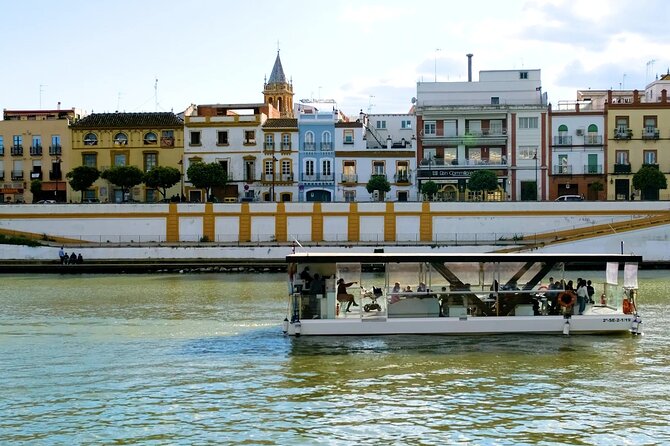
From the market, you move into crafts and the arts, with a specific focus on ceramics. Triana’s workshops are framed as more than a souvenir stop. They show how craft traditions feed local identity and help keep artistic skill alive.
This is one of the tour’s best themes if you care about what makes a neighborhood feel like a neighborhood. The guide connects the ceramics story to the broader idea of Triana as a place where making things matters.
You also get a chance to see how tradition continues through real artisan workshops. That is often what makes this kind of stop feel authentic, because you are not only looking at history behind glass.
If you like shopping but hate the trap of overpriced tourist clutter, this is where you get better context. Even if you do not buy anything, you leave with a better eye.
San Jorge fortress, defensive structure, and the Inquisition connection
Next up is the Castle of San Jorge. Here the tour turns serious, because it is described as the area’s only defensive structure and also the headquarters of the Inquisition.
That combination can feel heavy, but it is important context for Seville and the broader region. You are not just hearing a list of dates. The guide explains why a fortress and an institutional power could live in the same space, and how that shaped local history.
It is also a great stop for perspective. Even if you are not a history nerd, standing where defensive strategy once mattered gives you a different understanding of city layout.
One more benefit: it breaks the walk into a clear contrast. You go from everyday life and crafts into a defensive, political story. That rhythm helps the tour stay engaging instead of turning into a single long lecture.
Holy Week in Triana, and why these chapels matter
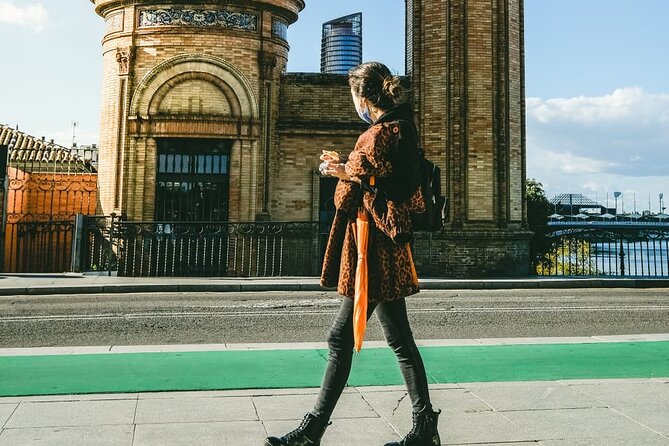
You then enter a little church tied to Holy Week. This stop is presented as essential because it is associated with some of the most beloved brotherhoods of Triana, and the chapel remains a must-see for anyone visiting the suburb.
This is not just religious architecture for passing interest. It is about local tradition and community identity. Triana’s Holy Week connection is the kind of thing that helps you understand why people return year after year, even when the rest of the city feels more like a stage for tourists.
The church stop also gives you a cultural anchor for the walk. After castles and bridges, you end up in a place where faith and tradition have a daily presence.
If you visit Seville outside Holy Week dates, this still works. You are learning the significance, not trying to catch a specific parade.
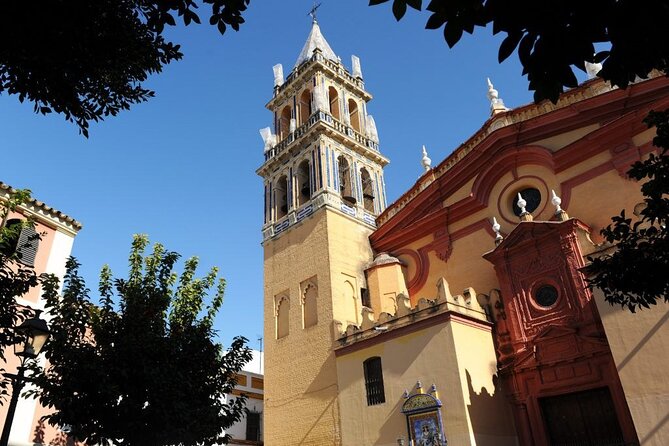
The Cathedral of Triana, Mudéjar style after 1248
The final major church stop is Triana’s most important church, described as the first built after the Christian conquest of 1248. It is also highlighted as a strong example of Mudéjar architecture, and it is often called the Cathedral of Triana.
This is a satisfying ending because it brings together the tour’s themes: layered culture, religious tradition, and architecture as an identity marker. Mudéjar style is a term you hear in Seville a lot, but this stop gives it a real place in Triana’s story.
Also, ending here feels right. You start at a river watchtower built for defense and end at a church connected to Triana’s lasting spiritual and neighborhood life.
Even the walk’s logic feels complete: power and protection, connections and commerce, craft and food, and then community tradition and belief.
The pace, the group size, and what you should wear
This tour runs about 1 hour 30 minutes. That is a great length because it gives time for multiple stops without exhausting you for the rest of your day.
Choose your start time based on how you like to tour. Morning can feel more comfortable for walking, while afternoon fits better if you want a slower start and lunch first.
The group cap of 10 is a big deal for pacing. In smaller groups, the guide can keep you from sprinting from place to place. From the walking style on this route, you can expect a generally manageable walk, and the route is described as flat on both sides of the river.
Wear comfortable shoes. Seville’s cobblestones can be charming, and they can also be unforgiving.
If you are traveling with service animals, the tour allows them. And since it is offered in English and most people can participate, it is a solid choice for a wide range of travelers.
Price and value for a 90-minute guided walk
At $30.04 per person, this is not a bargain price, and it also does not feel overpriced for what you get. The value is in the number of meaningful stops and the way the guide connects them into a single story of Triana.
You are paying for guided interpretation of a neighborhood that can take a long time to understand on your own. The cost also makes sense for a small-group format, not a large bus-style tour where the guide has to talk to everyone at once.
You also get a mobile ticket, so you can spend less time dealing with paperwork and more time meeting at Torre del Oro and then walking.
For comparison in your head, think of it like this: this is around 90 minutes of guided, structured sightseeing across multiple landmarks and themes, including markets and craft culture. If you usually book walking tours, it fits the category of practical, good value.
Guides who make the story land, Marta, Miguel, and Clara
A big part of why this tour works is the guide talent. Marta shows up in multiple experiences as enthusiastic and clear, with explanations that help Seville and Triana feel like a lived-in place rather than a list of monuments.
Miguel stands out when the group turns one-on-one. He is described as warm and friendly, and he weaves history with current events, which is a great way to keep the information from feeling stuck in the past.
Clara is mentioned for making the walk smooth and fun, with a lot of passion and strong pacing so it does not turn into an overload of facts.
What that means for you: if you like learning through conversation and you want someone to point out what matters, this tour is set up for that. You are not just following a route, you are getting a guided way to understand it.
And the best practical bonus from a few experiences: you leave with dining and entertainment tips. That kind of local direction is hard to replicate without a guide.
Should you book this Seville and Triana walking tour?
Book it if you want a focused neighborhood experience, not a scattered checklist. You will likely enjoy it most if you like history with context, and if you care about how Triana’s identity shows up in markets, crafts, bridges, and church architecture.
Skip it or consider a different option if you have very limited mobility or you hate walking. Also, if you want only the most famous Seville icons and you are not interested in Triana’s local culture, this may feel too neighborhood-specific.
If you are the type who enjoys figuring out why a place exists, this tour gives you that answer in a tight, easy-to-follow route.
FAQ
FAQ
Where does the tour start and end?
The tour starts at Torre del Oro (Golden Tower), P.º de Cristóbal Colón, s/n, Casco Antiguo, 41001 Sevilla, Spain. It ends at Real Parroquia de Señora Santa Ana, Párroco don Eugenio, 1, 41010 Sevilla, Spain.
How long is the Seville Triana Quarter and River small-group walking tour?
The duration is about 1 hour 30 minutes.
How big is the group?
The tour is limited to a maximum of 10 travelers.
Is it offered in English?
Yes, the tour is offered in English.
Do I get a mobile ticket?
Yes, you receive a mobile ticket.
Is it suitable for most people, and are service animals allowed?
The tour states that most travelers can participate, and service animals are allowed. It is also near public transportation.
Recently reviewed around Seville
- The Villages of Andalusia: Full-Day Trip from Seville★ 4.8 · 19 reviews
- From Seville: White Villages Tour★ 5.0 · 9 reviews
- White Villages and Ronda: Day Trip from Seville★ 4.9 · 89 reviews
- White Villages & Ronda 2-Days Trip & Overnight Stay★ 4.6 · 5 reviews
- Seville: Guided visit of the Casa de Pilatos with entrance tickets★ 4.3 · 18 reviews
- Triana Market Tapas Tour★ 4.9 · 12 reviews
- Your Photo Story in Seville★ 5.0 · 16 reviews
- Transfer Hotel Seville-Seville Airport★ 4.5 · 15 reviews
Walking Tours, side by side.
Walking Tour through Cádiz: Stories from the hand of a local guide
Read our review →
Small-Group Jewish Quarter Discovery Walking Tour
Read our review →
Also filed under