Rated · TOURS
Tour Sevilla de las 3 Culturas
Seville de las 3 Culturas is interesting because you do not just see monuments, you learn how the city’s layers piled up over centuries. You walk through the same neighborhoods and streets where Roman power, Al-Andalus life, Jewish community influence, and Christian rule all left visible marks.
Two things I like right away. First, you get a proper official guide, and in one standout case the guide José answered questions clearly. Second, the route is built for comfort, it is flat with shade in summer and sun in winter, so you can stay focused on the stories instead of fighting your feet.
One thing to consider: the live tour guide is Spanish only, and at 2 hours the pacing stays brisk. You will see a lot of stops, but this is not a slow, sit-and-stare museum visit.
Key highlights you will actually feel on the ground
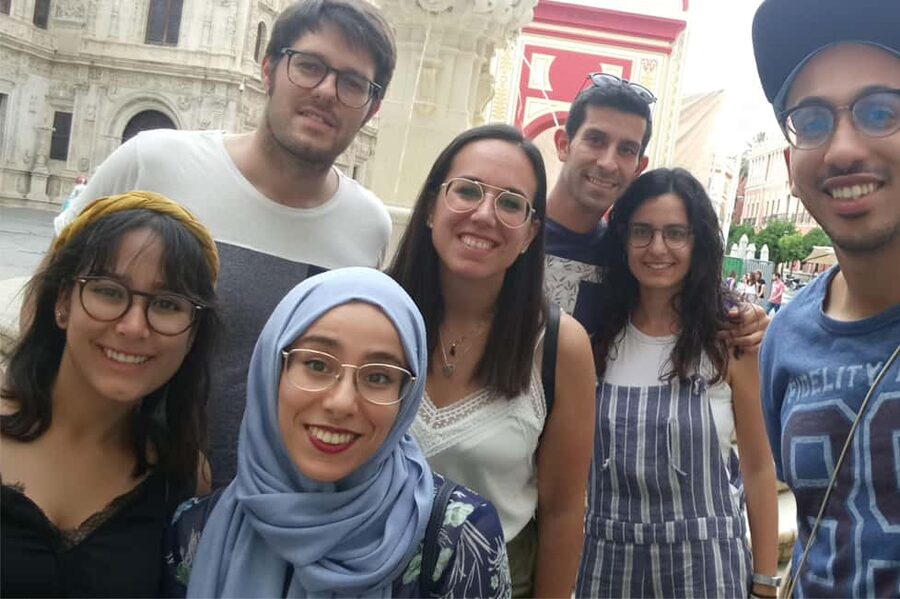
- An official guide with strong communication, including clear Q and A (José was specifically praised)
- A 3-culture wayfinding path through Medina-like lanes, the Jewish quarter, and major Christian sites
- Almohad remains plus Islamic Seville as a core theme, not an afterthought
- Santa Cruz and the Juderia framed with the stories of the old Jewish quarter
- Seville of the Indies theme, from archives to port-side views, ending at Torre del Oro
- Comfort-focused walking, flat terrain, water-friendly advice, and shade planning
How the three cultures tour changes the way you see Seville
This tour is built around one simple idea: Seville only makes sense when you connect the pieces. The guide moves you through Roman Seville, Al-Andalus, the Almohad period, the Reconquest under Ferdinand III, and the lasting imprint of the Jewish community in the old quarters. Add the stories of the 15th-century settled gitanería of Triana, and suddenly Seville stops feeling like a checklist.
What makes it work is that the emphasis is not abstract. You are guided through neighborhoods with names tied to these chapters, and you are encouraged to interpret what you see rather than just pass by it. The result is a city walk that feels like a guided reading session, except you are holding your phone above street-level arches instead of a book.
More of Seville worth an open tab:
- Seville: Live Flamenco Dancing Show Ticket at the Theater
★ 4.7 · 16,396 reviews - Seville: 1-Hour Guadalquivir River Sightseeing Eco Cruise
★ 4.2 · 10,281 reviews - Seville: Cathedral, Giralda, and Royal Alcázar Guided Tour
★ 4.7 · 9,165 reviews
Starting at Plaza de San Francisco and getting your bearings fast
You meet at Pl. de S. Francisco, 17. From the first minutes, you are placed in the flow of the historic center so the rest of the walk makes sense. Stop 2 is the Plaza de San Francisco itself, then you move on to the Banco de España for sightseeing.
This early stretch is practical. It helps you orient your brain before the tour starts stacking cultural layers. And it sets expectations for how the next 2 hours will feel: this is a walking experience with frequent stops for interpretation, not a long transit between far-flung sites.
One small but useful detail: the provider says you should include a phone number with WhatsApp so they can share the meeting point clearly. If you have ever been hunting for a tour group in Seville’s older streets, you already know how helpful that is.
Giralda, Seville Cathedral, and the Christian chapter under Ferdinand III
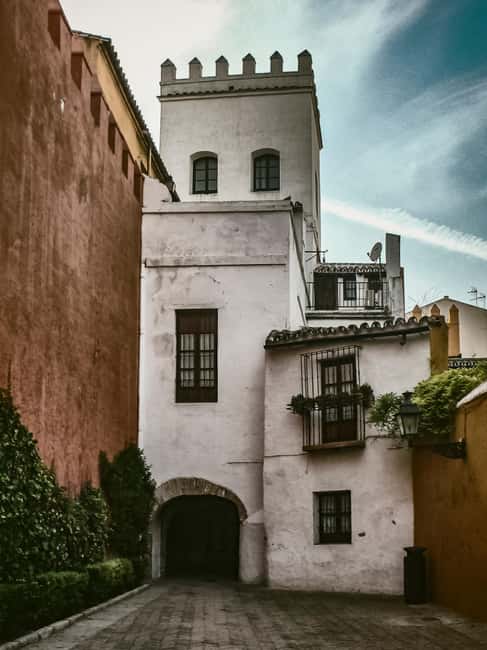
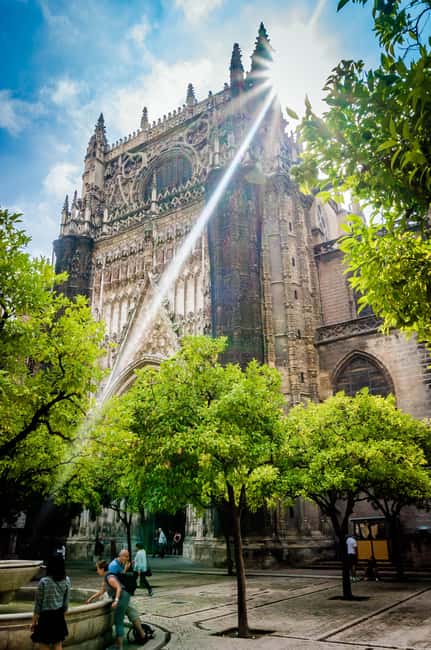
Once you are oriented, the tour turns toward the Christian landmarks. You visit the Giralda and then the Seville Cathedral. After that, there is sightseeing at the Palacio Arzobispal, followed by more time in the surrounding area.
The bigger context the guide will give you is Ferdinand III and the Reconquest. Seville became a reference point for Catholicism after the arrival of Ferdinand III, and this part of the walk is where that shift becomes visible in the city’s “center of gravity.”
Here is how I suggest you use this section: do not treat it like separate attractions. Treat it like a timeline marker. When the guide explains the move from Al-Andalus influence into Christian rule, look for the change in the kind of space you are standing in. Even without technical history facts, the city’s tone changes, and your eyes start picking up those cues faster than if you only read captions later.
Palacio Arzobispal and the walk into the Juderia mindset
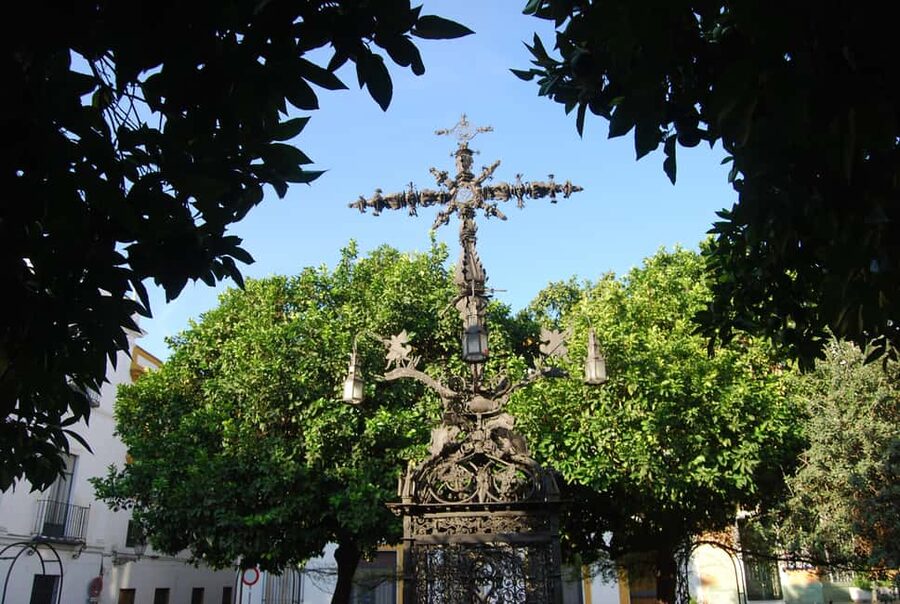
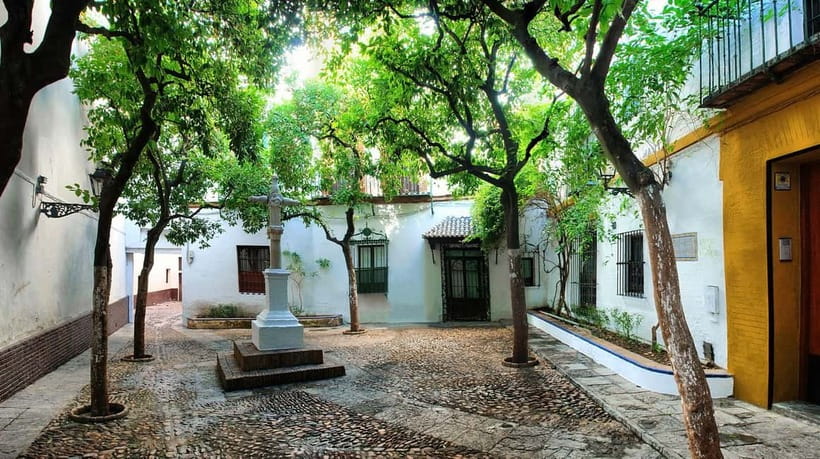
After the cathedral area, the tour keeps you moving into older streets where the feel shifts. You will spend time with sightseeing in the Judería, then you pass through smaller plazas like Plaza de la Alianza and Plaza Dona Elvira. The walk continues with Calle Susona and Calle Vida, which are perfect “in-between” stops. They are short, but they help you connect the big monuments to the daily street geometry that shaped community life.
This is also where the tour’s three-culture premise starts to feel real. Roman and Al-Andalus themes are not limited to a single museum-style exhibit. You see how the city’s layout supports the story, especially when the guide points out the narrow streets and the way walls, arches, and palaces show up in different eras.
Still around Seville, a different sort of day:
- Seville: Setas de Sevilla Entry Ticket
★ 4.6 · 8,901 reviews - Seville: Cathedral, Giralda & Alcazar Entry With Guided Tour
★ 4.6 · 8,560 reviews - Seville: Priority Access Cathedral, Giralda & Alcázar Tour
★ 4.8 · 7,563 reviews - Seville: Guadalquivir River Cruise
★ 3.9 · 6,921 reviews
Santa Cruz and the Jewish imprint you can follow step by step
One of the tour’s best themes is the Jewish quarter, especially Santa Cruz. You visit Santa Cruz, and you also get time at the Patio de Banderas.
The tour frames this section clearly. Seville had one of the oldest and largest Jewish quarters in the country, and the guide focuses on that visible mark in the neighborhood. The experience here is less about memorizing a list and more about learning how to read an area. You will hear stories tied to characters, legends, and curiosities connected with the epochs lived in these streets.
A practical tip: Santa Cruz is a place you might want to photograph from multiple angles. But during a guided tour, resist the urge to only take wide shots. Instead, pause for the guide’s line of explanation, then take your photos after. That simple habit makes the pictures mean something later.
Islamic Seville and Almohad remains at Real Alcázar and beyond
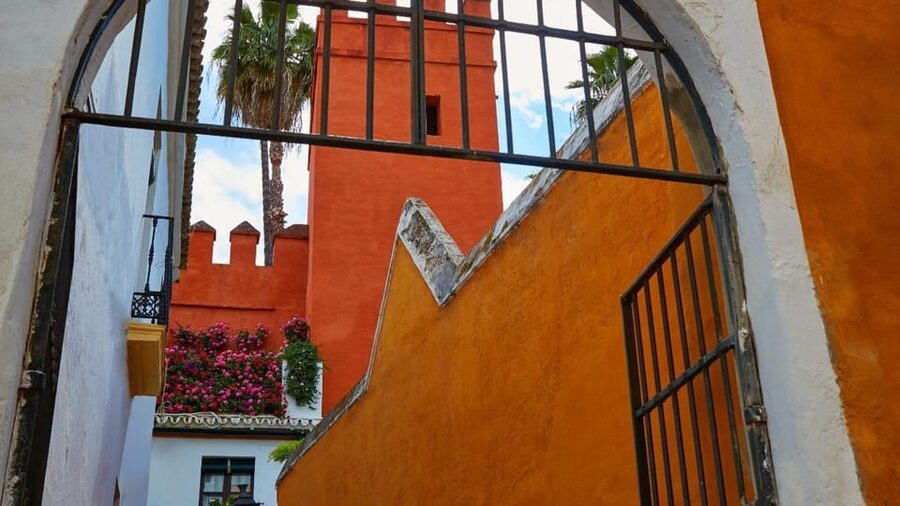
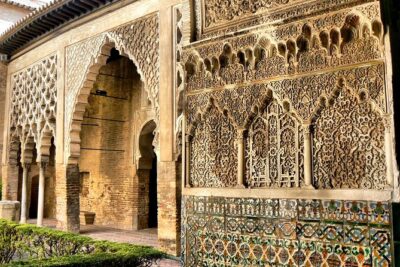
The tour promises “colourful Islamic Seville” and specifically highlights Almohad remains, saying Seville is the city with the most Almohad remains. You do not just hear that claim. You walk through major sites that relate to the Al-Andalus peak and then connect that era to what came after.
A key stop is the Puerta del León at the Real Alcázar of Seville. Later, there is sightseeing at El Giraldillo. The placement matters. By the time you reach this part of the walk, you have already seen Christian landmarks and you have walked through the Jewish quarter. So the guide can show you how the city transitioned, instead of treating each era as a separate world.
How to get the most out of it: when the guide talks about Almohad rule and the period reaching maximum splendor, look at how the spaces feel. The tour is designed to make these periods feel like they are layers you can point to. If you enjoy architecture or you like comparing different “styles” in one city, this section delivers.
El Arenal, archives, and Seville of the Indies
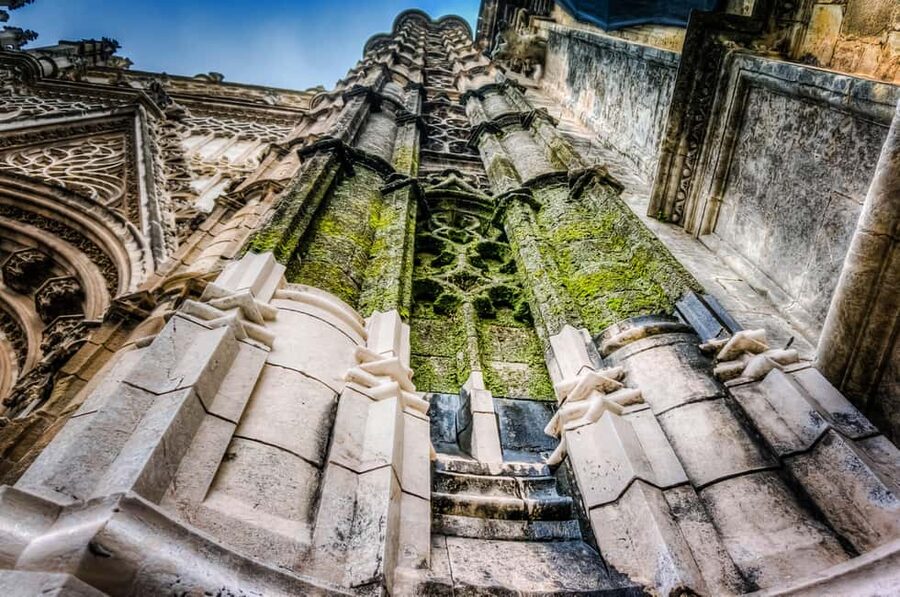
Next, the tour shifts to the maritime and imperial storyline, labeled Seville of the Indies. You visit El Arenal, and then you move on to Plaza del Cabildo. There is also a visit to Mercado Artesania El Postigo.
The “port of Europe for America, with its lights and shadows” theme is central here. This is not just about sea views. It is about Seville’s role as a gateway in a larger story, and how that role shaped the city you walk through today.
One of the most focused moments is the guided tour inside the General Archive of the Indies. A guided visit to an archive is different from a casual glance. It helps you connect the idea of Seville’s global importance to actual places where records and history live.
Puente de Isabel II and the final stretch to Torre del Oro
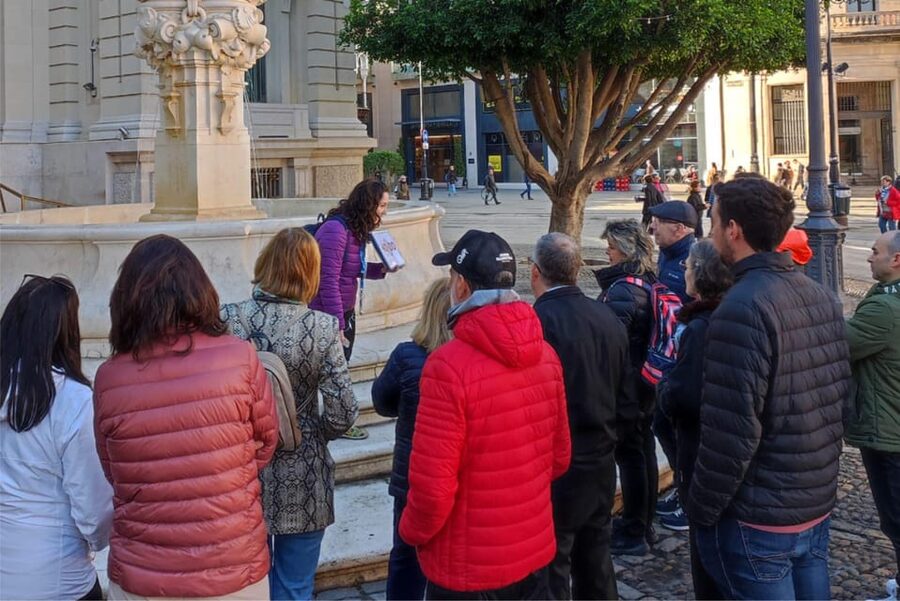
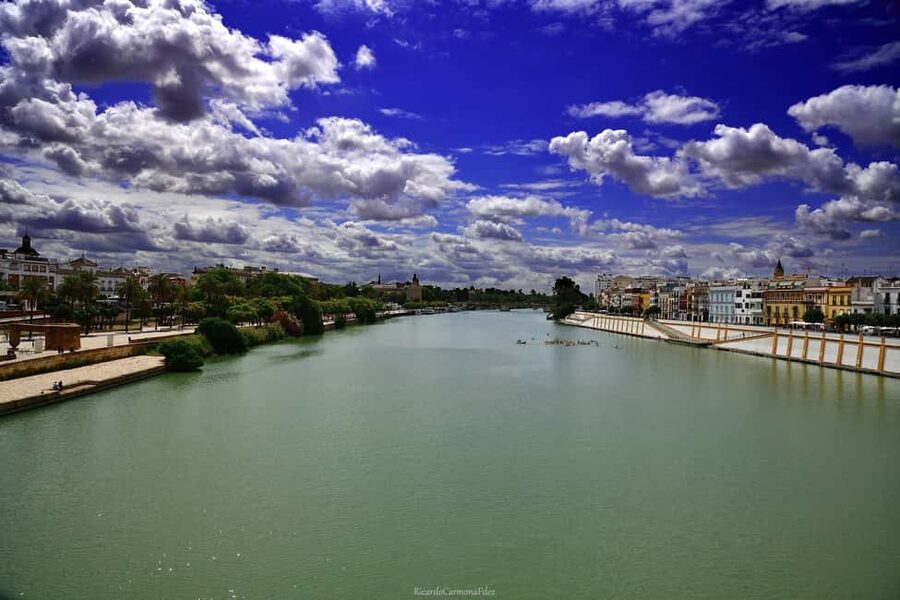
The closing stretch brings you to Puente de Isabel II, then you continue to Torre del Oro, where the tour finishes.
This last sequence works because it ties the “Indies” idea to a physical landmark you can remember. Torre del Oro is a strong visual anchor for the end of a tour that has been about reading Seville as multiple timelines at once.
If you are the type who forgets names quickly, do this: pick one moment from the walk that you can picture clearly, then link it to the era the guide explained right before that stop. For many people, the strongest memory will be in this final part.
Price and value, $7 for a 2-hour official-guided city read
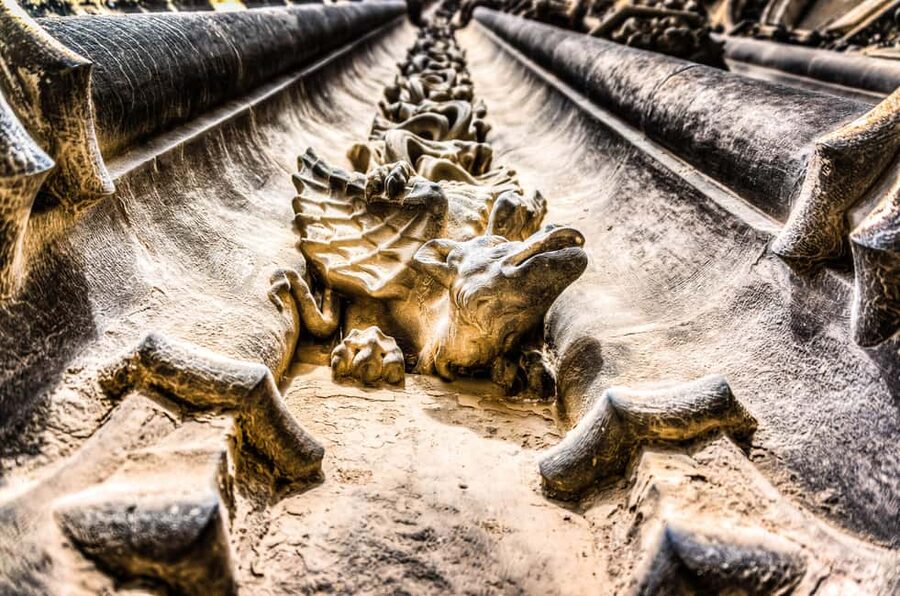
At $7 per person and about 2 hours, this is priced like a bargain for what you get: an official guide, multiple major stops, and a guided tour portion inside the General Archive of the Indies. The tour also includes skip-the-ticket-line access.
Two things make the value feel real, not gimmicky. First, the guide is framed as official and experienced, with a communication style that can handle questions. Second, the route is designed to be walkable, flat, and comfortable with shade in summer and sun in winter. When a tour is physically easy, you spend your energy on understanding, not on recovery.
If you already plan to visit several of the big sites around Seville, this tour can act like a shortcut to context. You might still want to come back later on your own to linger. But starting with a guided “read the city” session often makes those return visits much more rewarding.
Comfort tips so the 2-hour walk feels easy, not annoying
The provider notes the route is comfortable, with everything flat and no slopes. That matters. Seville’s center can feel like it never stops, so even a short walk can become tiring if the itinerary is steep or long-distance.
Here is what I recommend you do to match their comfort setup:
- Bring water. The route is shade-planned, but you are still walking in an outdoor city.
- Wear comfortable shoes. You will be standing and looking during visits, not just strolling.
- Plan for the season. They say stops are in the shade in summer and in the sun in winter, so dress accordingly.
Also, because the tour is Spanish only, consider downloading a few key words or just letting the guide carry the flow. If you understand even a little Spanish, you will pick up more of the nuance in the storytelling.
Who this tour is best for
This is a good fit if:
- You want a guided way to understand Seville’s layered past, not just a list of sights.
- You like walking tours with interpretation, especially ones that connect Islamic, Jewish, and Christian eras.
- You want a manageable 2-hour plan that covers a lot of ground without crazy slopes.
It may be less ideal if:
- You need English language support, since the live guide is in Spanish.
- You prefer long, unhurried museum-style time with minimal walking.
If you are traveling with mobility needs, the tour is listed as wheelchair accessible, which is a major plus for planning.
Should you book Sevilla de las 3 Culturas?
Book it if you want Seville to make sense in a single morning or afternoon block. The combination of official guidance, smart stop selection, and cultural framing around Roman, Al-Andalus, Jewish, Christian, and Indies stories gives you a fast path to understanding the city. At $7 with skip-the-ticket-line access, it also feels like a practical way to turn “I saw Seville” into “I understood Seville.”
Hold off if Spanish is a deal-breaker for you, or if you prefer to control the pace tightly. In that case, you might prefer self-guided time so you can linger longer at only one or two stops.
If Spanish works and you want a structured, comfortable walk, this is the kind of tour that saves you from wandering without a storyline.
FAQ
How long is the tour?
The tour duration is 2 hours.
What is the starting meeting point for the tour?
The tour starts at Pl. de S. Francisco, 17 (Plaza de San Francisco).
Where does the tour finish?
The listed finish point is Torre del Oro, and the meeting point information also says the activity ends back at the meeting point.
Is there a live guide, and what language is it in?
Yes, it is a live tour with an official tourist guide, and the language is Spanish.
Does the tour include skip-the-ticket-line access?
Yes, skip the ticket line is included.
Is the tour wheelchair accessible?
Yes, it is listed as wheelchair accessible.
What is the cancellation and payment policy?
You have free cancellation up to 24 hours in advance for a full refund, and you can reserve now and pay later.
Recently reviewed around Seville
- NOSIESTA | Guided E-Bike Tour Sevilla | ENGLISH (NATIVE)★ 5.0 · 5 reviews
- Tour of the Alcazar of Seville★ 5.0 · 7 reviews
- The Cultures of Seville Walking Tour★ 4.7 · 8 reviews
- Sunset Kayaking★ 4.9 · 16 reviews
- Seville PHOTO WALK★ 4.8 · 10 reviews
- Sunset Kayak: Historic Seville, Triana and La Cartuja★ 5.0 · 10 reviews
- Seville with a Michelin Chef: Gastronomic Tour around Secret Corners★ 1.3 · 6 reviews
- Welcome to Seville: Private Tour with a Local Host★ 4.1 · 44 reviews
Tours, side by side.
Skip-the-Ticket-Line Mosque-Cathedral Guided Tour
Read our review →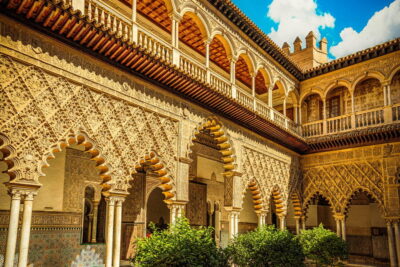
Cathedral, Giralda, and Royal Alcázar Guided Tour
Read our review →
Cathedral, Giralda & Alcazar Entry With Guided Tour
Read our review →Priority Access Cathedral, Giralda & Alcázar Tour
Read our review →
Cordoba Mosque-Cathedral: Skip-the-Line Guided Tour
Read our review →
Alcázar and Cathedral Entry Ticket and Guided Tour
Read our review →