
Rated · ITÁLICA TOURS
Historical Italica: Half-Day Guided Tour from Seville
It is hard to beat the punch of seeing a major Roman city in a short window, especially when it is tucked just outside Seville. Italica feels less like a museum stop and more like walking through a real place where the Romans once lived, worked, and put on big shows.
I love how the time is used: you get a long, guided look at the standout Roman ruins, then a second stop at a monastery that adds a different chapter of history. I also like the included access, especially the Roman theater area and the mosaics, plus the guided storytelling that helps you read what you are seeing. One thing to consider is that this is a walking tour, and you may feel the pace more if you are sensitive to heat or if your schedule is tight for later that day.
Key highlights at a glance
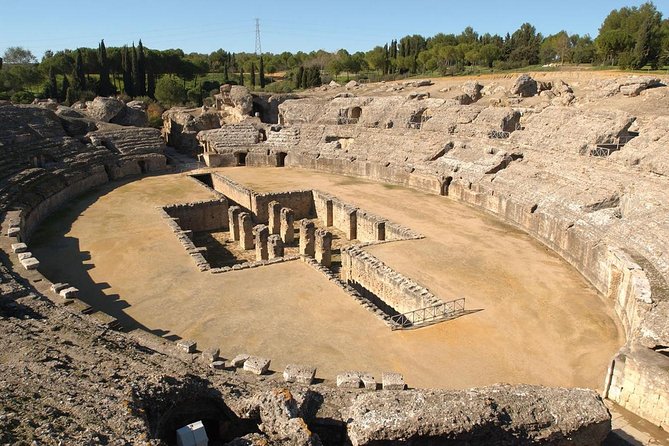
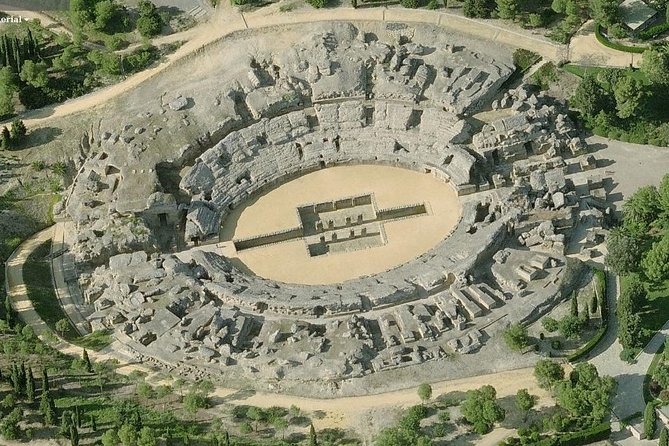
- Roman theater scale: see the amphitheater area built for up to 25,000 spectators
- Mosaics and domus houses: get a guided read on upper-class homes and floor designs
- A 4-hour format: half-day pace that works well between Seville plans
- San Isidoro del Campo included: a monastery stop that fits the site visit
- English-guided experience: the tour runs in English, with professional guidance
- Small-ish groups: capped at 60 travelers, so it usually stays manageable
Why Italica feels special on a half-day schedule
Italica is one of those Roman sites that makes you stop saying Roman ruins and start saying lived-in city. The reason this tour works is simple: you do not spend hours just getting to the place and you do not skim. You walk a focused route, learn what matters, and then you move on with the day still intact.
In about half a day, you can go from Roman entertainment and domestic life to a monastery stop with a medieval connection nearby. That mix is not random. It helps you see how later eras reused, repurposed, or grew around the remains of earlier ones.
For me, the best part is that you do not need advanced archaeology training. If you can follow a guide who points out what you are looking at, Italica becomes easy to understand fast.
More Itálica Roman city tours:
- From Seville: Italica Roman City & Medieval Monastery Tour
★ 4.5 · 1,051 reviews - Seville: Game of Thrones and Roman Empire Italica Tour
★ 4.3 · 372 reviews - Visit to Italica Roman Ruins Tour tickets included
★ 4.5 · 285 reviews
Getting from Seville to the Roman ruins, without wasting your day
The tour includes a round-trip shared transfer, which matters more than it sounds. Seville is busy, and a half-day trip means any extra transit time steals from the actual experience.
The tour also notes it is near public transportation, which is helpful if your plans shift or you are meeting at a convenient spot. The duration is about 4 hours, with enough structure to feel organized but not so long that you burn the entire day.
One practical note based on how these tours often run: getting back on time can be important if you have a train or reservation later. Several guests have mentioned lateness on some occasions in this kind of format, so I recommend building in a little buffer if your next stop is time-sensitive.
Stop 1: Anfiteatro de Italica, where the mosaics do the talking
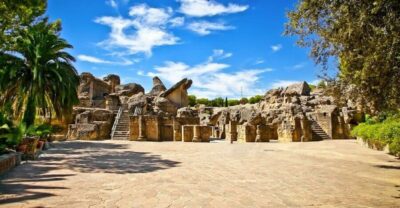
The first stop is the heart of it all: the Anfiteatro de Italica area at the Archaeological Ensemble. This is where you spend about 2 hours, and admission is included.
What you should expect to see
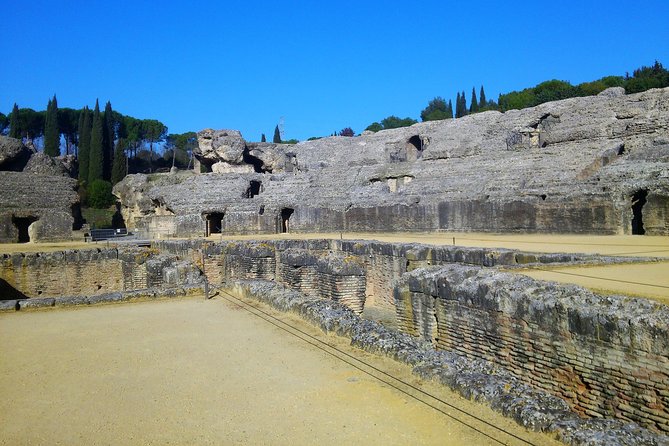
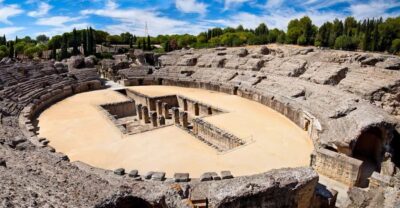
Think big, then look closely. You will be around a Roman entertainment structure that is described as one of the largest in the Roman empire, with capacity for 25,000 spectators. Even if you know Roman theaters only by reputation, the sheer scale hits in person. It is the kind of place where your brain instantly understands why crowds mattered.
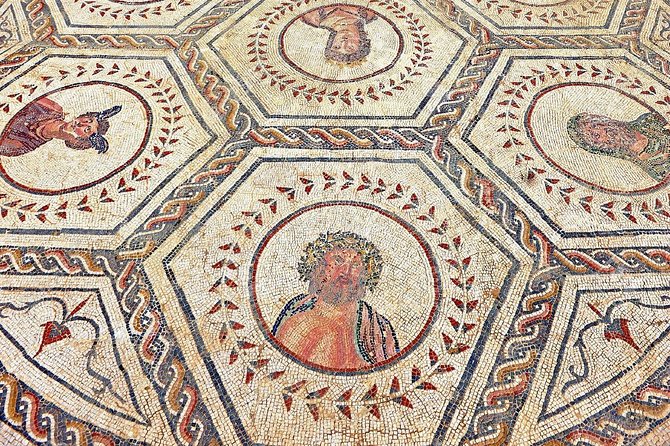
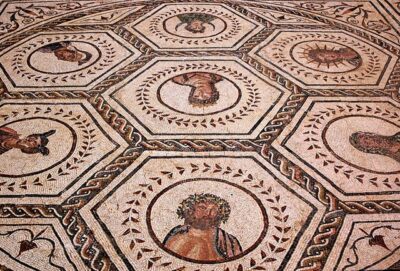
After you register the size, the site shifts into details. This is where the mosaics come in. Italica is especially praised for preserved mosaic work, and your guide should help you understand what you are seeing rather than leaving you to guess.
You also get context around domus houses, which were the homes of the upper classes. That means you are not just staring at ruins. You are learning what kind of people lived in the place and what their daily life likely looked like, based on the way rooms and floors were arranged and decorated.
More day trips from Seville:
- From Seville: Pueblos Blancos and Ronda Full-Day Trip
★ 4.5 · 3,849 reviews - From Seville: Ronda+Setenil de las Bodegas Day Trip
★ 4.4 · 3,562 reviews - White Villages and Ronda Day Tour from Seville
★ 4.5 · 2,049 reviews - From Seville: Cordoba, the Mosque and Carmona Day Trip
★ 4.5 · 1,967 reviews
Why the guided walk matters here
Without guidance, you can end up with a quick photo loop. With a good guide, Italica becomes readable.
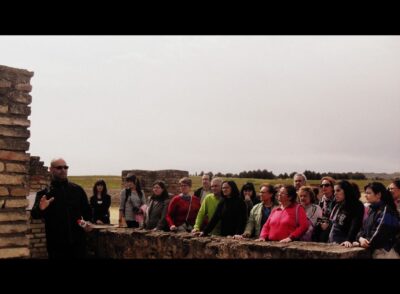
In the experience, guides are repeatedly described as turning stones into a timeline. Some guides explicitly focus on how Romans lived and how historians interpret the evidence. That matters because Roman sites can look straightforward until you realize what is missing, what was rebuilt, and what is still debated.
A timing tip for your best photos
Two hours sounds comfortable, but it is easy to rush when the light is good and you want everything. Pace yourself. Take 10 minutes to explore and find your best angles early, then let the guide take you through the points you might otherwise miss.
Stop 2: Monasterio de San Isidoro del Campo, a medieval pause near the ruins
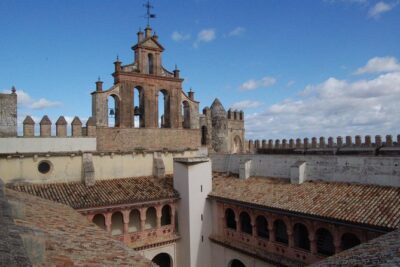
On the way back, the tour includes a visit to Monasterio de San Isidoro del Campo. This stop runs about 1 hour, and admission is included.
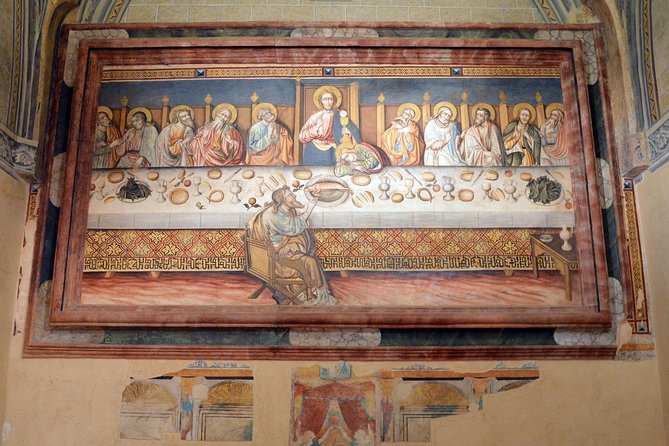
This monastery is often described as beautiful, and it adds a different kind of payoff than the Roman ruins. Where Italica is about scale, architecture, and everyday living details, the monastery is about atmosphere, art, and a separate historical layer that sits beside the archaeological complex.
One reason this works on a half-day format is that it gives your brain a switch. You are done with the Roman timeline, then you reset for something more spiritual and artistic. It also helps you feel like the tour is not just a one-note ticket.
The monastery is not for everyone
Not everyone loves this kind of stop. A few people have felt it was less connected to the main Roman focus, and if you are strict about your interests, you might find it slower than the ruins.
Still, for art and history fans, it is a worthwhile contrast. If you are more of a Roman-only person, mentally treat it as the calm chapter after the amphitheater.
The guide experience in English, and what to look for
This tour is offered in English, and the guidance is one of the biggest reasons it rates so highly. Multiple guides are named in guest feedback, including Jesús, Rebecca, Leon, Miguel, and Alberto. The recurring theme is that the best guides do two things well:
- They explain what you are seeing in plain language.
- They add narrative detail, not just dates.
That kind of explanation helps you connect the mosaics, the domestic spaces, and the theater into a coherent picture. You start noticing patterns. You stop asking what something is and start asking why it was there.
One language-and-clarity consideration
A tour lives and dies by naming things clearly. Some guests have pointed out issues with English naming consistency in certain departures. It is not a dealbreaker, but it is a good reason to choose your tour with patience, especially if you care about exact terminology.
If you are the kind of traveler who learns by labeling, take a quick photo of any informational signs so you can refresh words later.
A small safety tip from guest feedback
One guest suggested they were not told to bring ID, but they had passports available on their phone. You might not need it, but if you have your passport with you anyway, it costs nothing and reduces stress.
Pacing, group size, and how to handle the real-world day
The tour has a maximum of 60 travelers. That is not tiny, but it is also not a stampede. In practice, the group splits into smaller segments so the guide can manage the walk and the key stops.
You are also told that most travelers can participate, which is encouraging, but you should still take the walking component seriously. This is a walking tour at an archaeological site, and surfaces can be uneven.
Heat is the practical enemy
A very common theme in feedback is heat. If you go in summer, you need to plan for long moments in sun and then short bursts in shade. The monastery and the ruins can feel very exposed.
Since food and drinks are not included, you will want to bring water if the rules allow it, or at least ensure you have a plan for hydration before and after.
Tickets and transfers included, and how that affects value
The price is $47.18 per person, and the tour includes a driver/guide, round-trip shared transfer, and admission tickets.
From a value standpoint, this is not just “a guide talking while you walk.” You are paying for:
- Guided access to the Roman ensemble highlights
- A structured itinerary with two major stops
- The transport that keeps a half-day trip realistic
Food and drinks are not included, so factor that into your total daily budget. Still, for a guided Roman ruins visit plus a monastery stop, the included admissions and transfer make it feel fairly efficient for the money.
Also, this experience tends to sell ahead. Booking earlier can help you avoid the stress of last-minute choices, especially if you are targeting a specific day in Seville.
What you learn here, besides the obvious Roman facts
Italica is not just famous for being Roman. It is known as the first Roman settlement on the Iberian Peninsula. That alone makes it a meaningful stop if you want to understand how Roman influence took root in Spain.
But the bigger learning comes from how the guide connects themes:
- Entertainment and power: the theater scale shows why Romans built for crowds
- Domestic wealth: mosaics and domus houses point to social life, not just public buildings
- Historical interpretation: a good guide will help you see how historians explain what they find and what they still debate
Even if you think you know Roman history, this is the kind of place that makes it feel grounded. You stop thinking of Rome as a single city and start seeing it as an empire that reshaped local life across regions.
Practical tips so you enjoy Italica more
A few things make this tour smoother:
- Wear shoes you trust. Archaeological sites can be tough on soles.
- Protect yourself from sun if you are traveling in warmer months. Build your day around hydration.
- Bring something for photos, but do not let photos run your timing. Give the guide enough attention to understand what you are photographing.
- If you have a train or tight plan after, plan an extra buffer for return time. Some departures have had timing issues in the past.
If your Spanish is rusty, English guidance helps a lot. And if you like language practice, you can often use the guide as a real-life conversation partner during breaks.
Who should book this tour, and who might prefer to skip it
Book it if you:
- Love Roman history or want a serious Roman site beyond the obvious big names
- Want a guided visit that explains mosaics and what domus houses mean
- Prefer a half-day format that fits naturally into a Seville itinerary
- Enjoy archaeology plus an additional cultural stop
Consider skipping or changing plans if you:
- Want a purely Roman experience with no monastery component
- Have extremely strict mobility needs for uneven walking surfaces
- Get frustrated by tour timing issues and have zero flexibility after the excursion
Should you book Historical Italica from Seville?
Yes, I think you should book this tour if you are the type of traveler who likes structure. You get Roman Italica in a focused way, with the kind of guide-driven explanations that turn ruins into understanding. The included transfer and tickets help it feel like a real half-day plan, not a chaotic self-guided scramble.
If you love the theater and mosaics, you will be happy with how the time is allocated. If you are less into monasteries, you can still go for the Roman stop first and treat the monastery as a bonus chapter rather than the main event.
If you want one rule for the decision: book it when you want clarity fast, not when you want a slow, unguided wandering day.
FAQ
How long is the Historical Italica half-day guided tour?
The tour is about 4 hours.
What are the main stops on the itinerary?
You visit the Anfiteatro de Italica area and then the Monasterio de San Isidoro del Campo.
Is the tour guided, or self-guided?
It includes a professional guide.
Are admission tickets included?
Yes. Admission tickets are included for both stops.
Does the price include transportation?
Yes. Round-trip shared transfer is included.
What language is the tour offered in?
The tour is offered in English.
Is food or drinks included?
No. Food and drinks are not included.
How large are the groups?
The maximum group size is 60 travelers.
When will I receive confirmation after booking?
Confirmation will be received at time of booking.
Can I cancel for a full refund?
You can cancel up to 24 hours in advance for a full refund.
More Historical Tours in Seville
- Sevilla Food Tour: Tapas, Wine, History & Traditions
★ 5.0 · 3,468 reviews - Ultimate Seville Tapas, Wine & History Small Group Tour
★ 5.0 · 1,766 reviews - Seville: Tapas, Taverns, and History Walking Tour
★ 4.9 · 676 reviews - Seville Evening Historical Tour with Haunted History
★ 5.0 · 626 reviews
Recently reviewed around Seville
- Tour Sevilla de las 3 Culturas★ 5.0 · 4 reviews
- NOSIESTA | Guided E-Bike Tour Sevilla | ENGLISH (NATIVE)★ 5.0 · 5 reviews
- Tour of the Alcazar of Seville★ 5.0 · 7 reviews
- The Cultures of Seville Walking Tour★ 4.7 · 8 reviews
- Sunset Kayaking★ 4.9 · 16 reviews
- Seville PHOTO WALK★ 4.8 · 10 reviews
- Sunset Kayak: Historic Seville, Triana and La Cartuja★ 5.0 · 10 reviews
- Seville with a Michelin Chef: Gastronomic Tour around Secret Corners★ 1.3 · 6 reviews
Itálica Tours, side by side.
Visit to Italica Roman Ruins Tour tickets included
Read our review →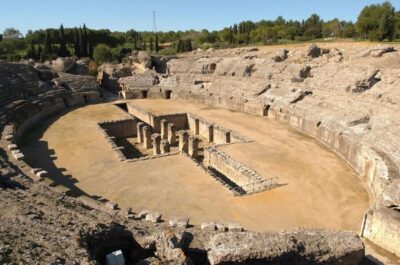
Also filed under