
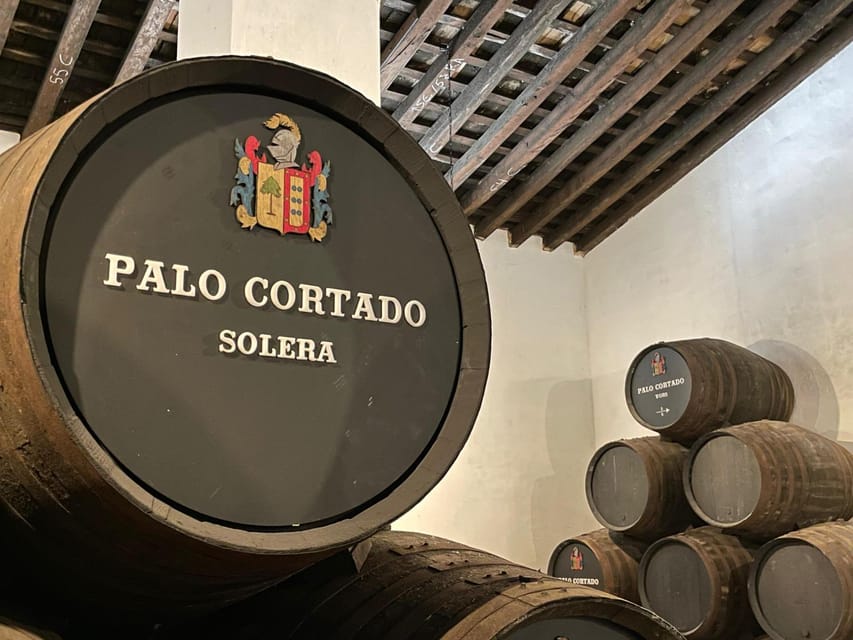
Rated · WINE TASTINGS
Visit a century-old winery in the centre of jerez
A visit to a working bodega in the center of Jerez is interesting because you are not just looking at wine, you are learning how sherry is presented, explained, and tasted right where it is made. This one is tightly packed at about 75 minutes, and it blends an audiovisual history with time in the winery itself.
Two things I like a lot: the way the visitor center uses a clear, graphic timeline to explain the story of sherry, and the fact that the tour ends with a structured tasting of four sherry wines. One thing to consider is that the pace is quick, so if you want lots of free roaming time inside the winery, you will probably feel like you are moving along a set route.
Key things I think you should notice
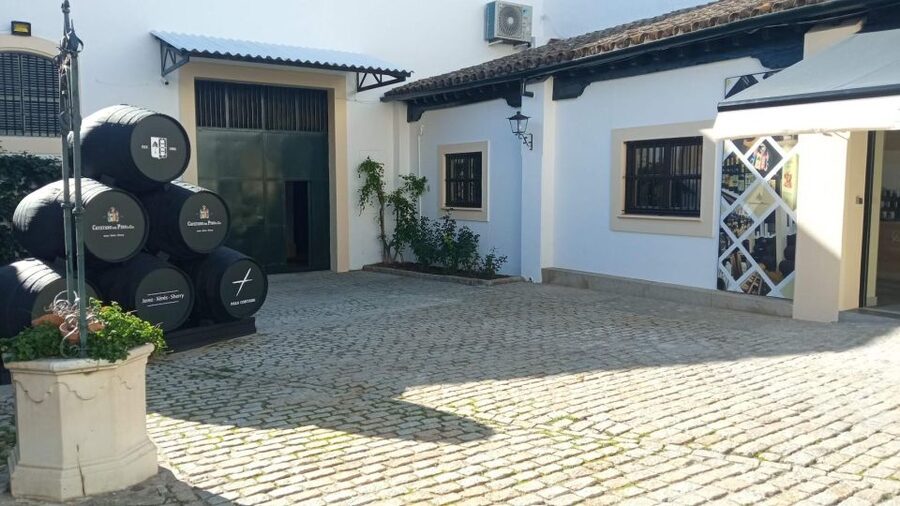
- Central Jerez setting inside Bodegas Cayetano del Pino, so you can pair it easily with nearby streets and tapas.
- Mid-19th-century cellar introduction that sets the tone before you ever get to the exhibits.
- Audiovisual sherry history running from the Phoenicians to the present day, explained in plain language.
- 1886 winery story with original 19th-century materials you can actually see.
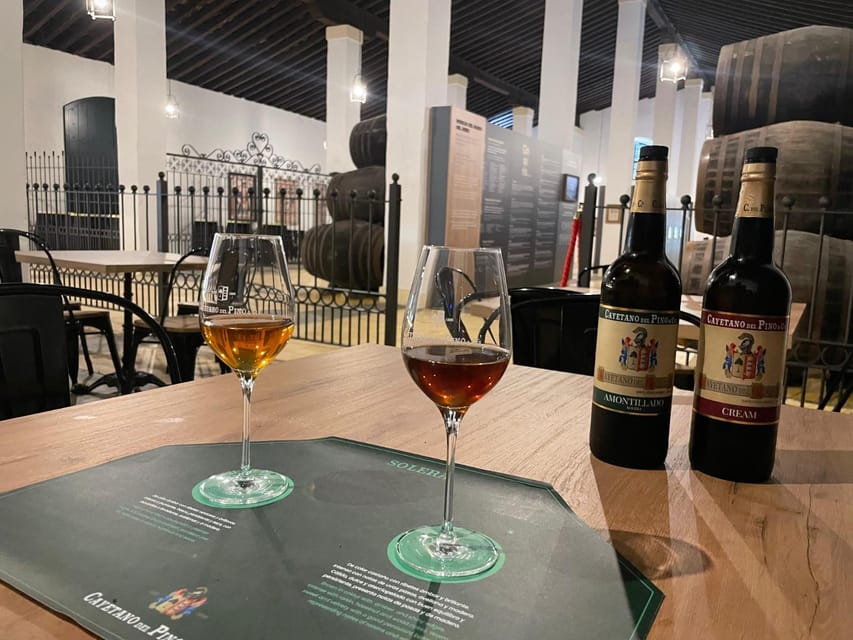
- Tasting of four sherries plus chips and a snack, included in the price.
- Historical label exhibition presented like art, which is a fun angle if you like design and branding.
Entering Bodegas Cayetano del Pino in central Jerez
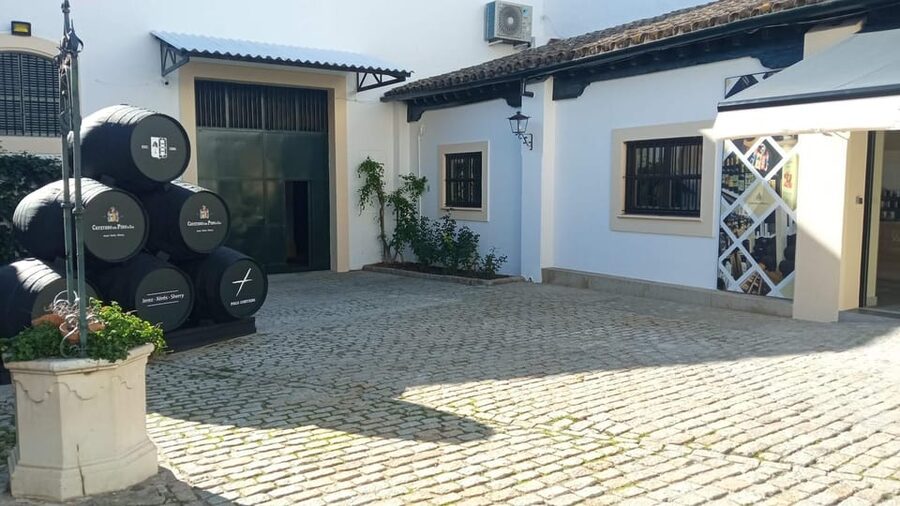
Your tour starts at Bodegas Cayetano del Pino, tied to the Jerez-Xérès-Sherry D.O. You are in the middle of Jerez de la Frontera, which matters more than it sounds. A lot of wine visits in Andalusia are out in the countryside. Here, you can keep the day simple: do this first, then keep exploring by foot afterward.
The first impression is that this is a shop-and-tour operation that is built for understanding. Even before you step deeper into the winery areas, the visitor center is set up to help you connect sherry to the region, not just to a glass. The result is that you can follow the talk even if sherry is brand new to you.
Also, the format is meant for real people with limited time. At 75 minutes, you get a full arc: intro, history, process, tasting, and then shopping.
More wine and sherry tastings in Jerez De La Frontera:
- Jerez: Bodegas Fundador Guided Tour with Tasting Session
★ 4.8 · 714 reviews - Jerez: Guided Winery Tour with Wine Tasting
★ 4.4 · 636 reviews - Jerez de la Frontera: Sherry Winery Tour with Tasting
★ 4.6 · 309 reviews
The mid-19th-century cellar plus the audiovisual sherry timeline
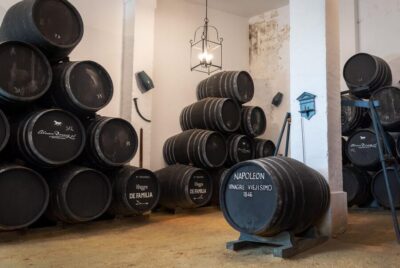
You begin in an introduction set in a mid-19th-century cellar. That is not just atmosphere. It is the start of the tour’s main trick: using the space to make the timeline feel physical.
Then the tour shifts to an audio-visual explanation of the history of sherry and how it is elaborated. The big win here is that you are shown the story from early influence right through to modern day, with the tour specifically mentioning a sweep from the Phoenicians to the present day. If you have ever felt confused by wine-history tours that jump around, this one keeps things in a line.
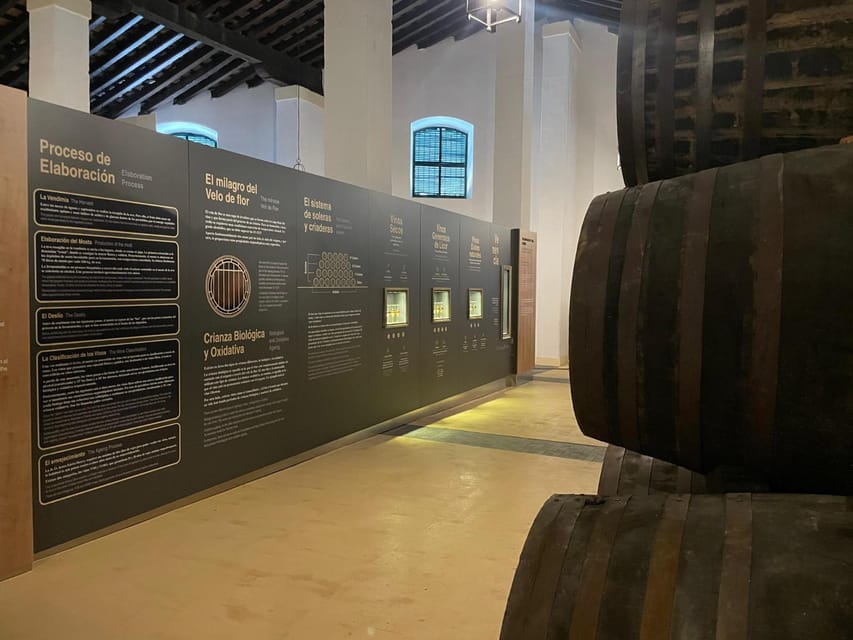
In the visitor center, you also get a graphically presented look at key facts about sherry wine. Even if you only catch part of the explanation, the visuals help you fill in the gaps so you are not standing there trying to translate in your head.
One practical point: the audiovisual portion is where your attention matters most. Bring your curiosity, and you will come away with a clearer mental map of what sherry is and why Jerez people take it seriously.
The 1886 winery tour and what original materials add
Next comes the part that wine lovers tend to enjoy most, the tour of the winery story itself. You visit the 1886 winery, and the guide walks you through the development of the bodega over time.
The tour includes time to see material original 19th-century pieces. That is a meaningful detail, because it takes the “history” label out of the abstract. You are not only hearing dates. You are looking at older material connected to the working culture of the winery.
The guide also brings you into the winery’s narrative in a way that feels organized. It is not a random walkthrough. There is a sequence: origin, story, then the sections that explain how sherry is made and represented.
If you are the kind of person who likes to understand systems, pay attention during this segment. You are learning how a long-running wine business built its identity and how the brand world connects back to production.
The vineyard and winemaking module, shown graphically
After the historical pieces, you move into a section focused on the vineyard and winemaking, presented graphically. This is one of the most useful stops if your goal is to leave with more than a drink memory.
Instead of only pointing at barrels or tools, this part is designed to explain. The tour says the vineyard and winemaking are graphically described, and you also get an “important facts of Sherry Wine” message in the visitor center. So the learning is not all in the guide’s voice. It is in the visuals too.
This matters for two reasons:
First, it helps you follow along in either Spanish or English. Since the tour runs live in both languages, the explanations are clearly planned to work for a mixed-language audience.
Second, it gives you something to connect during tasting. If you know what the tour just explained, you start to notice your own preferences with better context, even when you are not trying to be an expert.
If you are visiting with someone who gets bored by museum-style lectures, this segment tends to hold interest because it is built as a teaching module, not a long speech.
More Jerez day trips from Seville:
- Jerez de la Frontera: Andalusian Horse Dance and Museums
★ 4.7 · 1,289 reviews - Jerez: Yeguada de la Cartuja Carthusian Horses Tour
★ 4.8 · 970 reviews - Jerez: Royal Andalusian School of Equestrian Art Admission
★ 4.6 · 882 reviews - Jerez: Historic Center Guided Tour
★ 4.5 · 272 reviews
Historical labels exhibit: when branding becomes a design lesson
Then you get a special module that compares wineries and puts famous labels into a visual exhibit. The tour description notes that the labels are shown in a way that is like works of art, and that is exactly how it can feel in the right space.
This is a smart inclusion, because it connects to real life. Sherry is a product with long-standing identity, and labels are part of how the region speaks across time. You start to understand why a winery might treat labeling as heritage, not just packaging.
Even if your focus is purely taste, labels can help you remember what you tried. When you later look at bottles in the shop, this module makes it easier to connect a name to a visual.
Also, if you like collecting design inspiration, this is one of the few wine stops in Spain where the label focus is not treated as an afterthought.
Tasting four award-winning sherries with chips and snack
The tour ends with a tasting of several award-winning sherry wines, and the included tasting is specifically four wines, along with chips and a snack. This is where the tour’s structure pays off, because all the earlier history and winemaking context is supposed to feed into how you evaluate what is in your glass.
During the tasting, aim to do two simple things. First, compare the wines you taste, not just your favorites. Second, notice how the guide describes them in relation to the story you learned. The tour is built to connect process and presentation, so it is worth listening.
From a value standpoint, this is a big part of why the price works. At $29 per person for about 75 minutes, you are not paying only for entry and a walk-through. You are paying for audiovisual history, guided sections inside the winery, and a tasting that includes food basics (chips and snack). That makes it easier to justify than a purely museum-style stop.
If you are sensitive to alcohol, you still get a guided tasting structure, so you can take small pours and move at your own pace. Just remember you are in a winery setting where the tasting is part of the program, not an optional add-on.
Shopping for bottles and souvenirs at the end
After tasting, you finish in the shop area, where you can buy souvenirs and wine. This is the practical payoff. The earlier label exhibit helps you decide what to look for, and the tasting gives you a reference point so you are not guessing blindly.
If you want gifts, this is also the moment to think beyond one bottle. You can browse souvenirs while the tasting notes are still fresh in your head.
Also, if Iberian dishes are calling your name, note that the tour itself does not include them. It says Iberian dishes are an add-on, listed as plus 15 euros. That means you can do this as a clean, self-contained experience, then decide later if you want a full meal.
How long it takes, and how to fit it into your day
The tour is 75 minutes, and it is offered at set starting times. The visit runs in the center of Jerez, so you can plan around it without needing a taxi or long transport.
I recommend treating it like a foundation stop. Do it earlier rather than later. You will walk out with enough context to enjoy Jerez wine conversations afterward, and you will know what you like before you start browsing bottles on your own.
If you are short on time but want the most “worth it” factor, this schedule helps. It covers history, winemaking explanations, tasting, and shopping in one compact block. You are not spending half a day commuting or standing around.
Which guide style you might get, and why it matters
The tour is a live guided experience, offered in Spanish and English. One detail from past visitors that I find useful is that English-language tours have been led by guides such as Linda, who is described as very informative about the business and the wider sherry market and process.
In Spanish, guides like Carmen have also been praised for being attentive and friendly, which makes a difference when you are moving through exhibits at speed.
You do not need to worry about the tour feeling cold or robotic. The guide presence is part of the value, especially during the audiovisual segments and the tasting explanation.
Price and value: what you really get for $29
At $29 per person, this is not just a basic winery entry. You are paying for a package that includes:
- Audiovisual history plus a visitor center timeline
- A guided tour inside a winery connected to an 1886 story
- A section on vineyard and winemaking shown graphically
- A tasting of four sherries
- Chips and a snack
- Time to browse the shop afterward
That combination is why the price feels fair. You do not have to add a tasting elsewhere, and you are not stuck with only a self-guided museum layout. The structure is set up to make sure you learn something, then taste something, then shop with confidence.
If you are comparing against wine tours that include only a walk and a single pour, the four-wine tasting plus the history modules are what tilt the value in your favor.
Should you book this sherry winery tour?
Yes, if you want a central, time-friendly sherry experience that teaches while you taste. Book it if you like guided structure and you want the story of sherry in a format you can follow, especially the graphic timeline and audiovisual presentation.
Skip it or think twice if you strongly prefer long, slow, wandering winery time. This is a set program that moves from cellar intro to exhibits to tasting, and the total 75 minutes means there is not much unscheduled space.
If you are in Jerez and you want one solid “learning plus tasting” stop with good included value, this is a dependable choice. You will leave knowing what you like, and you will also understand why Jerez treats sherry like more than a drink.
FAQ
What is the duration of the tour?
The tour lasts about 75 minutes.
What does the tasting include?
The tasting includes four sherry wines, plus chips and a snack.
Where does the tour start and end?
It starts and ends at Bodegas Cayetano del Pino (Vinos de Jerez, D.O. Jerez – Xérès – Sherry) in Jerez de la Frontera.
Are the tour guides available in English?
Yes. The tour is offered in Spanish and English.
Is the tour wheelchair accessible?
Yes, the tour is wheelchair accessible.
Is there an option to add Iberian dishes?
Iberian dishes are not included in the tour price, but they can be added for an extra 15 euros.
Can I cancel for a refund?
You can cancel up to 24 hours in advance for a full refund.
Recently reviewed around Jerez De La Frontera
- Visit to the Cathedral of Jerez and the Church of San Miguel★ 4.5 · 10 reviews
- Jerez de la Frontera: 1.5-Hour Walking Tour with a Guide★ 5.0 · 3 reviews
- Visit to the Church of San Miguel★ 5.0 · 3 reviews
- Monumental Jerez Guided Tour★ 4.8 · 37 reviews
- Jerez: Tour Bodegas Páez Morilla ESPAÑOL/DEUTSCH★ 5.0 · 4 reviews
- Jerez: Historic center of Jerez and horse show★ 5.0 · 3 reviews
- Jerez de la Frontera: Cathedral of Jerez Ticket & Audioguide★ 4.5 · 74 reviews
- Jerez de la Frontera: Palacio Domecq Entrance Ticket★ 4.2 · 123 reviews
Wine Tastings, side by side.

Sevilla Food Tour: Tapas, Wine, History & Traditions
Read our review →
Ultimate Seville Tapas, Wine & History Small Group Tour
Read our review →
Authentic Flamenco Show with Tapas & Wine Guided Tour
Read our review →
Bodegas Fundador Guided Tour with Tasting Session
Read our review →
Bodegas Álvaro Domecq Guided Tour with Wine Tasting
Read our review →
Also filed under