
Rated · ANDALUSIAN HORSE SHOWS
Jerez: Royal Andalusian School of Equestrian Art Admission
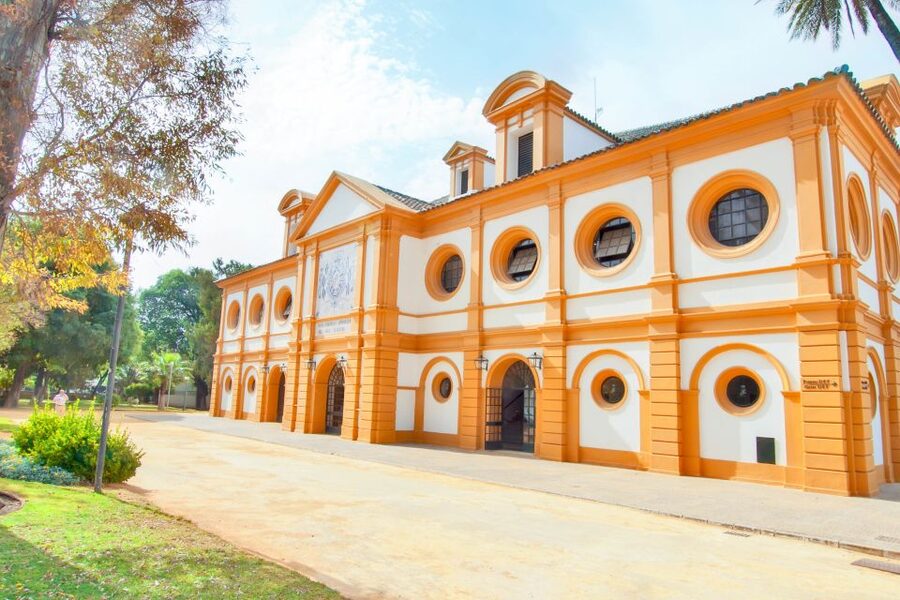
This is the kind of visit that feels more like watching living equestrian craft than sitting through a show. You get guided access to stables and the tack room, plus a palace setting and museum stops that explain how Andalusian horse culture developed.
I especially like that you can see the horses training during the day (with the regular exception noted below), and you get to walk through the school’s real working spaces, not just photo spots. I also love the museum setup, with hands-on, interactive exhibits that make history easier to follow.
One drawback to plan for: the program can shift, and training access is not the same every day. Also, if you need to leave on a tight schedule, pay attention to how quickly the site winds down once afternoon arrives.
Key highlights to zero in on
- Stables viewing inside an octagonal complex, with the tack room at the center
- Outdoor and indoor training arenas, including a large indoor space built for daily sessions
- Museum with 11 rooms focused on the origins and history of equestrian art in Andalusia
- Saddlery workshop access (except Saturdays), where harness work happens
- Carriage museum included at the end of your visit
- Guided tour with live staff from the school, with English guide options available
Royal Andalusian School in Jerez: Horse Training You Can Actually See
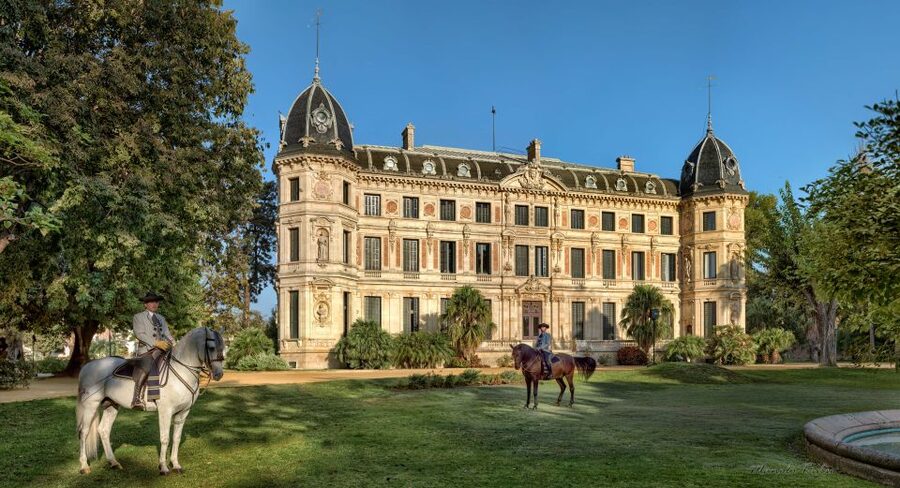
If you care about how discipline, timing, and training build into dressage-style precision, Jerez’s Royal Andalusian School is a strong stop. The setting helps too. You’re not in a generic arena. You’re in a working institution with carefully maintained spaces, from gardens to palace halls to stables.
The visit is built around a simple idea: you experience the school as a whole system. The place looks like 19th-century elegance above ground, then you go below and inside where the practical equestrian machinery runs, from harness making to the routines in the riding arenas.
The staff attitude is a big part of the value. Several guides you might encounter are tied directly to the school, not just external tour operators. That matters because it shows in the way they explain how horses are kept, trained, and equipped.
More Andalusian horse shows:
- Jerez de la Frontera: Andalusian Horse Dance and Museums
★ 4.7 · 1,289 reviews - Jerez: Yeguada de la Cartuja Carthusian Horses Tour
★ 4.8 · 970 reviews - Jerez: Historic center of Jerez and horse show
★ 5.0 · 3 reviews
Your 2-Hour Ticket: What You Get Beyond a Quick Look
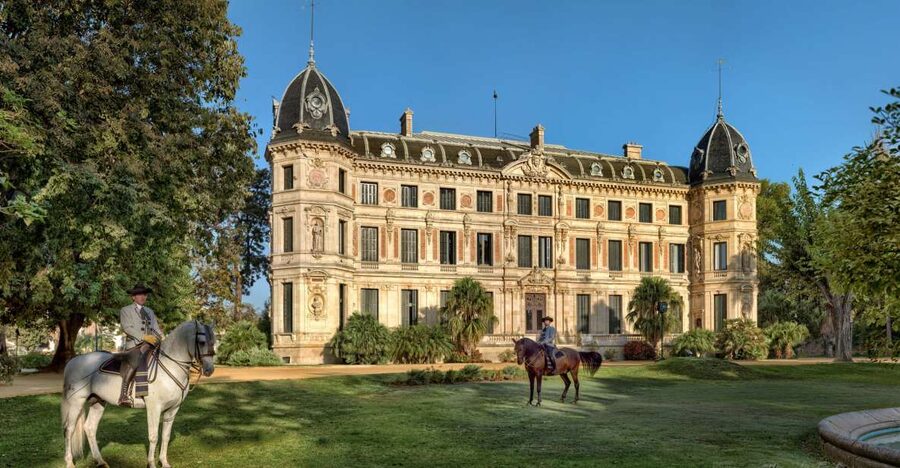
This admission is designed for about 2 hours, so you can fit it into a morning or early afternoon without burning your whole day. You’ll follow a guided flow through multiple parts of the complex, which is the difference between wandering alone and understanding what you’re seeing.
With your ticket, you enter at the visitor reception center and work your way through:
- a short audio-visual introduction focused on equestrian art in Andalusia
- palace and garden areas on the main level
- a basement museum covering origins and history
- saddlery and tack-related spaces
- horse training areas (outdoor rings and an indoor arena)
- stables, including the tack room
- and then a carriage museum stop
The value here is not just “seeing horses.” It’s seeing how the whole equestrian world fits together inside the school.
Reception Center Intro and the Garden Courtyard Setup
Right at the start, you’ll be directed through the visitor reception area where there’s an audio-visual presentation on the history of equestrian art in Andalusia. It runs until 11:00 AM, so if you’re visiting later in the day, you may miss that intro slot.
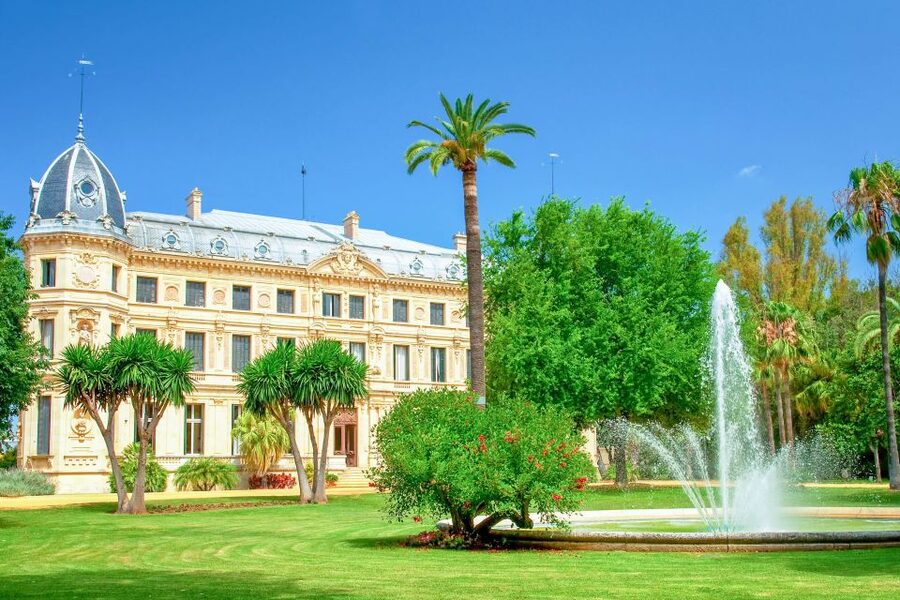
From there, you move into the gardens. This isn’t just pretty scenery. The garden layout acts like a transition from the modern arrival point into the school’s more ceremonial spaces. You’ll notice a central fountain with water jets, and the fountain creates a natural “pull you in” feeling as you step further into the grounds.
The gardens also help you understand why this place feels like a palace compound. It’s formal, maintained, and calm, even when you’re watching training in the background.
Charles Garnier Palace Halls: Pretty Architecture, Real School Spaces
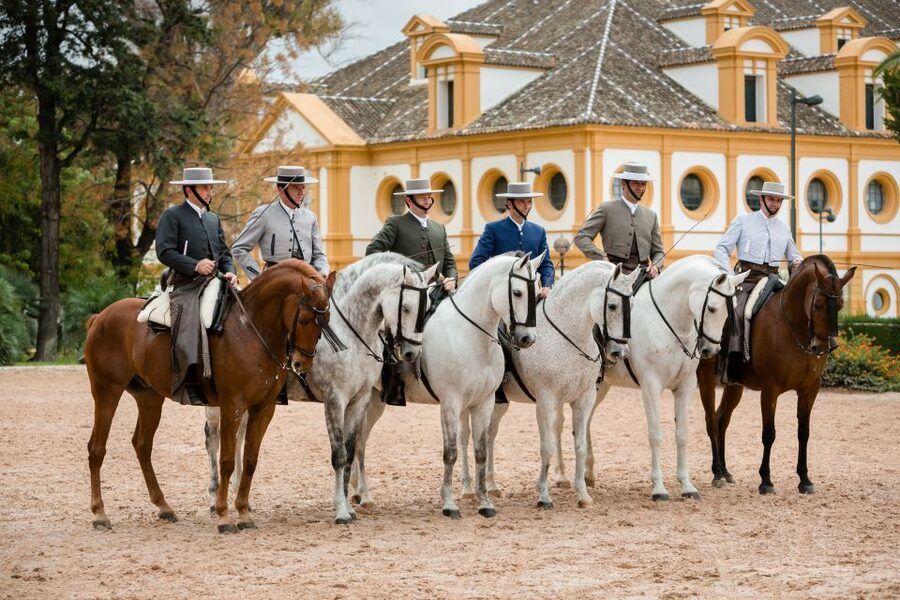
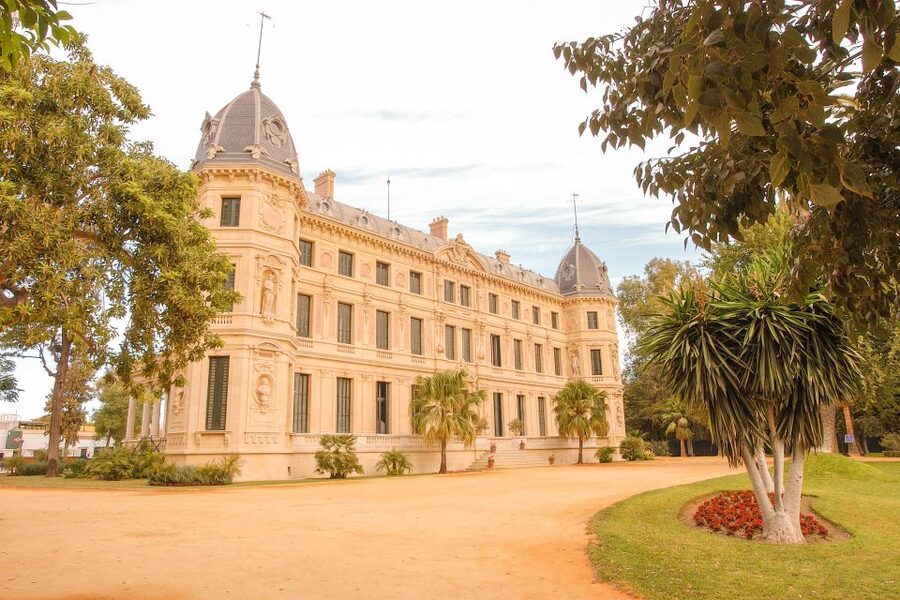
Across the gardens, the palace rises above the grounds. The architecture is described as 19th-century and linked to Charles Garnier. On the ground floor, you can admire halls decorated as they were originally conceived.
This is one of those stops that can either feel like a brief detour or a meaningful context section, depending on your interest. If you like the idea that equestrian art is also a visual culture, the palace halls help connect horses to art and design, not just technique.
Then you head to the part that most horse lovers end up talking about after the fact.
More Jerez day trips from Seville:
- Jerez: Bodegas Fundador Guided Tour with Tasting Session
★ 4.8 · 714 reviews - Jerez: Guided Winery Tour with Wine Tasting
★ 4.4 · 636 reviews - Jerez de la Frontera: Sherry Winery Tour with Tasting
★ 4.6 · 309 reviews - Jerez: Historic Center Guided Tour
★ 4.5 · 272 reviews
The Basement Museum with 11 Rooms (And Why It Works)
The Museum of Equestrian Art sits in the basement and is organized into 11 rooms. It covers the origins and the history of equestrian art, with a focus on the horse in Andalusia.
What makes this museum worth your time is the mix of storytelling and exhibit design. Several visitors mention interactive elements, and the overall setup does a good job of turning broad history into something you can follow without feeling lost.
It’s also a useful reset between training stops. After watching training routines, the museum explains where these traditions come from and how the school fits into that longer cultural arc.
If you are the type who usually rushes museums, slow down here. This one gives you context so the training you see next feels more intentional, not random.
Saddlery Workshop: Harness Making and Repairs You Don’t See Elsewhere
After the museum, you’ll see where harnesses are made and repaired. This happens in the saddlery with a master harness maker and apprentices.
There’s one key limitation: this workshop stop is available except Saturdays. If you’re visiting on a Saturday, you may miss that specific hands-on work segment, so your best bet is to still ask your guide what is running that day and how the flow changes.
Even when the harness-making view is brief, it tends to land well because it answers practical questions you might have. What materials are involved? How does daily wear get managed? Why do “small” equipment details matter for both comfort and performance?
That practical focus is a big part of why this ticket often feels like more than the price.
Watching Training: Outdoor Rings and the Indoor Arena (Capacity Matters)
Then comes the part most people come for: watching horse training. You can see sessions in outdoor exercise rings and also in an indoor arena.
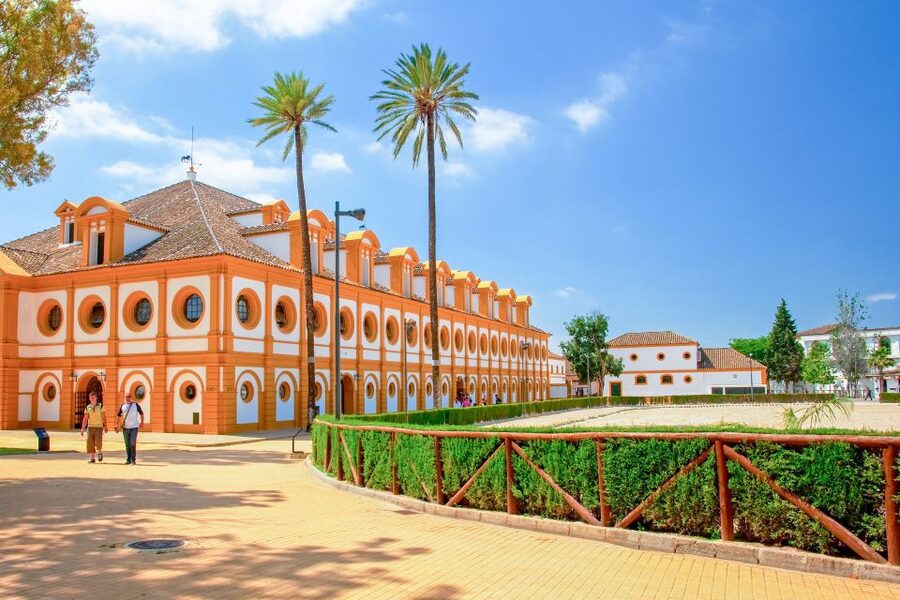
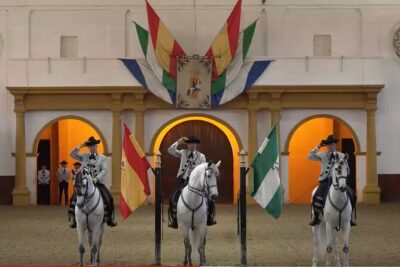
Training access is noted as available except Saturdays, and the indoor arena is described as an Andalusian-style building with capacity for 1,600 people. That scale is a helpful clue. This is not a tiny practice yard. It is built for serious daily work, with enough space for the rhythms of training and public viewing.
A practical caution: if you plan to photograph or video everything, be prepared for restrictions. One visitor notes they were not allowed to take pictures inside the arena. I’d assume rules can apply day to day, so follow staff instructions and save your best shots for areas where photography is permitted.
Also, expect the training to be the centerpiece that ties every earlier stop together. Once you see horses working in the ring, the tack room and harness details start making sense fast.
Stables and the Tack Room: The Most Emotional Part of the Visit
The stables sit in an octagonal complex, and they’re a highlight for a reason. You see the school’s most emblematic horses, and the space is arranged so you can take in the overall setting without just being herded like a crowd.
In the center is the tack room, where harnesses used for daily training and for shows are kept. Visitors often describe the tack room as a place where everything feels organized and purposeful. One review specifically mentioned a humidity-controlled tack room, which is the kind of behind-the-scenes detail that makes you realize this is a serious operation, not just a tourist attraction.
If you’re hoping for intimate interaction, manage expectations. One visitor found it strange that they could only view horses through bars and couldn’t pat or touch them. The good news is that you can still get close and watch how people handle routines and equipment.
If you go in with the right mindset, this is where the visit turns from “interesting” to “I get it now.”
Carriage Museum Finish: Vehicles, Harnesses, and Costumes
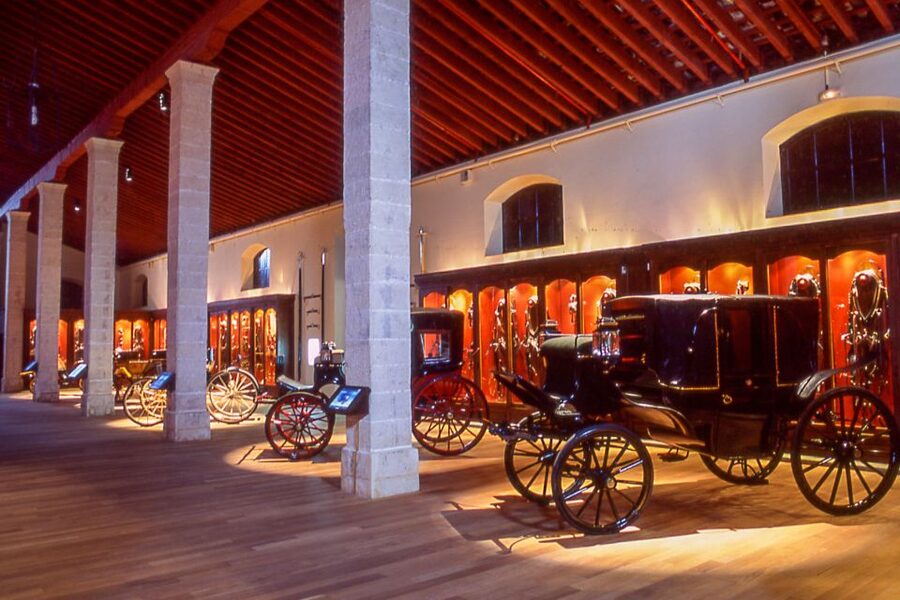
Your visit ends with the carriage museum, where you can admire vehicles, horses, harnesses, and equestrian costumes in the collection.
For some people, this is a gentle wrap-up that helps broaden the view beyond dressage-style training. For others, it’s a welcome contrast after the intensity of daily routines. Either way, it gives you a sense of equestrian art as performance plus technology plus styling.
One detail to keep in mind: if weather is rough, heat is high, or you’re short on time, you may not want to linger too long outside. The museum is often easier to handle than outdoor waiting.
Price and Value: Is $18 Worth It in Jerez?
At $18 per person for a guided, multi-area admission that takes about 2 hours, this is a pretty strong value in the context of what you get. You are not paying for a single room or a quick walk-by of horses.
You’re paying for:
- guided interpretation through palace, gardens, museum, stables, and training areas
- included access to the museum spaces and the carriage museum
- the chance to watch horses training during your visit
- behind-the-scenes access to working equipment areas like tack and saddlery (except Saturdays for saddlery)
The key “value” point is pacing. You get enough stops that the ticket feels full, but the overall time stays manageable. That matters if you’re also juggling other Jerez priorities like sherry tasting or a flamenco evening.
If horses are your main interest, this often beats waiting for a bigger show later. You get real-time training, which feels more intimate and more grounded.
Guides, Group Flow, and the Small Things That Affect Your Day
A good guide can turn this into a memorable morning, and many visitors highlight how informative the tour can be. Specific guide names that show up include Javi, Elena, and Harry. Even if you don’t know who you’ll get, you’ll likely feel that the guides are invested because this is their workplace.
Now for the small practical realities:
- Some tours can start later than the first impression you get when you arrive, so confirm the timing when you check in.
- You may still need to queue for paper tickets even if you already have an online ticket.
- The site can shift what runs on your day, especially around Saturday access to training and saddlery.
Also, hours can be tighter than you expect. One visitor notes that everything shuts at 2 PM, so if you have an afternoon plan, try to schedule your visit earlier rather than later.
Who Should Book This Equestrian School Visit?
This is best for you if you like:
- horses and want to see training, not just performances
- historical context tied directly to what you’re watching
- museum stops that feel connected to the main experience
It also works well for first-time visitors to Jerez who want an experience that feels authentically local and not generic.
If you only want entertainment and you don’t care about museum or history context, you may find the tour a bit more structured than you want. In that case, you might prefer a dedicated show day. But even then, the stables and tack room are usually worth the ticket on their own.
Should You Book the Royal Andalusian School of Equestrian Art?
I’d book this if you want a compact, guided, behind-the-scenes look at how an equestrian institution works in real time. The ticket gives you horses training access, museum context, and working craft spaces like the tack room and saddlery, with an atmosphere that feels carefully cared for.
Just book with two smart expectations:
1) plan around Saturday limitations on certain areas
2) arrive early enough to catch the audio-visual presentation if you’re visiting before 11:00 AM
If you like horses and you enjoy understanding the how and why, this is an easy “yes” for Jerez.
FAQ
How long is the Royal Andalusian School admission visit?
The duration is about 2 hours.
What languages are the live tour guides available in?
Live guides are available in Spanish, English, French, and German.
Can I watch the horses being trained?
You can watch training at the Royal School except on Saturdays.
Is there an audio-visual presentation at the start, and until when does it run?
Yes. The audio-visual presentation is available until 11:00 AM.
What do I need to show at the ticket office?
You need to present your printed receipt or show it on your mobile at the ticket office.
Is the venue wheelchair accessible?
Yes, the experience is wheelchair accessible.
Are bottles, cans, or animals allowed on the grounds?
No. You are not allowed to enter with bottles, cans, animals, or any objects the management considers unsuitable.
Recently reviewed around Jerez De La Frontera
- Monumental Jerez Guided Tour★ 4.8 · 37 reviews
- Jerez: Tour Bodegas Páez Morilla ESPAÑOL/DEUTSCH★ 5.0 · 4 reviews
- Jerez: Historic center of Jerez and horse show★ 5.0 · 3 reviews
- Jerez de la Frontera: Palacio Domecq Entrance Ticket★ 4.2 · 123 reviews
- JEREZ DE LA FRONTERA: PREMIUM GUIDED TOUR TO THE COOPERAGE★ 5.0 · 5 reviews
- Jerez de la Frontera: Cathedral of Jerez Ticket & Audioguide★ 4.5 · 74 reviews
- Jerez: City Guided Tour and the Alcazar★ 4.6 · 101 reviews
- JEREZ DE LA FRONTERA: GUIDED TOUR TO THE COOPERAGE★ 5.0 · 3 reviews
Andalusian Horse Shows, side by side.
Jerez & Cadiz Winery with Tasting & Opt Horse Show from Seville
Read our review →
Jerez, Cadiz Wine Tasting with Optional Horse Show
Read our review →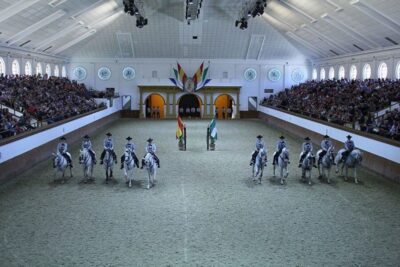
Also filed under